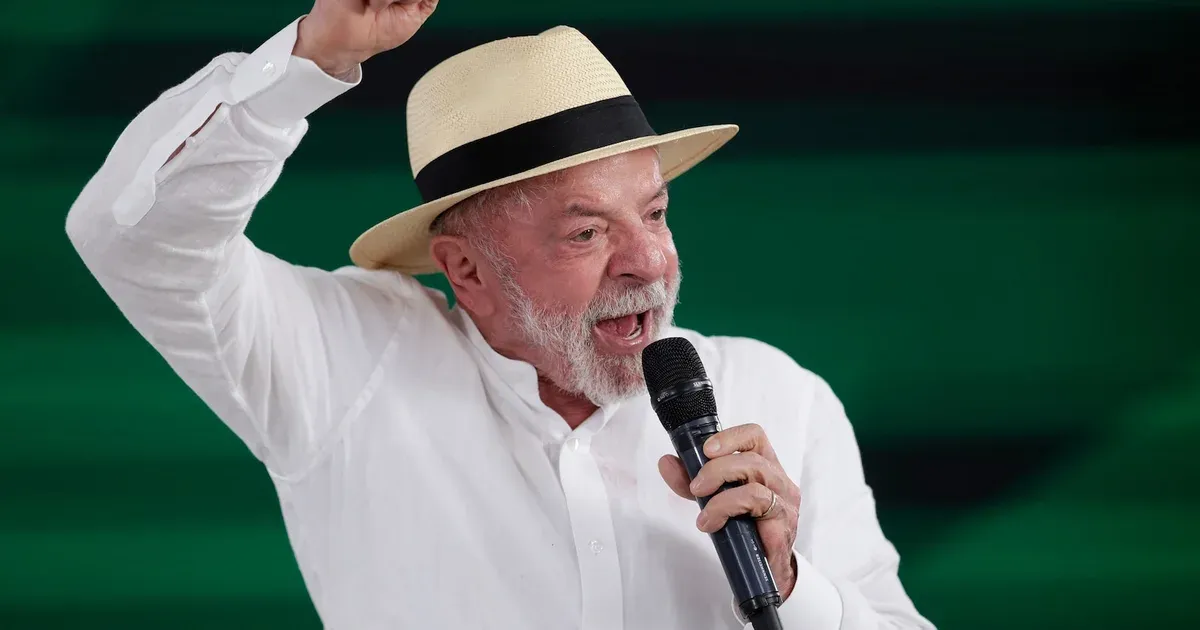
Brazil's governing Workers' Party has nominated President Luiz Inacio Lula da Silva for another term, opening a contest shaped by domestic economic pledges and unusually visible support for his opponent from abroad. The 80-year-old incumbent is entering what the party expects to be his final reelection bid and his seventh presidential campaign.
The October election will pit Lula against Senator Flavio Bolsonaro. Workers' Party delegates confirmed Lula's place on the ballot on August 2, 2026. Trump allies in Washington have embraced Bolsonaro's candidacy. Argentina's Javier Milei has offered his support, and Netanyahu has done the same from Israel. Vice President Geraldo Alckmin will again run alongside him.
Lula arrives at the campaign launch with stronger polling than he had six months earlier and with centrist parties moving toward his coalition, according to the Associated Press report carried by ABC News. His program pairs income-tax relief for people on lower incomes with a debt-forgiveness initiative that has become popular, giving the campaign an immediate pocketbook case to make alongside its warnings about foreign influence. The economic promises also help Lula distinguish his own coalition from a contest that opponents and overseas allies are trying to frame through ideology and diplomatic alignment.
Resources and Defense Enter the Campaign Program
The convention speech linked industrial policy to national control. Lula said Brazil should strengthen its defense industry and protect its mineral deposits, making rare-mineral sovereignty part of the election argument rather than treating the resources only as an export opportunity. That position also places China, the United States and European powers inside a campaign debate about who can gain access and on what terms.
"No Chinese, no American, no French will touch" the resources without respecting Brazilian sovereignty, Lula said.
The message reaches beyond mining. Lula recently held a long call with Chinese President Xi Jinping, whose country is one of Brazil's largest trading partners, while his supporters have presented the Mercosur trade bloc as a route to agreements with a wider range of partners. Brazil is the bloc's largest economy, but any strategy also involves Argentina, Paraguay and Uruguay. The relationship with Buenos Aires is especially complicated because Argentina remains a Mercosur partner while Milei openly supports Bolsonaro's campaign. Trade coordination and electoral confrontation are therefore unfolding between the same two governments.
The commercial pressure is already tangible. Washington has raised duties on goods imported from Brazil. The Trump administration also applied a terrorism designation to two criminal groups based in the country. The AP report said legal analysts believe those measures could create costs for companies and widen the scope for other intervention, though it did not establish a specific next action.
Foreign Endorsements Reshape the Opposition Contest
Flavio Bolsonaro's international backing gives the election a regional and geopolitical dimension. His father, former President Jair Bolsonaro, was a Trump ally. The former president is serving a 27-year term at home for an attempted coup. Milei traveled to Sao Paulo for the Liberal Party convention on July 25, where insults directed at Lula and the Supreme Court justice tied to the elder Bolsonaro's case triggered a diplomatic dispute. That episode is documented in Brazil's envoy recall.
Netanyahu has also recorded a video supporting Lula's opponent. The endorsements connect the Brazilian campaign to a broader group of Trump-aligned governments in Latin America, but they do not erase the local contest over taxes, debt and coalition building. Lula's improving position with centrist parties gives him an organizational answer to the attention surrounding Bolsonaro's foreign allies. Workers' Party chairman Edinho Silva described the Brazilian vote as consequential for Latin America. Governments shaped by similar politics have recently taken office in Colombia, Ecuador, Peru, Chile, Paraguay and Argentina. Lula, for his part, has said he does not want Trump as an enemy.
Workers' Party officials are concentrating on a different channel of influence: coordinated bot campaigns and social-media efforts that could undermine confidence in electronic voting. Flavio Bolsonaro has repeated unsupported doubts about the voting system. Brazil's foreign ministry denied visas to two U.S. State Department officials in July amid reported concern that they sought to encourage similar claims; the State Department rejected that account. Alckmin defended the electronic system with a pointed reference to the foreign leaders backing Bolsonaro, arguing that Brazilian machines do not accept votes from Argentines or Americans.
Electronic Voting Becomes the Operational Test
The election-security dispute converts diplomatic rhetoric into a practical problem for Brazilian institutions. Tariffs, public endorsements and campaign appearances are visible and can be answered through conventional politics. Automated distribution is harder to attribute, while attacks on the voting system can spread before officials establish who organized them. The governing party's concern is therefore tied to both the content of the claims and the speed at which they can move.
Lula's campaign is asking voters to connect three subjects that usually travel separately: household finances, control of strategic resources and trust in the ballot. Its performance will depend on whether that combination keeps the race focused on Brazilian policy choices while Bolsonaro's allies invite international figures into the contest. For election authorities, the immediate measure is narrower: preserving confidence in the electronic system as foreign endorsements and online manipulation claims intensify around the same October vote.