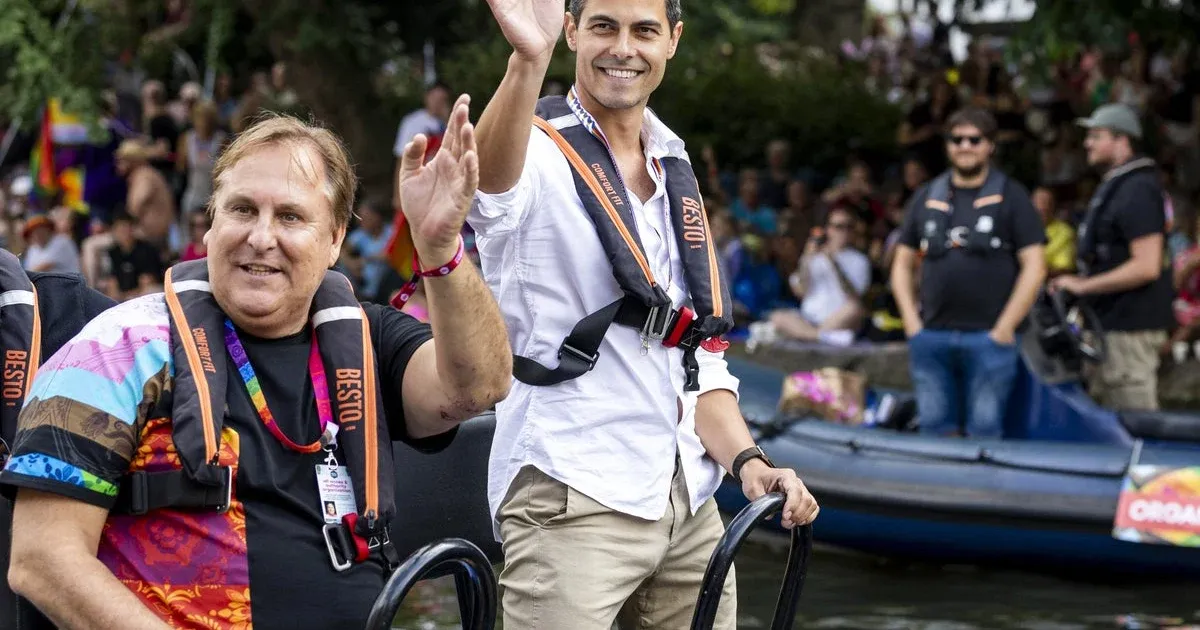
Dutch Prime Minister Rob Jetten joined Amsterdam's Pride canal parade as crowds packed the city's waterways for the annual celebration. The openly gay leader waved from a small boat while techno music played along the route and spectators filled bridges and canal banks. On August 1, 2026, the parade drew hundreds of thousands of people and brought 80 decorated vessels through the Dutch capital.
Jetten wore a white shirt, a black life vest and a gold necklace as he greeted participants and people watching from shore. His presence placed the head of government inside the event rather than at a separate official ceremony. Amsterdam was also hosting World Pride, making the canal procession the central public gathering in a larger international program.
National institutions were spread across the 80-vessel procession: government ministries, the military and police joined LGBTQ+ organizations and clubs on the water. COC, the Netherlands' LGBTQ+ rights group, used its boat to mark its 80th anniversary and carried a manifesto calling for further progress on human rights. Its participation paired a long organizational history with demands that remained current in Dutch public life.
Police Boats Covered the Canal Route
Security was visible without closing the parade off from the public. Police officers traveled beside the procession in motorboats, and a helicopter circled above the route. Amsterdam Mayor Femke Halsema had said authorities would use extra measures where needed while trying to keep their effect on visitors as limited as possible. The deployment put officers on the water and in the air while the banks and bridges remained crowded.
Seven days earlier, an assault on Berlin's Pride celebration had killed one person and injured 29. The Independent's account said a van entered the crowd before people were attacked with a machete, and authorities believed the violence was connected to Islamic extremism. Ballout died after officers opened fire during a Sunday encounter in a Berlin suburb. Prosecutors also said he had once attempted to enlist with the Islamic State group.
The parade also took place as reports of verbal and physical assaults on LGBTQ+ people have increased in the Netherlands, a country often associated with tolerance. A separate Amsterdam case ended July 31 with a discrimination conviction over language used at an earlier Pride gathering. The sentence was 40 hours of community service. The ruling and the security operation offered two separate responses to conduct directed at the community.
Rod Lugtenburg, a 55-year-old visitor from Toronto, watched from the Skinny Bridge in a shirt bearing a rainbow maple leaf. He said his Dutch heritage and Canada's record on LGBTQ+ rights both shaped his decision to attend. Lugtenburg described the Netherlands as a leader on acceptance and said Canada followed closely, linking the event to standards he valued in both countries.
“For me, it's about acceptance, being able to be who you are.”
COC's boat carried a portrait of Marsha P. Johnson as well as its manifesto. Johnson participated in the resistance to a police raid at New York's Stonewall Inn on June 28, 1969, an event that helped push the gay-rights movement into a more militant phase. The portrait connected a festive canal procession to the history of organizing that preceded it and kept that history visible among the official vessels.
Official Participation Makes Pride a Public Commitment
The mix of ministries, police, military units and community groups gave the parade an institutional dimension. Their boats did not erase the reported rise in abuse or the need for extra security. They did show that LGBTQ+ participation was being presented as part of public life, with the prime minister visibly sharing the route. COC's manifesto kept the gathering from being treated only as a ceremonial display. Its anniversary boat placed that demand beside the public institutions represented elsewhere in the procession.
That visibility also places responsibility on the institutions represented in the procession. Police protection, court action over discriminatory conduct and COC's demand for further progress address different parts of the same problem: people need to be able to gather openly, move through the city safely and seek a remedy when intimidation crosses into unlawful conduct. The Berlin attack showed why security planning could not be separated from the celebration. Amsterdam's parade paired public support with those concrete tests.