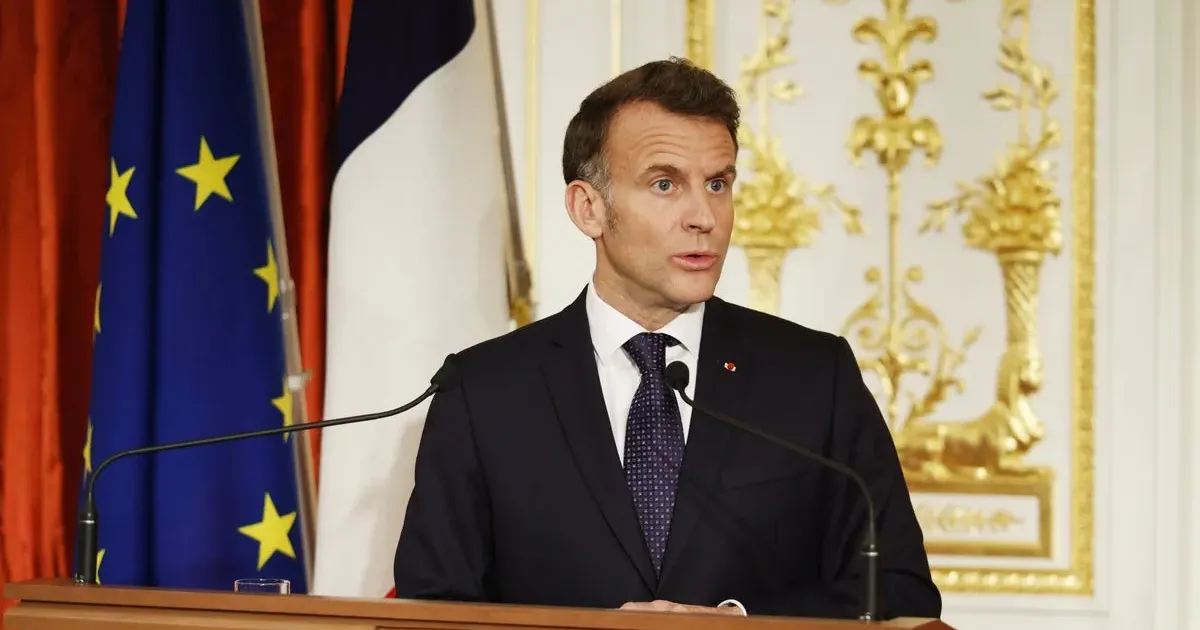
Emmanuel Macron's warning against forcing open the Strait of Hormuz by military operation now looks like a wider critique of U.S. escalation and allied trust. His April remarks were framed around a personal exchange with Donald Trump, but the policy substance has become the central problem of the crisis: military pressure can raise the cost for Iran without automatically restoring commercial confidence in one of the world's most important energy corridors.
Macron dismissed Trump's personal remarks about his wife and pushed the discussion back toward seriousness, NATO credibility and the limits of force. The choice was not only diplomatic etiquette. France was trying to separate alliance management from campaign-style insult, and to separate maritime security from a slogan about liberating a strait.
Three months later, the Hormuz file has become even more unstable. Renewed U.S.-Iran strikes, disrupted tanker traffic, insurance pressure, oil-price anxiety and Trump's abandoned idea of a 20 percent shipping fee all make Macron's caution more than an old sound bite. The question for allies is no longer whether the strait matters. It is whether they have a credible method for keeping it open without turning a maritime chokepoint into a wider war.
Personal politics weakened the diplomatic signal
Trump's personal jab gave the exchange a tabloid layer, but Macron's response was aimed at a diplomatic audience. A president can survive ridicule in domestic politics. An alliance cannot easily absorb ridicule when the same leaders need to share risk, intelligence, basing, ships and political cover.
France's irritation was therefore strategic. Personal insult turns allied disagreement into a loyalty performance. It makes caution look like betrayal and cooperation look like submission. In a crisis involving Iran, oil markets and Gulf security, this tone narrows the space for responsible disagreement.
Hormuz cannot be reopened by language alone
Macron's warning about a military operation was practical rather than passive. The Strait of Hormuz is not a symbolic gate that can be unlocked by one order. It is a dense maritime environment shaped by mines, missiles, drones, small boats, coastal batteries, commercial insurers, tanker crews, Gulf governments and Iranian asymmetric capability.
A strike campaign can destroy targets. It cannot by itself guarantee that shipowners, underwriters and crews will treat the route as predictable. A waterway can be legally open and commercially unattractive at the same time. Military rhetoric often outruns operational reality in this gap.
Defensive missions need a tighter mandate
European and allied discussions have pointed toward a more limited model: mine clearance, escort missions, surveillance and reassurance for commercial shipping. The limited model fits France's public posture more closely than an open-ended campaign to force Tehran into surrender at sea.
The mandate still has to be precise. Escorting tankers, clearing mines and striking Iranian infrastructure are different policies with different legal exposure and escalation risks. If allies blur those lines, they invite the same confusion they criticize in Washington. The mission has to define protection for shipowners, expected behavior for Gulf states and the Iranian actions that will trigger a response.
Trump's toll reversal damaged predictability
The abandoned proposal for a 20 percent fee on shipping through Hormuz showed why allies worry about U.S. improvisation. Even if the plan was short-lived, it added another layer of uncertainty to a market already pricing war risk, blocked routes and possible retaliation.
For energy markets, predictability can be as important as firepower. Traders, refiners and shipping firms do not need every dispute resolved before moving cargo. They do need to know which rules apply. A sudden toll idea, followed by reversal after Gulf investment discussions, makes policy look transactional at the exact moment allies need legal and strategic steadiness.
Europe's autonomy claim now faces a practical audit
Macron has long argued that Europe needs more strategic autonomy. Hormuz tests whether Europe's autonomy claim can survive contact with cost. France can say it rejects reckless escalation, but it also has to help offer a workable alternative when a major energy route is under pressure.
Moving too slowly risks making Europe look like a commentator on U.S. power. Moving too close to Washington risks turning a defensive maritime mission into a participant in a broader U.S.-Iran war. The credible lane is narrow: enough naval and diplomatic weight to reassure shipping, enough restraint to keep de-escalation possible.
Alliance credibility depends on burden and restraint
Macron's point was not that allies should ignore Iran's pressure on the strait. It was that an alliance built on insults, reversals and improvised threats will struggle to manage a crisis that requires patience. Hormuz needs legal clarity, operational discipline, shared burden and a political exit route.
Washington still has the largest military role. Europe still needs U.S. power to matter at sea. But partnership cannot mean automatic endorsement of every tactic, and autonomy cannot mean careful speeches without ships, money or risk. The strait will expose both sides: the United States if force replaces strategy, Europe if caution becomes an excuse for distance.