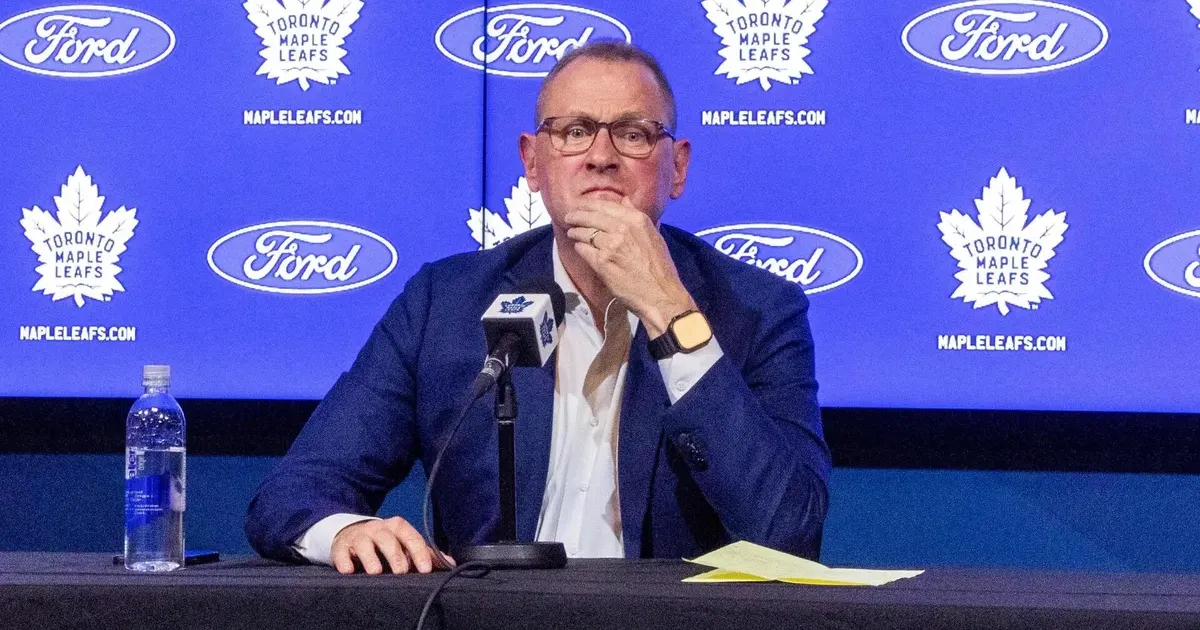
The Toronto Maple Leafs' firing of Brad Treliving was not a routine front-office adjustment. It was an admission that the old promise had broken.
Toronto finished 32-36-14, missed the playoffs for the first time since 2016 and turned a roster built for May into one that could not survive April. Treliving was dismissed March 30, before the full season had even closed. By May 3, the organization had hired John Chayka as general manager and brought Mats Sundin back as senior executive adviser for hockey operations.
The timeline matters because the Leafs are no longer selling patience around a familiar core. The question is whether the new office can make decisions the previous structure delayed, softened or could not solve.
The Missed Playoffs Changed The Argument
For years, Toronto's defense of its expensive core rested on regular-season credibility. The Leafs could disappoint in the spring and still argue they were close. Missing the postseason stripped that shield away.
Injuries, goaltending stress and defensive issues can explain parts of a bad season. They do not erase the larger fact: a team priced and marketed as a contender finished last in the Atlantic Division. That is not a small stumble. It is evidence.
Matthews Makes The Clock Louder
Auston Matthews remains the center of gravity for the franchise. His importance makes the reset more urgent, not less. A team with a star of that level cannot afford vague transition years built around hope and memory.
The new front office has to decide which pieces still fit Matthews' competitive window and which ones keep repeating the same failure. The answer may require moving players fans know well, changing the supporting cast and accepting short-term discomfort for a roster that makes more sense.
Chayka Brings A Different Kind Of Risk
Hiring Chayka gives Toronto a fresh operating language. His reputation is tied to analytics, cap creativity and a willingness to think differently about roster construction. A different operating model can help a franchise that has too often looked expensive without looking complete.
But a new model is only useful if it turns into hockey decisions that work under pressure. The Leafs do not need a smarter press conference. They need defense, goaltending stability, penalty-kill reliability, cap discipline and forwards who can win playoff-style minutes.
Sundin Adds Memory, Not A Blueprint
Sundin's return gives the reset emotional weight. He understands the weight of being a Toronto star in front of a fan base that remembers every failed spring. Sundin's perspective has value inside a franchise often trapped by its own mythology.
Still, symbolism cannot fix a blue line or manage the cap. Sundin can help frame standards and culture, but Chayka's office has to make the roster math work.
The Overhaul Has To Reach Below The Title
Toronto's later front-office changes showed that this was not meant to be a one-name reset. Staff departures and hockey-operations restructuring suggest Chayka wants different information flows and different decision habits.
A broader restructuring is necessary if the problem was not only one general manager. The Leafs have spent years around the same pressure cycle: elite talent, heavy expectations, roster imbalance, spring failure and another explanation. Changing that cycle requires changing how decisions are made before the public sees them.
Toronto Must Show Roster Courage
Firing Treliving was the easy hard decision. It looked decisive, gave fans a target and bought the organization a new beginning. The harder decision is whether Toronto is willing to break parts of a familiar roster to build one that can win differently.
If the Leafs only change titles, this season becomes another chapter in the same expensive story. If they reshape the roster with clear purpose, the firing may become the first honest move in years. Toronto has lived too long on talent, nostalgia and future tense. The next version has to prove the franchise can still make ruthless hockey decisions before the window closes.