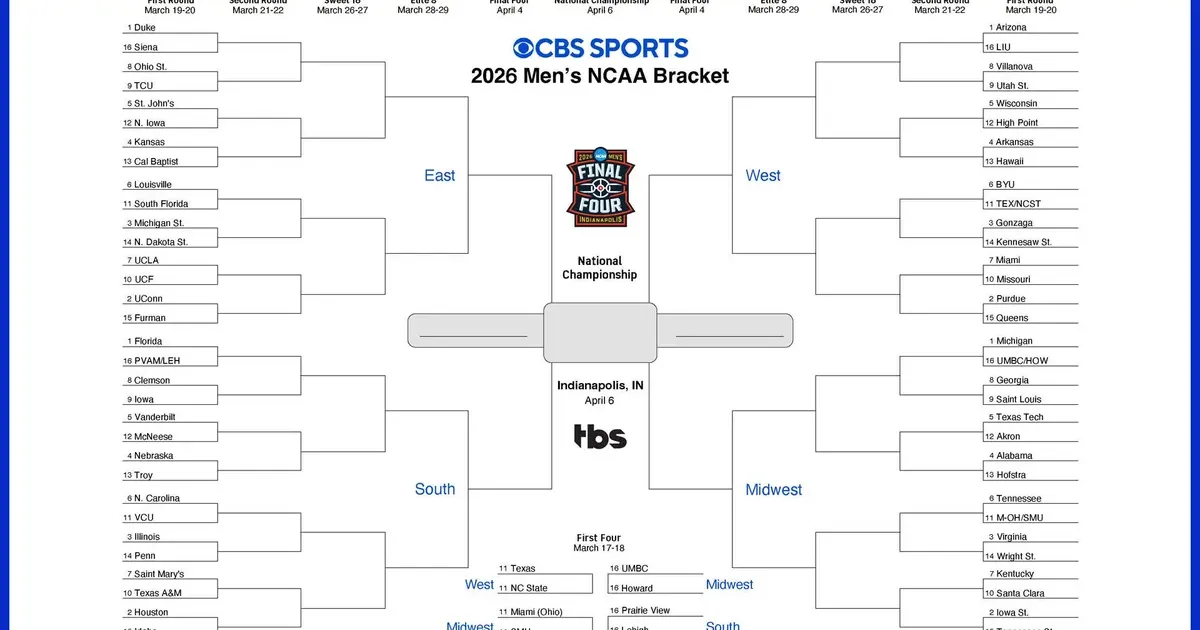
March Madness remains the NCAA's central media engine, but the business around the bracket no longer fits the old amateurism pitch. The men's tournament still carries the largest rights value, with CBS and Warner Bros. Discovery paying for a national live-sports product that cuts through a fragmented media market. Around it, NIL marketing, athlete revenue sharing, legal betting and the growth of women's basketball have changed the argument.
The tournament sells chaos to fans. To broadcasters, sponsors, conferences and the NCAA, it sells something more durable: live attention at scale. Upsets, office pools, alumni identity and national brackets create demand across television, streaming, social feeds and betting platforms.
The tournament's reach explains why the money keeps rising. It also explains why the governance questions are harder to dodge.
Media Rights Still Drive the Machine
The men's tournament is the backbone of NCAA revenue because it delivers a rare commodity: a weeks-long live event with national interest and built-in daily stakes. Current industry breakdowns put the men's tournament media-rights value at roughly $870 million a year through the CBS and Warner Bros. Discovery deal, while the wider commercial opportunity grows through licensing, tickets, sponsorships and advertising.
The rights money does not stay in one place. The NCAA distributes tournament revenue through conference shares, performance units and institutional payments. A deep run can therefore carry financial meaning far beyond the scoreboard. For major conferences, extra bids and extra wins become future budget events as much as sporting achievements.
Continuing demand explains why March Madness has survived so many changes in media behavior. Viewers may watch fewer scheduled shows, but they still make room for live elimination games when the bracket is moving.
Digital Attention Makes the Event Larger
March Madness is no longer measured only by full-game television viewing. Fans check scores at work, stream late games on phones, follow upset alerts, build second-screen brackets and clip individual moments into social feeds. The tournament serves obsessive viewers and casual participants at the same time.
Constant interaction gives sponsors more inventory and gives media partners a longer runway. A game window is valuable. A full tournament conversation is more valuable. The bracket turns every result into content, and the content keeps pushing fans back toward the next game.
The format is unusually well suited to modern attention. It can be watched for three hours, followed for three minutes or reduced to a single upset notification without losing its basic appeal.
Player Money Changes the Old Defense
Name, image and likeness deals first changed how players could benefit from March visibility. A breakout performance can quickly become a local endorsement, a national campaign or a transfer-market signal. The House v. NCAA settlement and the arrival of school revenue sharing changed the picture again by moving athlete compensation closer to the center of the business.
Revenue sharing weakens the old defense that tournament money sits apart from the people creating the product. The players create the emotional value: last-second shots, underdog runs, rivalry games and names people remember for decades.
The structure remains uneven. Major conferences and high-revenue sports still have the advantage, and the settlement has not made college athletics simple. But the commercial logic is now visible in a way the NCAA cannot easily talk around.
Women's Basketball Has Changed the Leverage
The women's tournament has become a revenue and politics story of its own. The NCAA's ESPN agreement for 40 championships averages $115 million annually, and women's basketball gained a far stronger media position inside that package than it held in the previous cycle.
The men's tournament remains the bigger rights engine. The larger men's rights engine does not make the women's tournament secondary in the strategic argument. Better distribution, star power and audience growth have shown how quickly value can move when a championship is treated as a premium product rather than filler inventory.
Audience growth changes the pressure on the NCAA. Investment, scheduling, promotion and treatment of championship events now look less like internal housekeeping and more like public governance questions.
Betting Adds Attention and Risk
Legal sports betting has intensified the tournament's attention economy. Brackets were always a form of mass participation, but betting markets add another layer of stakes to games that neutral viewers might otherwise ignore. Betting helps media value and sponsor interest.
It also raises integrity, education and athlete-harassment concerns that college sports cannot treat as background noise. The NCAA benefits when March Madness becomes unavoidable. It also inherits the responsibility that comes with being unavoidable.
A tournament built around students, schools and national gambling attention needs sharper guardrails than a professional league with collective bargaining and mature compliance systems.
Scale Makes Governance Harder
March Madness is still compelling because the basketball is volatile and emotional. The money does not ruin the games. It changes the argument around them. A billion-dollar media property cannot hide forever behind the language of campus spirit.
Every piece of growth creates a governance bill. Media rights raise distribution fights. NIL and revenue sharing raise athlete-equity fights. Women's basketball growth raises investment fights. Betting raises integrity fights.
The NCAA's problem now is clear. March Madness gives the association leverage, but each new revenue stream leaves less room for vague answers about who benefits, who carries the risk and who gets to shape the next version of the bracket.