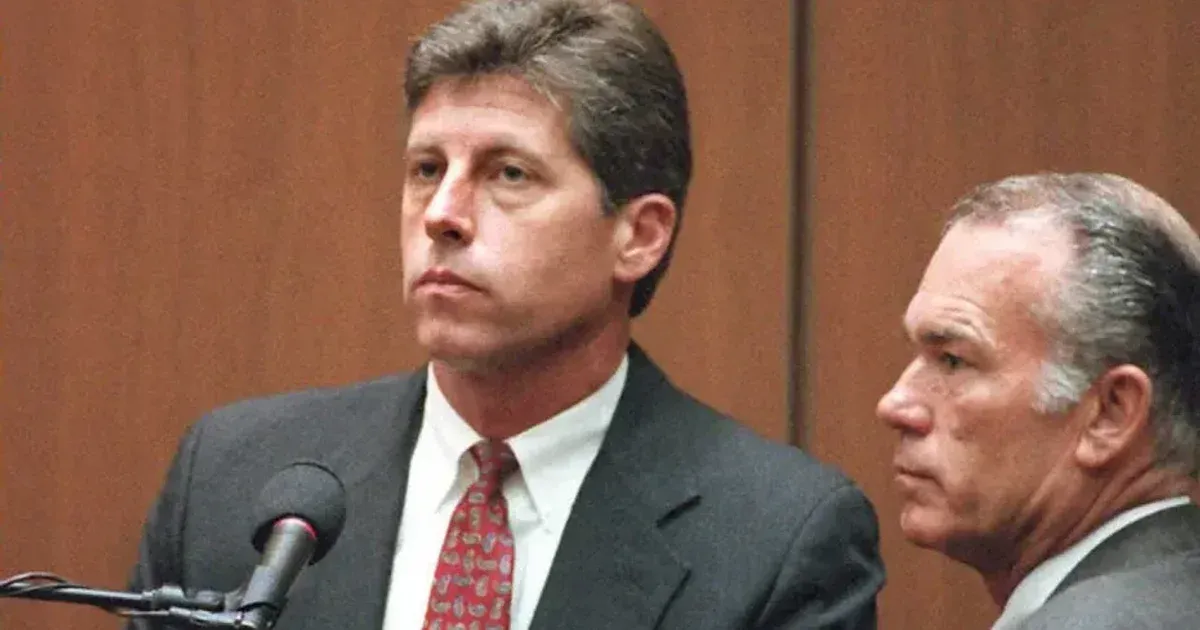
Mark Fuhrman, the former Los Angeles Police Department detective whose role in the O.J. Simpson murder trial redefined the national conversation on police conduct, has died at age 74. Chief Deputy Coroner Lynn Acebedo of Kootenai County, Idaho, said Fuhrman died May 12, 2026, while the county did not release a cause of death. TMZ and other outlets reported that he had been battling an aggressive form of throat cancer. Fuhrman had lived in Idaho for several decades after leaving law enforcement after the 1995 trial.
Investigators originally tasked Fuhrman with lead duties during the double-murder investigation of Nicole Brown Simpson and Ron Goldman. He arrived at the crime scene on Bundy Drive in the early hours of June 13, 1994, alongside other detectives from the Robbery-Homicide Division. During the subsequent search of the Rockingham estate, Fuhrman reported finding a dark, bloody glove that appeared to match one found near the victims. This discovery provided a central pillar for the prosecution's case against the former football star.
Prosecutors led by Marcia Clark initially viewed the detective as a star witness capable of tying the physical evidence directly to the defendant. Fuhrman testified with confidence about the timeline of the investigation and his movements on the night of the murders. He maintained that he discovered the glove behind a guest house on the property, an area he entered without a warrant due to what he described as exigent circumstances regarding the safety of those inside the residence.
Discovery of the Rockingham Estate Glove
Defense attorneys Johnnie Cochran and F. Lee Bailey centered their strategy on undermining Fuhrman's integrity. They questioned the detective about his past and his handling of the evidence, specifically suggesting he might have moved the glove from the crime scene to the Rockingham property to frame Simpson. Fuhrman denied these allegations under oath, asserting that he had never used racial slurs or harbored bias against African Americans.
Cross-examination by Bailey in March 1995 became a defining moment of the proceedings. The attorney asked Fuhrman directly if he had used the N-word at any time in the previous ten years. Fuhrman answered in the negative, a statement that would later serve as the basis for criminal charges against him. Prosecutors stood by their witness throughout this testimony, unaware of the existing evidence that would soon surface from an aspiring screenwriter.
His credibility collapsed after the defense introduced audio recordings known as the Fuhrman tapes. Laura Hart McKinny, who had interviewed Fuhrman for a project about police culture, provided hours of recordings in which the detective used numerous racial slurs and discussed the fabrication of evidence. The tapes contained dozens of instances of the racist language Fuhrman had specifically denied using while on the witness stand.
Contradictions and the McKinney Tapes
Judge Lance Ito eventually allowed the jury to hear only a small portion of the recordings, but the impact on the public and the legal strategy was substantial. Fuhrman was forced to return to the stand, where he invoked his Fifth Amendment right against self-incrimination when asked if he had planted or manufactured any evidence in the case. This shift in the trial's momentum contributed to the defense argument that the LAPD investigation was tainted by systemic racism.
Jurors later cited the Fuhrman testimony as a major factor in their decision to acquit Simpson in October 1995. Legal analysts noted that the revelation of the tapes made it nearly impossible for the prosecution to rely on any evidence Fuhrman had handled personally. Public perception of the LAPD reached a historic low as the recordings suggested a culture of corruption and prejudice within the department. The fallout from his testimony led to his retirement from the force before the trial ended.
A conviction for perjury followed in 1996 after the California attorney general’s office filed charges related to his false testimony. Fuhrman pleaded no contest to the felony count, receiving three years of probation and a fine. The legal outcome made him the only person associated with the investigation or trial to be convicted of a crime directly linked to the proceedings. The conviction effectively ended his career in law enforcement and led to his relocation to the Pacific Northwest.
Perjury Conviction and Media Rebranding
Moving to Idaho allowed Fuhrman to begin a second career as an author and media commentator. He published Murder in Greenwich in 1997, a book that investigated the 1975 death of Martha Moxley and helped lead to the eventual conviction of Michael Skakel. The success of the book helped rehabilitate his image as a forensic analyst and investigator among certain segments of the public. He followed this with several other true crime books and political commentaries.
Fox News hired Fuhrman as a contributor, where he provided analysis on high-profile criminal cases for several decades. He hosted The Fuhrman Diaries on the Fox Nation streaming platform, focusing on famous historical investigations like the John F. Kennedy assassination. Despite his media success, critics continued to point to his 1995 testimony as a symbol of the racial divisions in the American justice system. His analysis was still a staple of cable news crime coverage until his health began to decline.
“He was a much better detective than he was a witness,” Alan Dershowitz told the Associated Press.
His death in Kootenai County marks the end of a public life defined by one of the most scrutinized criminal investigations in history. Fuhrman is survived by his family and remains a central figure in legal textbooks regarding witness impeachment and the chain of custody for evidence. The LAPD implemented several reforms in the years following the trial to address the issues raised by his testimony. He spent his final years focusing on investigative projects and historical crime analysis.
Fuhrman’s Legacy Remains a Warning About Police Credibility
Mark Fuhrman’s legacy is closely linked to the institutional failures of 1990s law enforcement. His testimony was the catalyst for the Simpson defense to shift the trial from a murder case to a referendum on police racism. The transition in legal strategy proved that the credibility of a single witness can dismantle an entire prosecution, regardless of the physical evidence presented. The LAPD was forced to undergo federal oversight and extensive internal audits partly due to the culture exposed by the Fuhrman tapes.
Modern police departments now use his testimony as a case study in the catastrophic risks of dishonest witness conduct. The case prompted stricter background checks and more rigorous monitoring of officers' historical behavior. While Fuhrman found professional success in the media, his name persists as a cautionary note for the legal profession regarding the fragility of the justice system. His death concludes a chapter of American legal history that forced a painful re-examination of how race and policing intersect in the courtroom. No other witness in a modern American trial has had such a deep and lasting effect on the credibility of a major metropolitan police department.