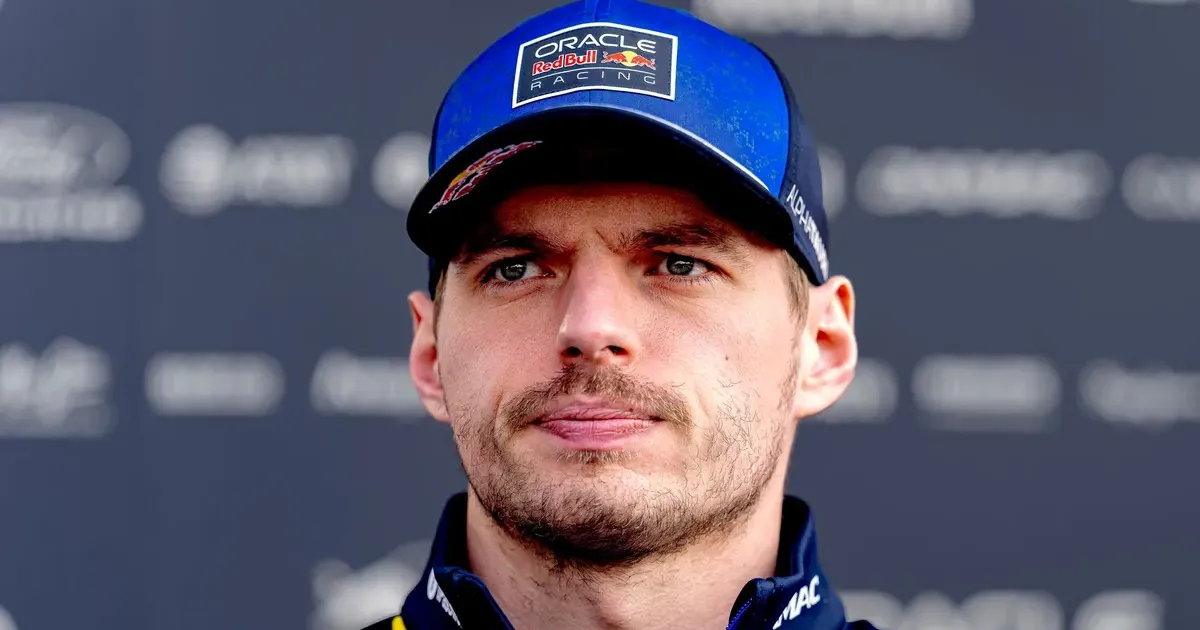
Max Verstappen's Japanese Grand Prix weekend turned sharply when he was eliminated in Q2 and qualified 11th at Suzuka. At a circuit where he had repeatedly dominated, Red Bull could not give him the balance needed to reach the final qualifying segment.
The result was more than a bad grid slot. It was a public sign that Red Bull's early 2026 problems were not limited to race execution or small setup misses. When Verstappen cannot drag a car into Q3 at Suzuka, the weakness is visible to the entire paddock.
Kimi Antonelli took pole for Mercedes ahead of George Russell, while Oscar Piastri placed McLaren in third. Verstappen, by contrast, was left trying to explain why the Red Bull felt so difficult at one of the most technical tracks on the calendar.
Suzuka Exposes Red Bull Balance Problems
Suzuka gives drivers little room to hide. The first sector demands commitment through the Esses, the Degners punish instability and 130R tests whether a car gives the driver enough confidence at high speed. A nervous platform costs lap time before the stopwatch even tells the story.
Verstappen's comments after qualifying pointed to a car that was difficult to trust. That matters because his normal advantage is precision under pressure. If the car will not rotate cleanly, or if the rear feels too unstable on entry, even a driver of his level starts giving away hundredths in every corner sequence.
Eleventh on the grid also changes the race equation. Instead of controlling tyre life from clean air, Verstappen had to start among traffic, dirty air and first-lap risk. Suzuka rewards rhythm; the midfield destroys it.
Antonelli Pole Sharpens The Contrast
Antonelli's pole made Red Bull's trouble look even sharper. Mercedes locked out the front row, and the result suggested that the new competitive order was no longer theoretical. The 2026 field had enough depth to punish any team that missed its window.
That is the modern Formula 1 penalty for a narrow setup range. A car can look competitive in one phase of a weekend and exposed in the next. With margins compressed, a small balance problem becomes a grid-position problem, and a grid-position problem becomes a strategic trap.
For Red Bull, the most worrying part was not losing pole. It was losing access to Q3 altogether. Dominant teams can survive an imperfect lap. They cannot ignore a weekend where their lead driver is eliminated before the top-ten shootout.
Race Strategy Became Damage Limitation
Starting 11th forced Red Bull into damage limitation. The team had to weigh whether tyre offset, early aggression or patience in traffic gave Verstappen the best chance to recover. None of those options is as clean as starting near the front and managing the race from position.
Overtaking at Suzuka is possible, but it is rarely cheap. A driver needs a pace advantage, battery deployment at the right point and enough tyre life to attack without falling into a later deficit. Running in traffic also exposes the car to overheating and dirty-air balance problems.
That is why the Q2 exit mattered even before the race began. Verstappen's Sunday was no longer about victory control. It was about how much could be salvaged from a qualifying failure.
Regulation Era Punishes Narrow Excellence
The hard lesson is not that Verstappen suddenly forgot Suzuka. It is that Formula 1's current competitive structure punishes teams whose advantage depends on a narrow operating window. Once the car falls outside that window, even a generational driver can look ordinary on the timing sheet.
That may be good for entertainment, but it carries a cost. The sport sells technical excellence and then celebrates when regulation, cost control and parity compress the field enough to humble the best. A shuffled grid is exciting. It is also a warning that the machinery is doing as much storytelling as the drivers.
Red Bull now has to prove the Japanese qualifying failure was a solvable setup problem rather than an early sign of deeper design limitation. If Verstappen can be left 11th at Suzuka, the old aura has already taken a hit.