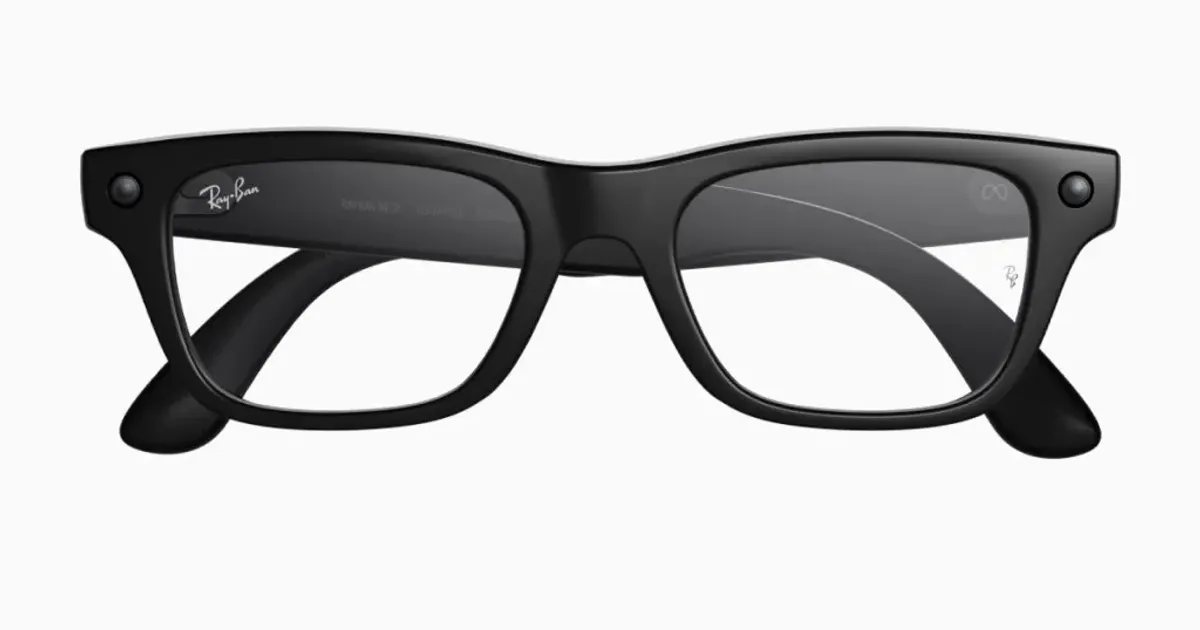
Meta and EssilorLuxottica are pushing AI glasses from novelty gadget toward daily eyewear, and prescription support is the reason the travel pitch has become more credible. A pair of smart glasses is easier to dismiss when it sits beside a user's real glasses. It becomes harder to dismiss when it is the pair that person already wears to see.
Ray-Ban Meta frames, newer Meta-branded glasses and EssilorLuxottica's retail network give the product something most wearable startups lack: optical fitting, lens customization, stores, brands and the ability to handle prescriptions. For travelers, prescription support turns the device from a face-mounted camera into a hands-free helper for translation, quick capture, audio prompts, landmark questions and phone-free moments in crowded places.
Prescription Support Changes the Addressable Market
Glasses are not only accessories for millions of buyers. They are medical devices worn all day. If smart frames cannot handle real prescriptions, progressive lenses, fitting adjustments, lens thickness, bridge comfort and optical aftercare, they remain a toy for people willing to compromise. EssilorLuxottica helps Meta solve that problem at retail scale.
The hardware challenge is also physical. Batteries, speakers, microphones, cameras, hinges and processors have to fit into frames that still feel normal on the face. Weight distribution, heat, temple pressure and nose fit decide whether someone keeps wearing the product after the first week. The best AI feature is irrelevant if the glasses become uncomfortable by lunch.
Travel Gives the Glasses a Clear Job
Travel is one of the cleaner use cases because the environment keeps producing small information problems. A user may need to understand a menu, identify a landmark, hear a translated phrase, capture a quick clip, follow an audio direction or ask a question while carrying luggage. A phone can do all of that, but a phone also pulls the user's eyes down.
Live translation is the most obvious travel feature. Hearing translation through open-ear speakers can preserve eye contact better than passing a phone back and forth. Audio navigation can reduce screen-checking in train stations or dense streets. Short hands-free photos can be useful when pulling out a phone would interrupt the moment.
The New Meta Line Pushes Beyond Ray-Ban
Meta's newer EssilorLuxottica partnership widens the bet beyond the original Ray-Ban frame identity. The company has moved toward more styles, lower entry prices and Meta AI built into the product from day one. The wider frame selection matters because smart glasses will not become mainstream if they look like one tech demo in one shape.
A broader catalog also makes prescription adoption easier. People choose eyewear through face shape, comfort, brand, lens type and habit. More frames mean more chances that the technology disappears into an ordinary buying decision. Ordinary adoption is exactly what Meta wants: a computer that enters daily life as eyewear, not as a headset.
Privacy Is Still the Hard Barrier
The same cameras and microphones that make the glasses useful make them socially difficult. Bystanders may not know when recording, visual AI or audio capture is active. Indicator lights help, but recent reporting about tampering and Meta's update to disable cameras when privacy lights are damaged shows why the concern is not theoretical.
Airports, restaurants, classrooms, concerts, offices and private conversations all create different consent expectations. A traveler may see convenience. The person across the table may see surveillance. Meta can write privacy policies, add app controls and improve device signals, but trust will be judged in public use, not in product copy.
AI Accuracy Matters More on the Face
A wrong answer on a phone is annoying. A wrong answer whispered through glasses while navigating a foreign city can be more consequential. Translation can fail with accents, slang, overlapping speech or poor connectivity. Landmark recognition can be uncertain. AI answers can sound confident while missing context.
Face-worn use raises the standard for wearable assistance. The device has to know when to answer, when to ask for confirmation and when to stay quiet. A face-worn assistant that interrupts too much or hallucinates at the wrong moment will feel more invasive than helpful.
The Social License Is the Product
Meta has one of its most practical routes into wearable computing because it is attaching AI to something people already wear. Prescription support, travel utility and EssilorLuxottica's retail reach all make the product more plausible than earlier smart-glasses attempts.
But practicality will not be enough. Travelers may welcome translation, audio cues and hands-free capture when the tools work quietly. They will reject the product if every interaction becomes a privacy negotiation. Meta is selling hardware, software and style. The harder sale is convincing everyone nearby that the glasses belong in ordinary public life.