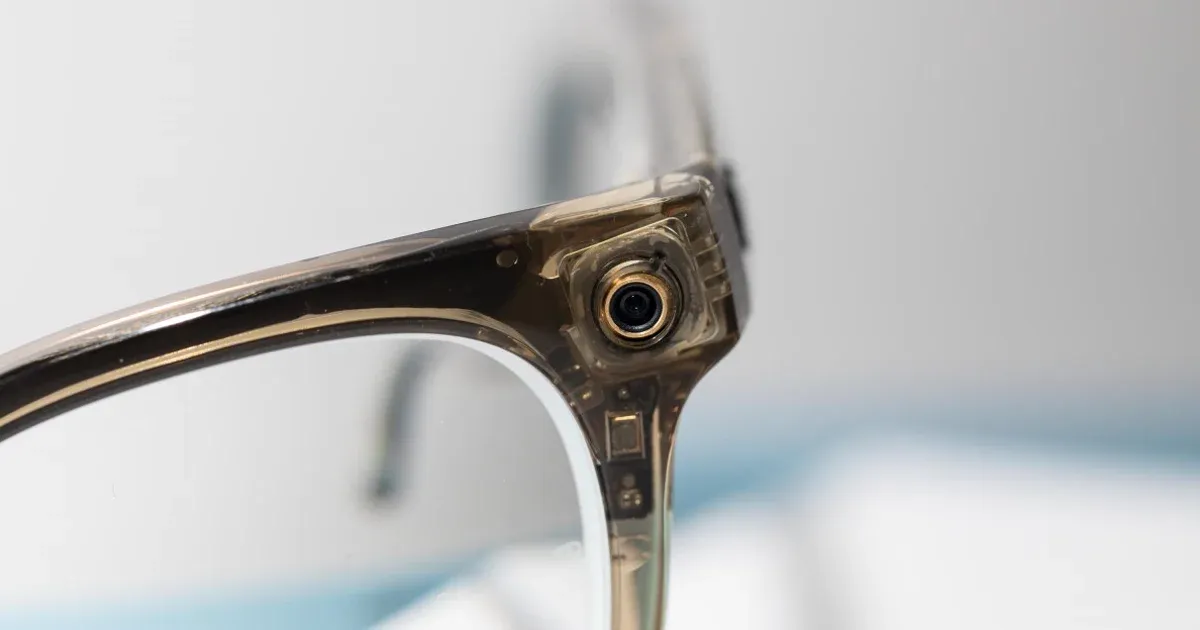
Apple's first smart glasses are reportedly moving toward a 2027 launch because privacy is being treated as a product constraint, not merely a setting. The central question is whether a company that sells itself as the safer steward of personal data can place a camera on people's faces without weakening that promise. For Apple, the answer must survive daily use rather than a controlled product demonstration.
On Sunday, July 26, 2026, The Verge, Engadget and Gizmodo reported details from Bloomberg's Mark Gurman about the unannounced device. Apple is now expected to show the glasses at its Worldwide Developers Conference next June and release them by the end of 2027. Earlier plans reportedly pointed to an introduction this year and an earlier 2027 arrival. The project is said to carry the internal code name N50.
The delay is partly tied to the privacy features and public explanation Apple wants ready before the product appears. The reporting does not identify privacy as the only cause of the shift, and Apple has confirmed neither the schedule nor the design. That work reaches beyond the person wearing the glasses. A face-mounted camera also collects information about bystanders who never agreed to enter its field of view. Because Apple has not announced the product, its dates, features and even its final camera configuration remain provisional.
A Camera Product Is Also a Bystander Product
One protection under consideration would stop recording when the device detects interference with its camera light. That would make the indicator part of the enforcement system rather than a signal that an owner could cover while continuing to film. A visible light can communicate that recording is active; an automatic halt can make an attempt to conceal that fact enforceable. Apple is also expected to favor on-device processing, reducing the need to send sensitive footage to remote servers.
Other reported limits concern what happens after an image is captured. The glasses may avoid facial recognition, continuous recording and the use of customer footage to train artificial intelligence models. Apple is also unlikely to send recordings to human reviewers, according to the reports. Local processing does not mean that nothing ever leaves a device, so upload exceptions, retention periods and access rules would still determine how much protection the design provides. None of those safeguards has been formally announced.
The company has reportedly tested more restrictive hardware. One version would omit the camera. Another could retain a camera for environmental sensing while blocking ordinary photo and video capture. Sensing could support navigation or scene awareness without building a personal recording library, but people nearby would need a way to understand which mode is operating. Those concepts would reduce surveillance risk while removing a feature that has helped make competing glasses easy to demonstrate and sell.
That tradeoff already defines the wider market. Meta's prescription-ready glasses make wearable assistants more practical, yet their usefulness keeps privacy at the center of adoption. Competing products have also shown why a bystander cannot infer a device's capabilities from an ordinary-looking frame. Apple is entering after consumers, courts and regulators have had more time to recognize that a recording device can look like familiar eyewear.
The Camera Decision Will Define Apple's Entry
Apple cannot settle that tension with a privacy slogan. A recording light is meaningful only if the wearer cannot defeat it, and local processing matters only if cloud transfers and human access are narrow enough to audit. The test will include who can retrieve raw footage, what triggers an upload and whether any captured material reaches model training. A camera-free model would be clearer, but it might leave the flagship product without the capability buyers most readily understand.
The final hardware will reveal which risk Apple considers harder to absorb: losing useful features or losing control of its privacy reputation. If the company ships a camera, bystander protection must be built into its defaults, not left to the customer behind it. Until Apple publishes those limits, the reported delay is evidence of an unresolved design choice rather than proof that the problem has been solved. The product will be judged by what its wearer cannot override.