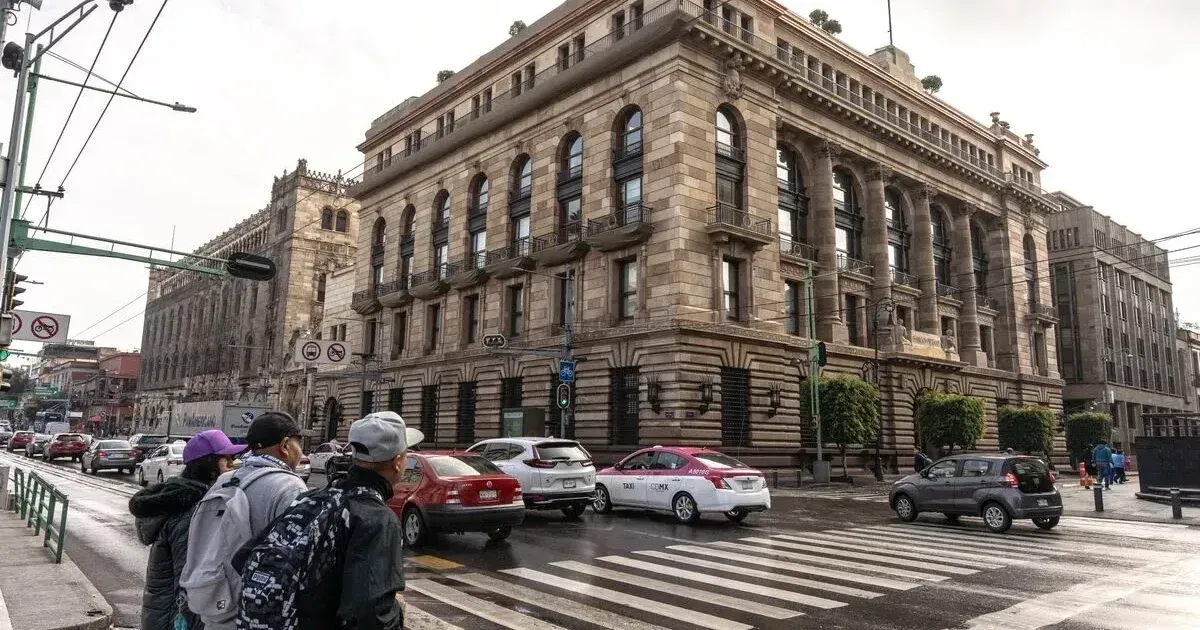
Aldo Heffner Rodríguez accepted the role of chief economist at Banco de México, ending a prolonged vacancy central to the nation’s monetary policy apparatus. Confirmation of the appointment came directly from the central bank, known colloquially as Banxico, which had operated without a permanent research head for half a year. Heffner takes the helm of the General Directorate of Economic Research during a period when inflationary pressures and currency volatility dominate the regional outlook. Banco de México confirmed the appointment on April 11, 2026.
Experts in Mexico City had expressed concern over the delayed naming of a successor since the previous director departed in late 2025. Stability within the research department is a requirement for the five-member board to execute precise interest rate adjustments. Investors have sought clarity regarding the bank's long-term forecasting capabilities as global trade tensions shift manufacturing toward the Americas.
Banco de México Restores Research Leadership
Recruiting an internal veteran or a seasoned economist from the Finance Ministry provides institutional memory that markets often reward. Heffner enters the position with a mandate to synthesize complex data streams into practical policy recommendations for the Board of Governors. Vacancy duration reached six months, a timeframe that some observers suggested might lead to a brain drain within the bank’s lower research tiers. Continuity in the chief economist role prevents bureaucratic drift and ensures that econometric models reflect current labor market dynamics. High stakes surround this transition because the Mexican economy faces structural shifts from increased foreign direct investment. Coordination between the research staff and the board requires a singular voice to manage internal disagreements over price stability targets.
Technical expertise defines the chief economist's influence over the $1.5 trillion Mexican economy. Heffner must navigate the intersection of domestic consumption and the external demands driven by North American supply-chain integration. Projections regarding gross domestic product growth have fluctuated as the manufacturing sector absorbs new capital from Asian firms relocating to northern Mexico. Research produced by the bank influences the cost of credit for millions of households and corporations. Failure to provide accurate inflation forecasts could lead to delayed policy responses, potentially overheating the economy or stifling growth through unnecessarily restrictive rates. Professional backgrounds for this specific role typically include doctoral-level training and extensive experience with emerging market debt cycles.
Economic Projections and Inflation Targets
Inflation figures in early 2026 stayed stubbornly above the bank's target range of 3 percent plus or minus one percentage point. Persistent service-sector price increases forced the board to maintain high nominal interest rates even as regional peers began easing cycles. Heffner will lead the team responsible for identifying the exact moment when domestic demand cools sufficiently to justify a pivot. Structural changes in the Mexican labor market, including minimum wage hikes and formalization efforts, have complicated traditional Phillips Curve assessments. Data transparency is a hallmark of the central bank, and the market anticipates that Heffner will continue the tradition of rigorous quarterly reports. Private-sector economists often use these reports to calibrate their own expectations for the Mexican peso.
Mexico’s central bank has tapped Aldo Heffner Rodríguez as its new chief economist, filling a role that has been vacant for half a year. The importance of central bank independence remains a defining theme for institutions navigating political pressure worldwide.
Independence of the central bank is a frequent topic of debate among international observers. Victoria Rodríguez Ceja, the current governor, has prioritized the bank’s autonomy since her appointment. Appointing a career economist like Heffner reinforces the perception of a technocratic institution that remains insulated from short-term political cycles. Political pressure to lower rates often intensifies during election years or periods of fiscal expansion, making the chief economist's objective data even more essential. Board members rely on the Research Directorate to provide a shield of empirical evidence against populist narratives. Strong internal debate is encouraged, yet the final output must present a unified front to global credit rating agencies.
Nearshoring and Currency Market Pressure
Capital inflows related to nearshoring have placed the Mexican peso in a unique position relative to other emerging market currencies. Strength in the currency helped reduce imported inflation throughout 2025, but it also squeezed margins for exporters in the automotive and aerospace sectors. Heffner must analyze how these investment flows affect the neutral interest rate over a multi-year horizon. Real interest rates in Mexico have stayed among the highest in the G20, attracting carry trade investors who seek yield in a relatively stable environment. Sudden reversals in these flows could trigger volatility that the central bank is mandated to contain.
Technical models used by the bank must now account for the large infrastructure projects currently under construction in the Tehuantepec isthmus.
Labor market tightness remains a critical variable for the new chief economist to monitor. Employment levels in northern industrial hubs reached record highs in the first quarter of 2026, leading to wage-push inflation concerns. Heffner will oversee the analysis of regional variations that often get lost in national-level statistics. Divergence between the industrial north and the agricultural south presents a challenge for a one-size-fits-all monetary policy. While the bank does not have a dual mandate like the U.S. Federal Reserve, the impact of rates on employment cannot be ignored by the board. Effective communication of these complexities to the public will be a primary task for the research department in the coming months.
Fiscal policy under the current administration has maintained a degree of discipline that surprised many early skeptics. Debt-to-GDP ratios have stayed within manageable limits, providing the central bank with a stable environment for monetary intervention. Heffner’s previous interactions with the Ministry of Finance may enable better understanding between the two most powerful economic entities in the country. Markets generally react poorly when the central bank and the treasury are at odds over growth forecasts or debt management. Cooperation is necessary for maintaining the $200 billion in foreign exchange reserves that protect the country from external shocks. Heffner is expected to maintain a conservative stance on reserve management while exploring modernized payment systems.
Modernization of the financial system also falls under the scope of the research teams. Digital payment adoption in Mexico has lagged behind some of its Latin American neighbors, prompting the bank to investigate a central bank digital currency. Heffner will likely oversee the cost-benefit analysis of such a move, considering the large unbanked population. Financial inclusion is often seen as a requirement for more effective monetary policy transmission. If more citizens participate in the formal banking sector, interest rate changes will have a more direct impact on consumer behavior.
The research department’s role in shaping these long-term structural reforms is just as significant as its monthly inflation forecasts. One challenge will be balancing innovation with the legendary risk aversion of the Mexican central bank.
The appointment of a career technocrat addresses the tension between Banxico and the current political mood by reinforcing institutional expertise. Choosing Heffner suggests that Governor Victoria Rodríguez Ceja is doubling down on institutional expertise at a time when other global central banks are bowing to political populism. This is a defensive play. By filling a six-month vacancy with a known quantity, the bank is signaling to Wall Street and the City of London that the era of erratic leadership transitions is over. The Mexican peso has long been a proxy for emerging market sentiment, and any perceived weakness in the bank’s research arm would have invited speculative attacks. Heffner is not only an economist; his appointment is a defense against market volatility.