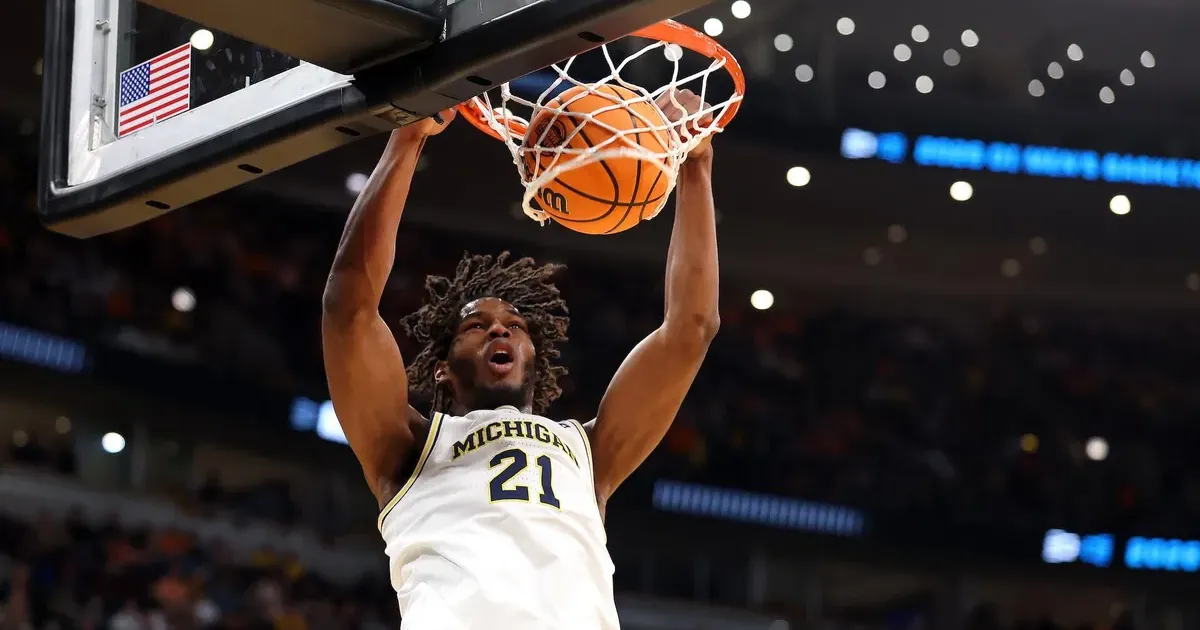
The 2026 men's Final Four started as a clean power bracket and ended as a Michigan statement. The Wolverines beat Arizona 91-73 in the national semifinal, then held off UConn 69-63 in the championship game at Lucas Oil Stadium in Indianapolis. What had looked like a heavyweight weekend with Michigan, Arizona, UConn and Illinois became something sharper: proof that the modern tournament increasingly rewards programs with depth, size, money-era roster planning and enough guard play to survive ugly possessions.
This was not a Cinderella Final Four. Illinois was the lowest seed at No. 3. Michigan and Arizona were No. 1 seeds. UConn was a No. 2 seed with recent championship muscle and Dan Hurley's late-March credibility. The bracket still had drama, but it was not the old March story of a small program hijacking the sport for a week. It was a power collision, and Michigan was built to win that kind of collision.
Michigan Made Arizona Look Too Thin
The semifinal against Arizona was the loudest signal. A 91-73 score in a Final Four game is not just a win; it is an exposure. Arizona had the talent to reach Indianapolis and the offensive quality to threaten anyone, but Michigan turned the game into a depth and physicality test. Once the Wolverines created separation, the Wildcats could not drag the night back into a possession-by-possession argument.
The margin mattered because Arizona was not an underdog story running on fumes. It was a top seed with real tournament credentials. Michigan beating that team comfortably showed how little margin even elite opponents had when the Wolverines were scoring, defending the rim and pushing tempo without losing structure.
UConn Still Had Championship Nerve
UConn reached the title game by beating Illinois 71-62, a result that felt familiar because the Huskies have made deep March runs feel routine under Hurley. They defended, leaned on interior toughness and got the kind of late-game execution that had carried them through other tournament pressure points. Illinois had size and scoring, but UConn kept the semifinal inside its preferred emotional range: physical, tense and controlled enough for the Huskies to trust their habits.
UConn's tournament nerve made the title game more than a Michigan coronation. UConn was chasing another championship-game win and had the confidence of a program that does not treat April basketball as a novelty. Any team beating the Huskies had to do more than play pretty. It had to win through contact, missed shots and the uncomfortable minutes when UConn's defense turns confidence into doubt.
The Final Was Won at the Line
Michigan did not beat UConn because everything looked smooth. The Wolverines were cold from three for long stretches and had to fight through a defensive game that pulled both teams away from their cleanest offense. Elliot Cadeau still gave Michigan the point-guard performance it needed, scoring 19 points and earning Most Outstanding Player honors.
The deciding detail was discipline. Michigan made 25 of 28 free throws, a brutal number for an opponent in a six-point title game. Trey McKenney's late three widened the gap when UConn was still trying to squeeze the game. Morez Johnson Jr. supplied the kind of frontcourt work that does not always define a highlight package but often defines a championship. UConn had answers from Alex Karaban and Tarris Reed Jr., yet Michigan kept finding the safer possession, the tougher rebound, the cleaner trip to the line.
The Big Ten Finally Converted
The result also changed the Big Ten's national conversation. For years, the league carried size, crowds and regular-season credibility without converting that weight into a men's national title. Michigan's win gave the conference its first championship since Michigan State in 2000 and gave the Wolverines their second title, the first since 1989.
The conference history matters because the Final Four field had two Big Ten teams. Illinois falling to UConn kept the league from owning both sides of the championship game, but Michigan's finish did more than rescue conference pride. It proved that a Big Ten roster could be built for the current tournament, not just the current league schedule.
The Lesson Is About Roster Power
The hardest part of the 2026 bracket for the rest of the sport is that Michigan's title did not feel accidental. The Wolverines had high-end players, older bodies, transfer-era answers, bench confidence and a coach in Dusty May who turned the pieces into a team before leaving for the NBA later in the summer. That is the modern college-basketball bargain: build fast, win now, then try to survive the next round of departures.
March can still produce shocks, but this Final Four showed where the sport is leaning. The teams that lasted had resources, roster construction and multiple ways to score. Michigan simply had the strongest version of that model. The upset romance did not disappear; it just did not reach Indianapolis. By the final buzzer, the message was plain enough: in the NIL and transfer era, thin teams can make noise, but deep teams are the ones more likely to leave with the trophy.