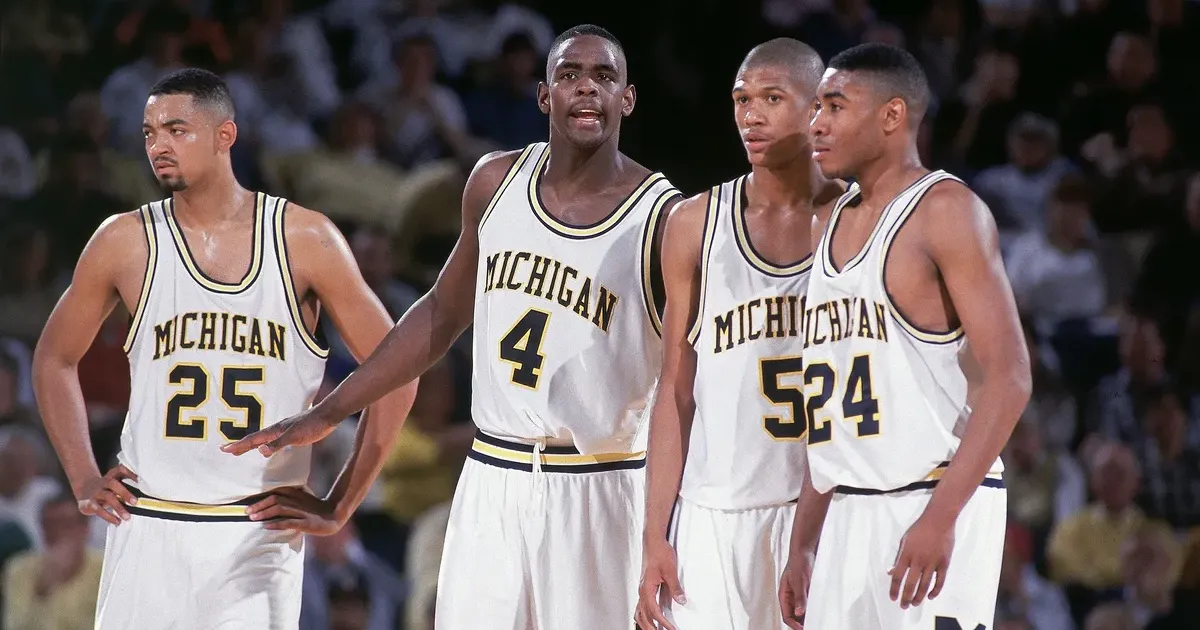
Indianapolis officials braced for the arrival of thousands of basketball fans on April 2, 2026, while Michigan, Arizona, UConn, and Illinois prepared for the national semifinals. Fans expect a high-stakes cultural moment when members of the 1990s Fab Five join the broadcast team to call the action for their alma mater. Chris Webber, Jalen Rose, Juwan Howard, Jimmy King, and Ray Jackson will participate in an alternative broadcast on Saturday evening. This group changed the sport with their progressive fashion and freshman dominance during the early 1990s. Warner Bros Discovery announced on Thursday that the reunion will occur on truTV and HBO during the Michigan-Arizona game.
Michigan enters the Final Four for the first time since 2018. That season ended with a loss to Villanova in the title game. Current players are attempting to secure the program's first national championship since 1989. Success on the court has renewed a fan base that still considers the 1992 and 1993 teams as the gold standard of collegiate basketball. Those squads became the first all-freshman starting lineup to reach a national title game. King told reporters that the group wants to support players who are currently close to making their own history.
Fab Five Returns to Michigan Airwaves
Alternative broadcasts have become a staple of modern sports media, but the inclusion of the entire Fab Five roster is a first for the NCAA tournament. TruTV will provide the platform for their reactions and storytelling throughout the contest. Traditional coverage will persist on TBS and TNT for viewers who prefer standard play-by-play. Howard and Rose bring extensive television experience to the booth, while Webber has spent years as a lead analyst for professional games. The chemistry between these five athletes remains a central draw for a generation of fans who wore baggy shorts and black socks in their honor.
"We want to just come together and be fans of guys close to doing something historical," said Michigan alumnus Jimmy King.
Program loyalists remember the Fab Five for their swagger as much as their statistics. They reached consecutive title games but never secured the trophy. This weekend provides a chance for the 1990s icons to witness a new generation finishing the job. Semifinal action begins with UConn facing Illinois, followed by the Michigan-Arizona nightcap. Broadcast executives expect the alternative feed to capture a meaningful share of the younger demographic. Engagement metrics for these star-studded panels often outweigh those of traditional booths during high-pressure tournament moments.
Betting Markets Favor Illinois and Michigan
Oddsmakers at BetMGM report heavy action on both semifinal matchups as the Saturday tip-off approaches. Illinois is currently a 1.5-point favorite over UConn in the early game. Public betting splits show 51% of tickets and 55% of the total money favoring the Huskies to cover the spread. Borgata sportsbook director Thomas Gable noted that the market opened with Illinois at -2 before settling at the current number. He expects the line to move back toward the Illini as game time nears. The total points line holds steady at 139.5.
Michigan enters its matchup with Arizona as a 1.5-point favorite. This pairing features two number-one seeds in a game many analysts describe as the de facto national championship. Money is almost perfectly split between the two programs, with 51% of bets favoring Arizona. The point total for this late-night clash is 157.5, reflecting the high-octane offensive capabilities of both rosters. Gable indicates that the betting action is among the most balanced he has seen in a Final Four setting. A win for Michigan would likely position them as the favorite for Monday night. Both Arizona and Illinois are aiming to capitalize on their long-awaited return to the national spotlight.
$615,000 was the payout for one gambler who backed UConn against Duke in the Elite Eight. That bettor placed $300,000 on the moneyline before the Huskies secured a 73-72 victory. Braylon Mullins hit a last-second three-pointer to seal that win and deny Duke a trip to Indianapolis. Such high-volume wagering is becoming more common as legal sports betting expands across the United States. Sportsbooks expect several more six-figure wagers to arrive before the Saturday double-header begins.
Ticket Prices Slump After Duke Exit
Secondary market prices for the 2026 Final Four experienced a sharp decline following the elimination of the Blue Devils. Data from Gametime indicates that get-in prices peaked at $594 on Sunday before Duke lost to UConn. Once the Duke collapse was finalized, the minimum entry price dropped to $524 for the Saturday session. Average ticket prices currently sit at $1,397, while the most expensive seats are listed at $7,869. The absence of an enormous brand like Duke often softens the immediate demands for tickets among neutral fans.
Championship Monday tickets are considerably more affordable than the semifinal session. Fans can enter the stadium for $192, though the average price stays near $857. The highest-priced ticket for the title game is currently $17,599. Market dynamics show that the two-for-one nature of the Saturday semifinals provides more perceived value for the general public. Women's tournament tickets follow a different trend, with the championship game being more expensive than the Final Four matchups. Women's final in Phoenix has a get-in price of $236.
Travel costs to Indianapolis remain high despite the dip in ticket prices. Hotels in the downtown corridor are at 98% capacity. Local businesses expect a serious economic boost from the visiting fan bases of Michigan and Illinois, both of which are within driving distance of the city. Arizona and UConn supporters are arriving via heavy flight schedules at Indianapolis International Airport. The city has hosted numerous Final Fours, and the logistics of the event are functioning without major delays.
Expansion Clouds Gather Over Indianapolis
NCAA executives and conference commissioners are meeting in Indianapolis to discuss the inevitable expansion of the tournament field. The current television contract ends in five years, creating a deadline for structural changes. SEC and Big Ten leaders previously used their influence to secure more power in the College Football Playoff. They are now eyeing a similar overhaul for basketball. Connecticut athletic director David Benedict recently stated that a breakaway or expansion is a matter of when, not if. He hopes the Big East will be included in any new postseason configuration.
Competitive balance is the primary concern for mid-major programs that rely on the current 68-team format. The gap between the wealthy power conferences and the rest of the field has widened due to athlete compensation and transfer movement. Big Ten and SEC programs have the financial resources to dominate the recruiting trail. The disparity makes the "Cinderella" stories of the past more difficult to replicate. Expansion would likely favor middle-of-the-pack teams from the largest conferences over champions from smaller leagues. The tournament is the crown jewel of the industry, but its future format is in flux.
Greg Sankey, the SEC commissioner, has been vocal about re-evaluating the postseason structure. He has challenged the idea that all conferences must stay together under the current model. His comments from two years ago still resonate among administrators who fear a fractured college sports environment. The Big Ten and SEC could theoretically form their own postseason event if their demands for revenue and authority are not met. The weekend in Indianapolis is a backdrop for these tense negotiations.
The Elite Tribune Strategic Analysis
Expansion talks suggest a cynical disregard for the very chaos that makes March lucrative. Every move made by the NCAA and power conferences in Indianapolis points toward a future where the tournament is no longer a meritocracy. Money dictates the movement of these programs, and the proposed expansion of the tournament serves one master: television revenue. SEC and Big Ten leadership is essentially holding the postseason hostage, demanding a larger share of a pie they did not bake alone. The strategy will inevitably suffocate the mid-major miracles that built the tournament's brand.
A sixty-eight team field already allows for mediocre teams to find a path to the Final Four. Increasing that number to eighty or more will turn the regular season into a series of meaningless exhibitions. The current model survives on scarcity and high stakes. Dilute the product, and you destroy the tension that keeps viewers engaged during the first weekend of play. The power brokers are trading long-term cultural relevance for short-term balance sheet gains.
Corporate greed is winning the war for the soul of college basketball. If the tournament expands to satisfy the egos of power conference commissioners, the magic of the upset will vanish. Fans do not want to see the tenth-best team from the Big Ten; they want to see a small school with everything to lose take down a giant. When the bracket becomes a bloated reflection of conference standings, the Big Dance will stop being a national treasure. Short-term profit is a hollow victory.