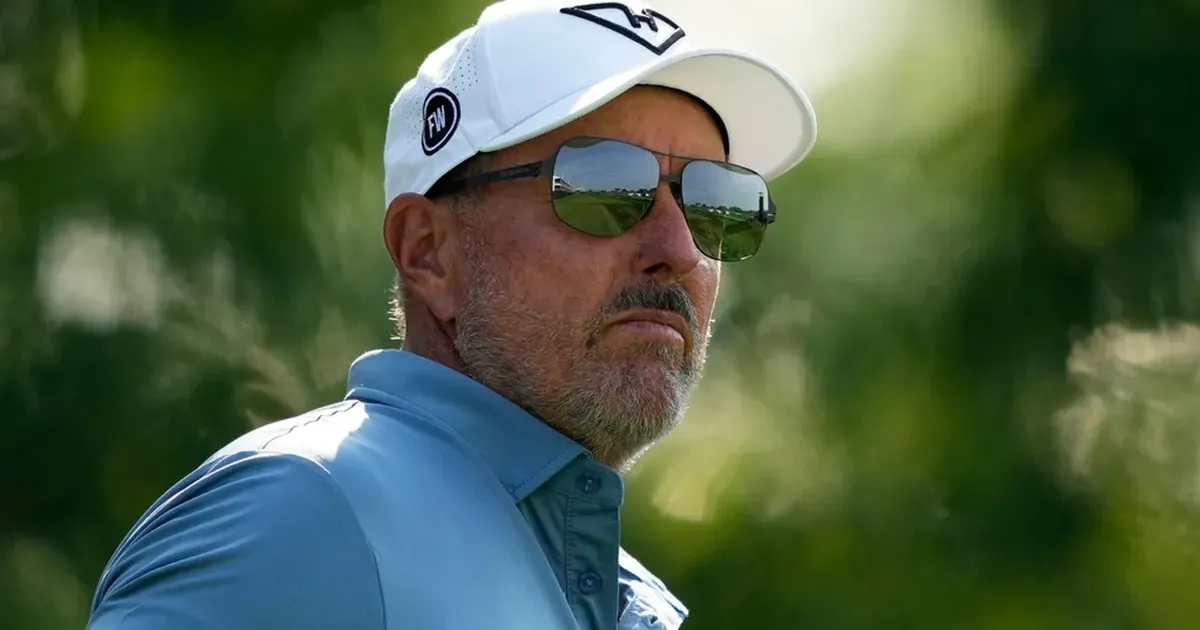
Phil Mickelson's withdrawal from the 2026 Masters was initially a family matter intersecting with Augusta tradition. Months later, the absence has become a wider golf story. Mickelson stepped away from the Masters because of a personal health matter involving his family, later withdrew from the PGA Championship, and remains one of the biggest missing names around the summer major conversation.
Privacy still matters. Mickelson did not owe the public a diagnosis, a timeline or family detail. The news is his absence from competition and what that absence does to golf's calendar, not the private facts behind it. For a player whose career has been tied to major Sundays for more than three decades, even a respectful absence changes the shape of the season.
Family privacy comes first
Mickelson's statement around the Masters made the priority clear: he would be away from competition while his family handled a personal health matter. Mickelson's statement should be enough for the public record. Sports coverage can discuss the competitive effect without treating private health circumstances as an open file.
Editorial restraint is especially important because fame can create a false sense of entitlement. A major champion's schedule is public. His family's medical circumstances are not. The proper boundary is plain: report the withdrawals, avoid diagnosis speculation and keep the analysis on golf.
Masters absence hit more than the field
Mickelson's absence did not remove a current betting favorite from Augusta. It removed a living part of the tournament's modern memory. His Masters wins in 2004, 2006 and 2010, his short-game imagination and his connection with Augusta crowds made him more than another past champion on the tee sheet.
His absence changes the atmosphere more than the math. The Masters can still produce a great champion without Mickelson. It already has a deep competitive cast. But the tournament's emotional continuity depends partly on familiar figures returning, aging, missing cuts, making one more charge or simply reminding viewers how much time has passed.
PGA withdrawal confirmed a longer pause
The later PGA Championship withdrawal made clear that the Masters was not a one-week scheduling decision. Mickelson's 2026 competitive year had already been limited, including missed LIV events and only brief returns. Once another major passed without him, the story became less about one tournament and more about an extended interruption.
Golf careers often fade in fragments rather than through a formal retirement. A player misses one event, then another, then appears less often, then becomes part of the game's memory before making any final announcement. Mickelson has not framed this absence as retirement, and it should not be treated as one. But the season has made his future presence feel less automatic.
LIV still leans on older star power
Mickelson's limited schedule also exposes a LIV Golf problem. The league was built with major winners, name recognition and familiar figures who could pull attention away from the PGA Tour. Older star power helped launch the product, but star-driven identity becomes fragile when the stars are unavailable, injured, aging or no longer contending.
The point concerns LIV's business reality, not Mickelson's family decision. A league cannot depend forever on the gravitational pull of names who built their reputations elsewhere. It needs weekly sporting tension, rivalries, younger characters and stakes that survive when a founding figure is absent.
Golf is leaving the Mickelson-Woods era
The broader major calendar keeps showing the same transition. Tiger Woods and Phil Mickelson are no longer reliable fixtures at every major, and the sport has to build audience habits around players who did not create the boom years. The transition does not make the present weaker, only less protected by nostalgia.
Golf still has stars, but stars need repeated major moments to become cultural anchors. The Woods-Mickelson era gave the sport a familiar storyline even when neither player won. Their absence forces tournaments, broadcasters and tours to sell the current competition on its own terms.
Respect and reality can coexist
Mickelson's family priority deserves respect, and the competitive consequences can still be discussed. Respect and competitive analysis are not opposing positions. The sport can give him privacy while recognizing that his long absence leaves a commercial and historical gap.
The 2026 season has made golf's transition more difficult to ignore. Augusta, the PGA Championship and the Open conversation can move forward without Mickelson, but they do so with one more reminder that the old engines of attention are not permanent. Golf's next era will not be defined by whether its icons return for ceremonial applause. It will be defined by whether the players now carrying Sundays can make the audience care without them.