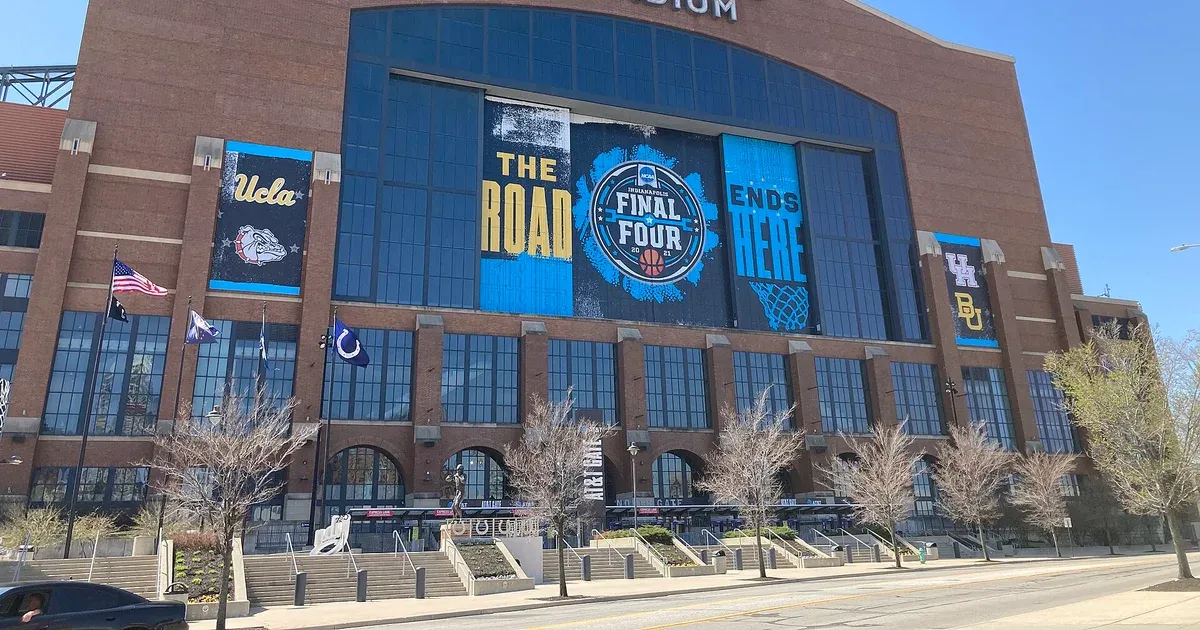
Michigan did not simply enter Indianapolis with a strong roster and a favorable market price. The Wolverines turned that pressure into the 2026 men's national championship. The pre-Final Four question was whether their depth, size and defensive balance could survive the two-game test. The answer came in two parts: a 91-73 semifinal win over Arizona, then a 69-63 title-game win over UConn at Lucas Oil Stadium.
That result changes the way the story should be read. Before the weekend, odds boards and analysts could argue about Arizona's price, Michigan's matchup edge, UConn's March habits and Illinois' shot-making. After it, Michigan had the only proof with consequence. The Wolverines finished 37-3, won the school's first national title since 1989 and gave the Big Ten its first men's championship since Michigan State in 2000.
Arizona Could Not Make The Favorite Blink
The Arizona semifinal looked dangerous on paper because the Wildcats had the athletic frontcourt and tempo to drag Michigan into a faster, looser game. That threat never became the main story. Michigan's 91-73 win was decisive enough to strip the matchup of its suspense before the final minutes. The Wolverines did not have to win ugly or survive one frantic possession. They controlled the shape of the game and made Arizona chase.
That confirmed the difference between a betting label and a tournament team prepared for pressure. Michigan's advantage was not only talent. It was the ability to keep structure while playing with pace, to use size without becoming slow and to punish mistakes without letting the game turn reckless. Arizona had NBA-level pieces. Michigan had the more complete collective answer.
UConn Made The Final More Demanding
UConn reached the championship game after beating Illinois 71-62, carrying the feel of a program that knows how to handle the final weekend. Dan Hurley's team had already survived a dramatic Elite Eight comeback against Duke, and the Huskies were chasing another title run after recent championship success. That made the final a different problem from Arizona. It was less about absorbing speed and more about handling a team comfortable with late-game strain.
The 69-63 score showed that Michigan's title was not built on one decisive blowout. UConn fought through a rough shooting night and stayed close enough to make the last stretch uncomfortable. Alex Karaban led the Huskies with 17 points and 11 rebounds, while Tarris Reed Jr. closed a powerful tournament run with another double-double. Michigan still had enough control to finish the job.
The Roster Was Built For April
Michigan's championship also said something about the modern economics of college basketball. The best teams are no longer assembled through recruiting alone. They are built through retention, transfers, NIL support, scouting and fast roster repair. Dusty May's group looked like a roster designed for the last weekend, not just for a good regular-season ranking.
That does not cheapen the players' work. It explains why the old Final Four romance has changed. By Indianapolis, the field was heavy with power programs, deep payrolls, professional evaluation and older, deeper rosters. Illinois was cast as the nearest thing to a surprise team despite being a major Big Ten program. The sport still produces upsets in March, but the final weekend increasingly rewards programs that can buy, keep and organize depth.
Expectation Became Evidence
Being favored is not only a compliment. It is an invoice from fans, donors and athletic departments who read the bracket as a required return on investment. Michigan paid it. The Wolverines did not just look complete in projection models; they proved completeness against two different opponents under the brightest pressure of the season.
Money and structure now shape the road to the Final Four more openly than the sport likes to admit. They buy depth, keep rosters older and give coaches fewer excuses. But they still have to survive forty minutes, and then forty more. Michigan's title carries weight because it completed that chain. The roster looked built for April, then played like it when April stopped being theoretical.