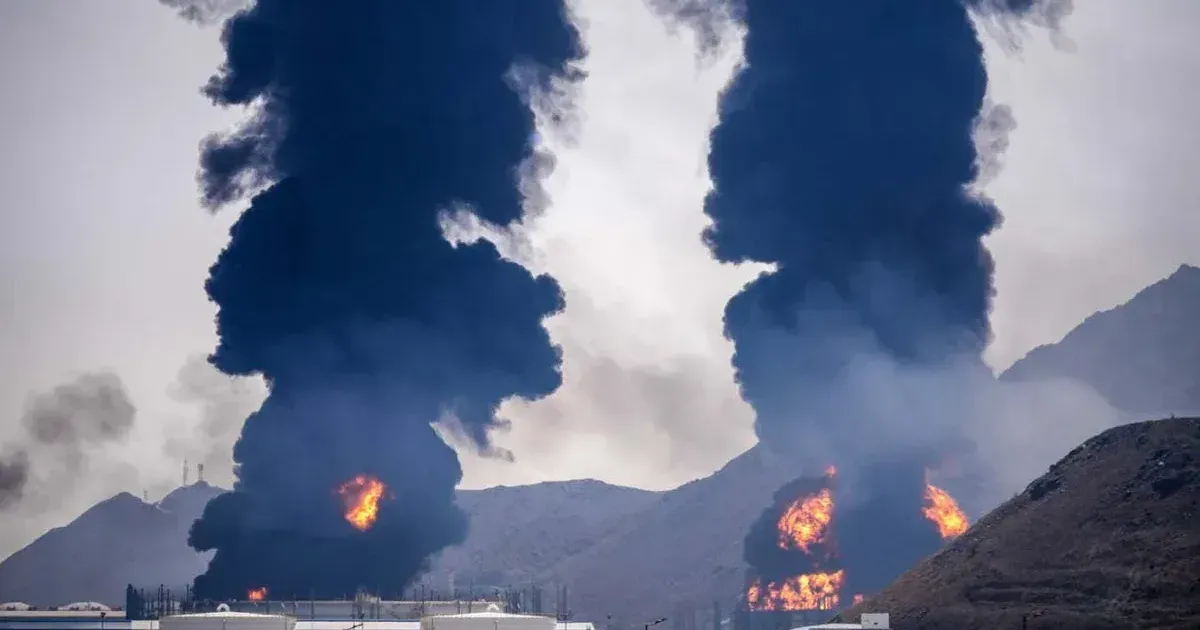
Middle East hostilities flared in the Strait of Hormuz on March 18, triggering a sharp increase in global crude prices and renewed urgency for energy independence. Regional instability interrupted critical shipping lanes, forcing tankers to anchor or divert around the Cape of Good Hope. Oil markets reacted with volatility, pushing Brent crude futures above $120 per barrel for the first time in several years. Global energy security now rests on a knife edge as traders weigh the duration of the current maritime blockade. Military maneuvers in the Gulf have effectively weaponized the flow of hydrocarbons to Western markets. The Middle East conflict forced a faster clean-energy policy argument.
Shipping lanes in the Strait of Hormuz remained congested on Tuesday, according to satellite data. This chokepoint handles approximately 20% of global petroleum consumption, making any disruption a systemic risk to the global economy. Insurance premiums for maritime freight increased 400% in forty-eight hours. Shipping companies like Maersk and Hapag-Lloyd suspended transit through the region entirely. These logistical failures require a reassessment of fossil fuel dependence across the industrial world. Economic pressure from rising gas prices usually dictates voter behavior in the United States and United Kingdom. High costs at the pump create immediate political demand for alternatives that are not subject to the whims of overseas cartels. Solar and wind energy projects, once viewed through an environmental lens, are now being rebranded as essential national security infrastructure. Domestic power generation provides a hedge against the price shocks inherent in global oil markets.
Middle East Instability Impacts Global Oil Markets
Price surges in 2026 have already begun to filter through to consumer electricity and heating bills. Analysts at Goldman Sachs noted that the current supply gap cannot be easily filled by shale producers in West Texas. Production capacity limits mean that immediate relief from domestic drilling remains unlikely. Markets are pricing in a long-term premium for geopolitical risk that could persist for years. Refineries in Europe are particularly vulnerable to these sudden shifts in crude availability. Still, the immediate consequence of high oil prices is a dramatic reduction in the payback period for renewable energy installations. Businesses that previously hesitated to invest in onsite solar arrays are now finding the return on investment happens in months, not years. Energy efficiency measures have moved from the periphery of corporate strategy to the center of balance sheet management. Manufacturers are decommissioning gas-fired boilers in favor of industrial heat pumps to avoid volatile fuel costs.
High prices are the most effective subsidy for clean energy that exists, forcing a total realignment of capital toward technologies that do not require a global supply chain for fuel.
For one, the current crisis mirrors the 1973 oil embargo, which forced the first major push for fuel efficiency in the automotive sector. Unlike the 1970s, however, the world now possesses commercially workable alternatives that can be scaled rapidly. Battery storage technology and photovoltaic cells have seen price drops of nearly 90% over the last decade. Capital is flowing into these sectors at a rate that suggests a permanent move away from carbon-heavy assets.
Strait of Hormuz Blockage Triggers Price Spikes
Policy experts in Washington and Brussels are accelerating legislative packages to shorten the permitting time for grid-scale wind farms. Current regulations often mean a decade of waiting before a new offshore wind project can connect to the national grid. Emergency orders are now being drafted to bypass these bureaucratic hurdles in the interest of national defense. Energy independence is no longer a rhetorical goal but a practical requirement for sovereign stability. Rapid deployment of localized energy resources reduces the strategic leverage of hostile actors in the Middle East.
In fact, the International Energy Agency has updated its forecast to suggest that renewable energy will account for 50% of global power generation by 2030. This accelerated timeline is a direct result of the current conflict and its impact on trade routes. Investment in green hydrogen is also seeing a resurgence as heavy industry seeks to replace natural gas. Governments are offering tax credits and direct grants to ensure that the transition remains ahead of the curve. These fiscal incentives are designed to pull forward demand that would have otherwise materialized over twenty years.
Meanwhile, the automotive industry is witnessing a surge in electric vehicle orders as gasoline prices hit record highs. Car buyers in the UK and US are opting for battery-powered models to insulate themselves from the daily fluctuations of the global market. Charging infrastructure is expanding to meet this demand, supported by public-private partnerships. Fleet operators are converting delivery trucks to electric power to lock in predictable operational costs for the next decade. Gasoline demand is projected to enter a terminal decline in several major economies by the end of the year.
Energy Security Policies Focus on Renewable Growth
Supply chain constraints for minerals like lithium and cobalt remain a major challenge for the clean energy sector. Most of these materials are processed in China, creating another layer of geopolitical risk for Western nations. Efforts to diversify mineral sourcing have intensified, with new mining projects opening in Australia and Canada. Recycling programs for electronic waste are also being scaled to reclaim valuable metals from old batteries. Stability in the energy sector requires a broad approach to the entire production cycle. Yet, the transition is not without friction for workers in traditional energy sectors. Coal miners and oil rig operators face uncertainty as capital shifts toward newer technologies. Transition programs are being funded to retrain these workers for roles in wind turbine maintenance and battery manufacturing. Regional economies that rely on fossil fuel extraction are lobbying for a slower pace of change to protect their tax bases. These internal political battles are slowing the adoption rate in certain jurisdictions despite the clear economic signal from global markets.
For instance, the British government recently announced a series of grants for homeowners to install air-source heat pumps. This move aims to reduce the country's reliance on imported gas from the Middle East and Russia. Initial data suggests that applications for these grants have tripled since the Strait of Hormuz was first obstructed. Public awareness of the link between domestic heating and global conflict has never been higher. Consumers are making choices based on both cost and a desire for strategic autonomy.
Technological innovation continues to drive down the cost of green alternatives even as fossil fuel prices climb. Researchers are testing solid-state batteries that promise longer ranges and faster charging times for electric vehicles. Grid-scale storage solutions using iron-air batteries are also nearing commercial viability. These developments solve the problem of intermittency that has long plagued wind and solar power. Reliability is the final hurdle for the total replacement of thermal power plants. Separately, the maritime industry is exploring nuclear-powered merchant ships to avoid the need for bunkering fuel in unstable regions. Small modular reactors could provide the propulsion needed for the largest container vessels. The move would decouple the shipping industry from the price of oil entirely. Development of these vessels is currently in the prototype stage with several major navies providing technical assistance. Maritime transport is one of the hardest sectors to decarbonize but the current war has made it a priority.
Energy markets are ultimately driven by the cold logic of cost and risk. As long as the Middle East is still a theater of war, the risk of relying on its exports will remain unacceptably high. Global capital will continue to flee toward the certainty of wind, sun, and domestic nuclear power. The shift compels a reorganization of the global geopolitical order that has existed since the end of the Second World War. Control over energy is moving from those who own the land to those who own the technology.
Why War Is Accelerating the Energy Transition
The sharp lesson is that clean-energy growth is no longer driven only by climate promises. War, fuel risk and industrial competition are pushing governments toward systems they can control closer to home. That can help the transition, but it also strips away the comfortable story that policy alone is steering the shift.
Energy security is doing work that speeches could not. Politicians spent years selling renewables as virtue; the market now sells them as survival. That shift is harsher, but it is also more durable. When oil routes become military targets, wind farms, batteries and domestic grids stop looking like lifestyle choices and start looking like strategic armor. The countries that understand this first will write the next energy order.