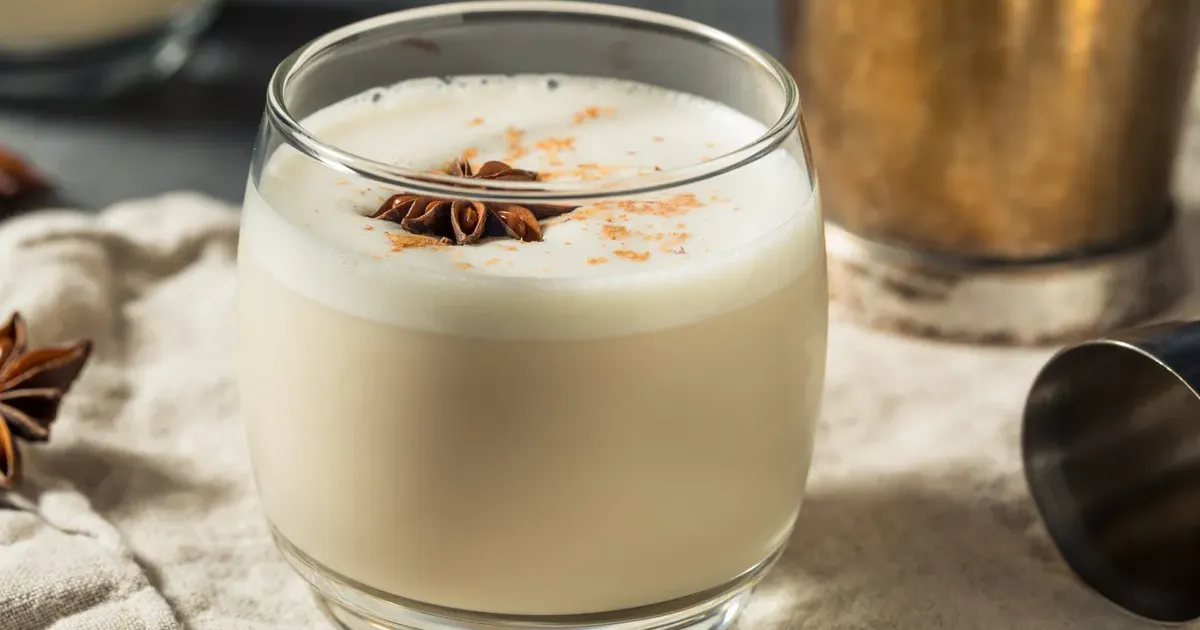
High-end beverage programs across London and New York are stripping back their menus in a move toward extreme minimalism. This shift finds its latest expression in a two-ingredient build that relies on the chemical teamwork between dairy lipids and unrefined floral sugars. While the cocktail industry spent a decade obsessed with homemade bitters and centrifuge-clarified juices, the current momentum favors simplicity. Mixologists now point to the milk and honey cocktail as the standard for this new era of functional elegance.
Ingredients in this pairing are deceptive in their simplicity. The drink requires only milk and honey, yet the quality of these two components dictates the entire experience. According to sourcing experts, the fat content of the milk acts as a carrier for the complex aromatic compounds found in artisanal honey. This creates a mouthfeel that rivals much more complex cream-based liqueurs without the need for stabilizers or artificial thickening agents.
Sourcing Components for the Milk and Honey Profile
Quality begins at the farm level where the terroir of the honey provides the primary flavor profile. Clover honey offers a mild, grassy sweetness that blends seamlessly into cow milk, whereas buckwheat or wildflower honey introduces earthy, strong notes. Producers in New Zealand have seen a surge in exports of high-grade Manuka honey specifically for the premium hospitality sector. In fact, the floral source of the nectar determines whether the drink leans toward a floral brightness or a deep, molasses-like richness.
Dairy selection remains equally critical to the final texture. Whole milk provides the necessary fat globules to capture the honey molecules, preventing the sugar from feeling cloying on the palate. Some bars are experimenting with high-protein filtered milks to enhance the structural integrity of the drink when shaken. But the traditionalists insist that organic, grass-fed dairy offers the best flavor balance for a two-ingredient build.
Honey provides the structure that refined sugar lacks.
Thermal Versatility in Seasonal Drink Service
Preparation methods vary based on the desired serving temperature, making this one of the few cocktails that transition effortlessly between seasons. For a cold application, bartenders must use a specific technique to prevent the honey from seizing when it hits chilled liquid. A common method involves creating a honey syrup by slightly tempering the nectar with a small amount of warm milk before adding it to the rest of the cold dairy. This ensures a homogenous mixture that maintains its silkiness after being shaken with ice.
Warm versions of the drink offer a different sensory experience. Heating the milk to approximately 150 degrees Fahrenheit allows the honey to dissolve instantly, releasing volatile aromas that remain trapped at lower temperatures. The steaming process also creates a light micro-foam that alters the texture of the drink. Separately, the heat can mellow the sharp bite of certain high-acidity honeys, resulting in a smoother finish. To that end, the warm version has become a staple in late-night lounge menus during the colder months in the United Kingdom.
"The beauty of a two-component build lies in the absolute transparency of quality," notes Marcus Thorne, lead strategist at DrinkSmith Global.
Thorne suggests that when there are no garnishes or secondary mixers to hide behind, every flaw in the base ingredients becomes visible. The transparency has forced venues to invest in better supply chains. For instance, a bar using industrial honey and skim milk will produce a thin, one-dimensional drink that fails to justify a premium price point. Still, venues that source locally are finding high margins in these low-labor recipes.
Economic Shifts Toward Low Complexity Spirits
Market data from early 2026 indicates a growing consumer fatigue with overly complex cocktail descriptions. Patrons are more and more gravitating toward drinks they can understand and replicate at home. The milk and honey cocktail fits this demand perfectly, offering a sense of nostalgic comfort combined with a modern focus on clean labels. By contrast, the labor costs associated with complex, multi-step drinks have squeezed the margins of independent bars.
Simple builds demand flawless execution.
And the speed of service remains a significant factor in the popularity of this two-ingredient drink. A bartender can execute a milk and honey build in under sixty seconds, compared to the five minutes required for a layered craft cocktail. In turn, this allows high-volume venues to maintain a luxury feel without the bottleneck of long wait times. Even so, the presentation remains elevated when served in a chilled coupe or a heavy ceramic mug.
Global Variations on Dairy and Nectar Pairings
Regional adaptations are beginning to emerge as the drink gains global traction. In some Mediterranean markets, bartenders are substituting traditional honey with thyme or orange blossom varieties to reflect local flora. At the same time, the rise of oat and nut-based milks has opened the cocktail to a wider audience. Yet, these plant-based alternatives require different honey ratios to compensate for the lack of animal fats and the presence of natural grain sweetness. In particular, cashew milk has emerged as a favorite among vegan mixologists due to its natural creaminess.
Research into the history of this pairing reveals deep roots in ancient dietary practices. Many cultures have used milk and honey as a restorative tonic for thousands of years. Modern mixology is simply reapplying these established flavor affinities to the cocktail bar environment. Prices for these drinks often range from $16 to $22 in major metropolitan areas, reflecting the cost of the premium raw materials. Every sip is reminder that luxury does not always require a long list of ingredients.
The Elite Tribune Perspective
Mixology has entered a phase of aggressive subtraction that exposes the mediocrity of standard bar programs. For years, we have been subjected to the tyranny of the twelve-ingredient cocktail, where a dozen expensive tinctures are hidden behind a wall of dry ice and dehydrated citrus. The sudden fascination with milk and honey is less a return to our roots and more an admission of exhaustion. The industry has finally realized that the average consumer cannot distinguish between three types of bitters in a drink, but they can certainly tell the difference between cheap milk and the good stuff.
But do not be fooled by the branding of this as a sophisticated evolution. At its core, charging twenty dollars for a glass of milk and a spoonful of honey is a brilliant exercise in high-margin laziness. We are paying for the audacity of the bartender to do less. Still, if this trend kills off the era of the overly sweet, neon-colored sugar bombs that have dominated menus for too long, then perhaps the price of entry is worth it. It is a cynical maneuver, certainly, but one that results in a at its core better beverage. Minimalism is the ultimate shield for the talentless, yet in the hands of a master, it is a devastatingly effective tool for quality control.