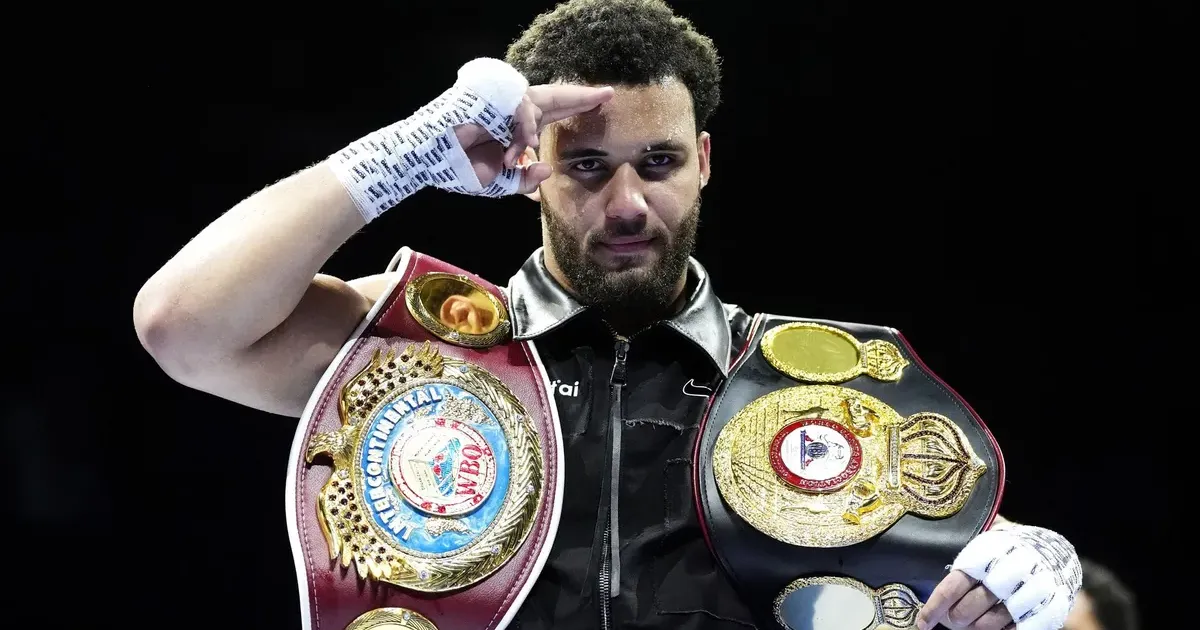
Moses Itauma did more than win a heavyweight step-up in Manchester. He stopped Jermaine Franklin in the fifth round at Co-op Live on March 28, 2026, and turned a durability test into a career accelerant. Franklin had gone the distance with Anthony Joshua and Dillian Whyte. Against Itauma, he suffered his first knockout defeat.
That detail is the value of the result. Heavyweight prospects can look spectacular against soft opposition, but Franklin had built his name on surviving pressure, taking rounds from bigger names and making opponents work. Itauma did not merely bank a points win over an experienced American. He found a finish that had eluded more established fighters.
Itauma Passed a Test That Was Supposed to Take Longer
The knockout came from a heavy uppercut after Itauma had already shown patience and control. Reports from ringside described Franklin being hurt earlier in the fight before the fifth-round finish ended the contest cleanly. For a young heavyweight, that matters more than a highlight alone. The performance showed timing, range judgment and enough calm not to force the ending before it was available.
Itauma's team chose Franklin because he was not known as a quick collapse opponent. He had size, experience and recent winning form. A decision victory would have moved Itauma forward. A stoppage changed the conversation because it suggested his power can carry upward against fighters who are used to absorbing heavyweight shots.
The Usyk Talk Still Needs Discipline
After a win like this, the title conversation becomes unavoidable. Itauma has been linked with bigger names and the Oleksandr Usyk orbit will follow any unbeaten heavyweight who can sell tickets and produce violent finishes. The problem is that championship readiness is not measured by one emphatic knockout. Usyk-level fights ask different questions: footwork, feints, angles, long-round concentration and the ability to keep solving problems after the first clean shot does not end the night.
The Franklin result earns Itauma better opponents and a bigger platform. It does not remove the need for development rounds. He still needs opponents who can clinch, spoil, move laterally, slow the pace and test whether his defense stays tidy when the clean counterpunching lane is gone.
A Knockout Should Not Become a Shortcut
Heavyweight boxing rewards moments quickly. One punch can create a broadcast package, a ticket-selling story and new leverage in negotiations. Itauma now has all three. The risk is that the business side tries to turn a measured rise into a rushed title-market gamble.
The sharper reading is more demanding. Itauma has earned respect because Franklin was credible, durable and difficult to stop. He has also earned tougher matchmaking because another soft victory would waste the momentum. The next opponent should test stamina, composure and defense as much as punching power.
Manchester gave Itauma the right kind of breakthrough: a clean finish over a man who had not been easy to remove. The hard part starts after the applause. A prospect becomes a contender when the matchmaking keeps asking new questions instead of simply feeding the same answer back to the public. Itauma's power is already clear. The next stage has to prove how much structure sits behind it.