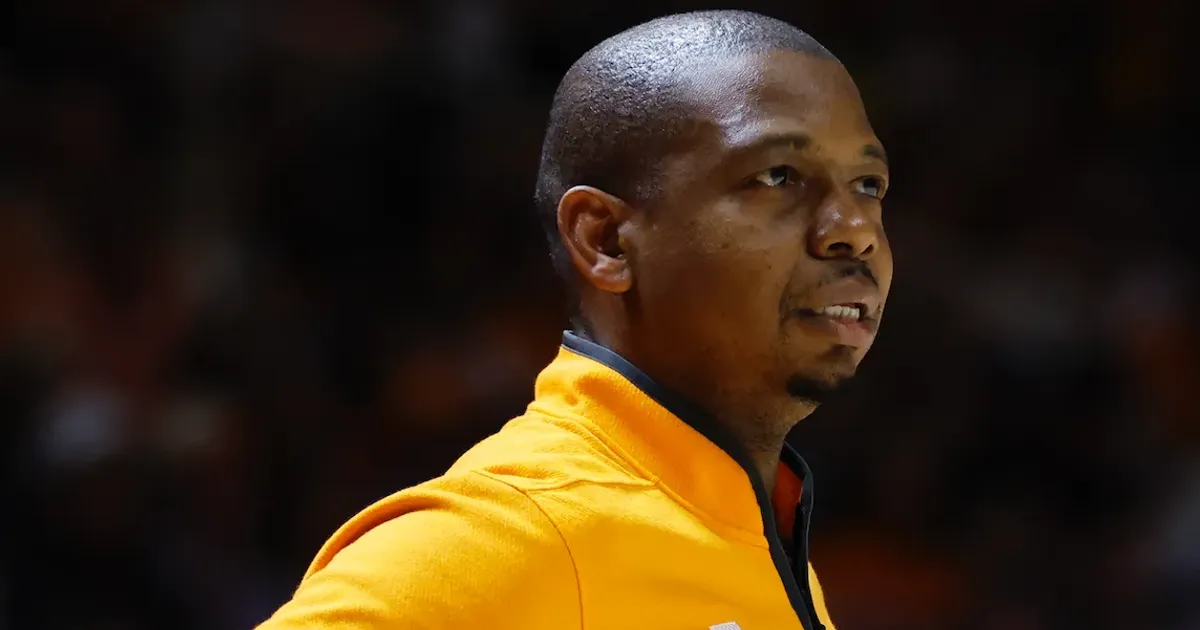
NC State's hiring of Justin Gainey was both a basketball decision and a trust decision. The former Wolfpack guard returned to Raleigh after five seasons on Rick Barnes's Tennessee staff, taking over after Will Wade's one-year stay ended with a return to LSU.
The hire gives NC State a coach who knows the school, the state and the pressure of the ACC. It also gives the program a clean identity word: defense. The identity is useful after a turbulent stretch, but it is only the starting point.
Gainey Brings A Real Defensive Resume
Gainey's Tennessee background matters because the Volunteers built much of their recent identity around defensive toughness, scouting discipline and guard pressure. Assistants do not own every part of a program's success, but Gainey's work under Barnes gives NC State something concrete to sell.
The Wolfpack can tell recruits and returning players what the first standard will be: guard the ball, communicate, compete physically and accept accountability on that end. For a new coach, defensive identity often travels faster than offensive chemistry.
The Homecoming Buys Goodwill, Not Wins
Gainey's playing history gives the move emotional force. He was an NC State point guard from 1996 to 2000, and the school framed his return as one of its own coming back to lead the program. The homecoming matters to alumni who want a coach who understands the place rather than merely using it as a stop.
Familiarity can buy patience, especially after a strange coaching turn. It cannot win ACC games by itself. Nostalgia becomes dangerous if it hides the scale of the roster, recruiting and style-of-play work still ahead.
The Portal Window Made The First Test Immediate
Gainey did not get a slow runway. The transfer portal forced quick decisions on retention, staff construction and lineup balance. A new coach has to decide who fits the defensive standard, who can shoot, who can handle pressure and who can survive league size.
Current preseason discussion around NC State points to a roster with talent and inconsistency, especially in the backcourt. The compressed timeline makes clarity important. Players need to know what shots are acceptable, what defensive mistakes are unacceptable and who leads when games tighten.
Offense Is The Unknown
The defensive case is easier to explain than the offensive one. Tennessee's best teams under Barnes could defend at an elite level, but offensive rhythm was not always as reliable. NC State now has to build spacing, shot quality and late-clock answers around the personnel Gainey assembled.
Staff fit matters here. A defense-first head coach can win, but only if the offense has enough structure to avoid long scoring droughts. In the ACC, energy without shot-making becomes a narrow margin quickly.
Local Roots Must Become Recruiting Leverage
NC State cannot let every high-end North Carolina prospect drift automatically toward nearby blue bloods or national bidders. Gainey's local roots may open doors, but modern recruiting depends on NIL structure, staff reach, playing style and development proof.
Gainey is a sensible hire if NC State treats him as a builder, not a symbol. Defensive credibility and local understanding are a foundation. The next question is whether he can turn that foundation into an ACC roster with an actual edge. The answer will come from recruiting rooms, portal decisions and winter road games, not the introductory press conference.