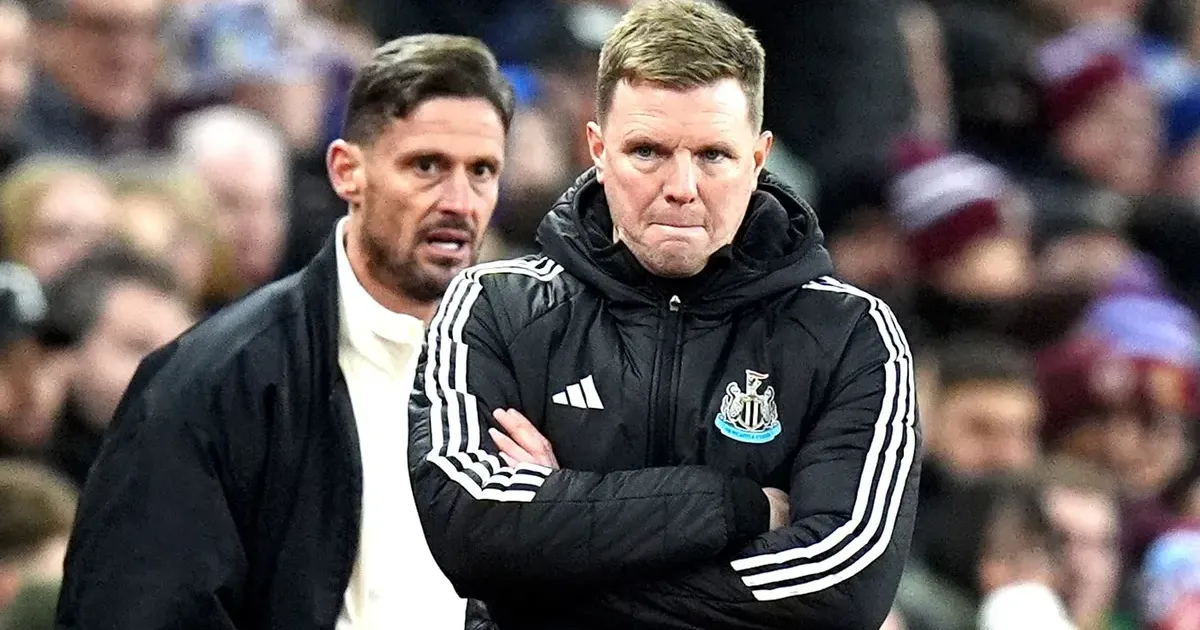
Newcastle chief executive David Hopkinson did not sack Eddie Howe. He did something more revealing: he declined to give a cast-iron guarantee about Howe's long-term future. In football, such an answer is rarely neutral. It leaves the board with flexibility, the manager with less public cover and supporters with a signal that results have started to speak louder than past credit.
The context made the answer sharper. Newcastle were 12th at the time, had suffered a painful home derby defeat to Sunderland and had seven Premier League matches left to show the season could still end with direction rather than drift. At the same time, the club reported record revenue of GBP335.3 million for the year to June 2025. The contrast creates the pressure. The business was growing. The team was not matching the ambition.
Hopkinson Left the Board Room Open
Hopkinson's line was careful. He did not publicly commit to a managerial change, and he said the club would look at the full picture rather than react to one result. The wording is reasonable executive language. It is also exactly the kind of language that tells a manager the judgment is active.
A head coach wants certainty, especially when a squad is low on confidence. A board wants optionality, especially when results are weak and financial rules limit easy fixes. Hopkinson gave the board optionality. From that moment, every team selection, substitution, late collapse and dressing-room signal became part of Howe's assessment.
The Sunderland Defeat Changed the Temperature
Newcastle's derby loss mattered because it turned frustration into humiliation. Poor form can be explained through injuries, schedule congestion, European hangover or squad churn. A home defeat to Sunderland carries a different emotional weight. It tells supporters that the club's old anxieties have not been buried by new money.
A derby defeat does not automatically decide a manager's future. It does change the mood around every answer from the executive team. Hopkinson's refusal to shut down speculation landed harder because supporters had just seen a result that cut into identity as much as the table.
Record Revenue Raises the Standard
The GBP335.3 million revenue figure changes the argument. Newcastle can no longer present itself only as a rebuilding club waiting for commercial growth. The money is arriving, commercial income is rising and the ownership ambition remains large. The revenue does not mean the club is free to spend without limit. It does mean the performance bar rises.
Supporters do not judge a season by revenue tables. They judge it by derbies, league position, European qualification, recruitment and whether the team looks closer to the elite group it wants to join. Record income makes mid-table explanations sound thinner, especially when rivals keep converting revenue into squad depth and clearer football identities.
Financial Rules Make Coaching More Important
Newcastle's finances are more complicated than the headline number suggests. The sale-and-leaseback of St James' Park, sustainability rules and the need to operate as a trading club all show that revenue growth has not removed constraint. The club is richer, but it is not free.
The constraint makes Howe's work more important, not less. If financial rules prevent Newcastle from buying its way out of every mistake, the coach has to make the existing squad look coherent. Recruitment can help, but shape, intensity, defensive structure and player development become the difference between a club building smartly and a club drifting expensively.
Howe's Credit Is Real but Finite
Howe earned time by transforming Newcastle from drift to ambition. Howe's record matters. He made the team harder to play against, restored belief and helped turn ownership promise into visible progress. But credit is not the same as immunity. The next phase asks a different question: can he manage pressure when expectations are no longer modest?
The harder Newcastle grows commercially, the less patience there will be for seasons that feel stuck between eras. A club that talks like a future giant cannot keep playing like a project waiting for clarity. Hopkinson's refusal to guarantee Howe was not a dramatic execution. It was a warning shot. Revenue can buy tools. It cannot buy authority for a manager whose results stop answering the question.