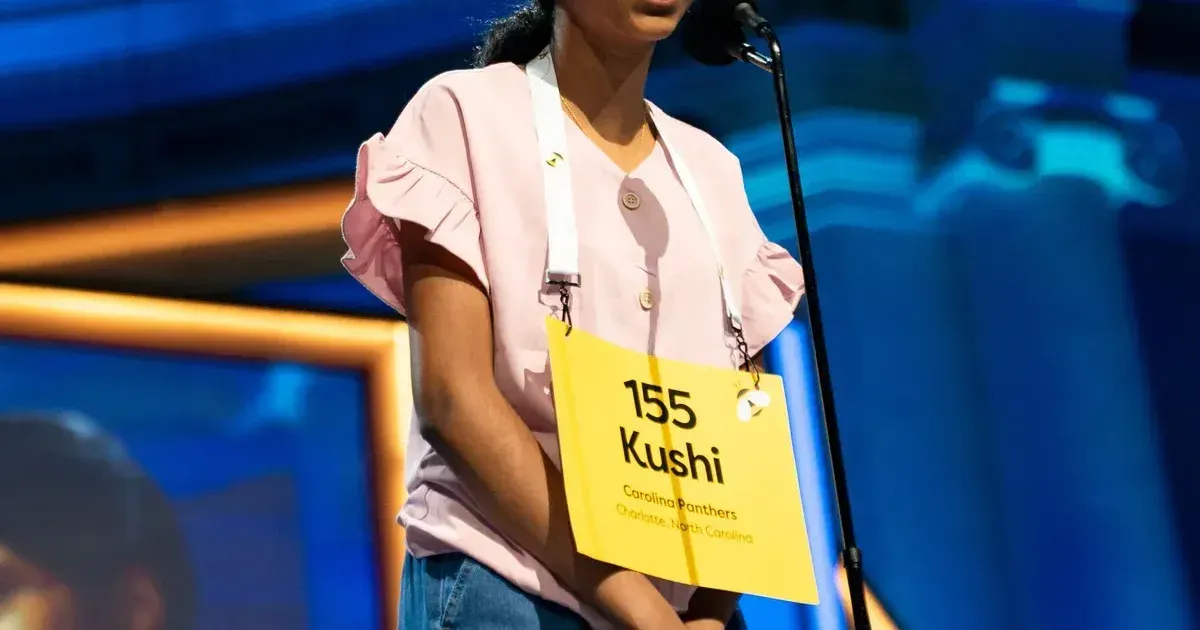
Scripps National Spelling Bee finalists secured their places in the 2026 championship round following several days of intense preliminary and quarterfinal matches. The final round gives the spelling bee another chance to turn precision, nerves and preparation into a national television event. Each finalist enters with a different path through regional qualifiers and previous pressure rounds. Competition officials confirmed the final roster on May 29, 2026, signaling the end of the wider bracket and the start of the final push for the $50,000 top prize. These nine students emerged from a field that originally included hundreds of top-tier spellers from across the globe.
Representing five different states and the District of Columbia, the remaining group consists of students between the ages of 12 and 14. This age range historically produces the most consistent results in high-pressure orthographic competitions. Spellers at this developmental stage often possess the cognitive maturity to handle complex etymological roots while maintaining the rigorous study schedules required for national success. Many of these finalists have spent three to five hours daily reviewing word lists and dictionary entries leading up to the event.
Maryland hosts the final stages of the competition, drawing large audiences to the National Harbor area near the capital. Results from the early rounds showed a high level of proficiency, with judges remarking on the depth of the field. Winning the competition involves more than simply memorizing letters. It requires a full understanding of how languages like Greek, Latin, French, and German have shaped English vocabulary over centuries.
Finalists Represent Diverse Regional Backgrounds
Spellers currently remaining in the competition hail from a concentrated geographic area compared to previous years. Five states and the District of Columbia produced the final nine contestants, highlighting regional strongholds in competitive linguistics. Previous records indicate that states with powerful local bee programs, such as Texas and California, frequently see their representatives reach the final stage. The current distribution suggests that localized training and mentorship remain critical factors in student performance.
Nine kids will battle it out in the 2026 Scripps National Spelling Bee finals to determine who can spell as well as the experts, according to a BBC report on the field.
The report underscored the difficulty of the 2026 word list. This battle for the trophy involves several rounds of increasing difficulty. Words in the early finals often feature obscure technical terms or archaic linguistic forms that are rarely used in modern conversation. Spellers must ask for definitions, parts of speech, and languages of origin to successfully navigate the more difficult challenges.
Participants must also contend with the introduction of oral vocabulary rounds, a feature added to the Bee to ensure that contestants understand the meaning of the words they spell. In these segments, a speller is given a word and must choose the correct definition from a list of options. The multi-dimensional approach to literacy has changed how students prepare for the national stage. Success now hinges on both orthography and semantic knowledge.
Evolution of Competition Rules and Complexity
Judges at the Scripps National Spelling Bee have refined the rules to prevent the marathon sessions seen in previous years. Rule changes allow for a "spell-off" if the final two contestants remain tied after a certain number of rounds. In a spell-off, each contestant has 90 seconds to spell as many words as possible from a predetermined list. Accuracy and speed both count toward the final score in these lightning rounds. The introduction of these measures ensures a definitive winner within the broadcast window.
Official dictionaries for the event continue to be provided by Merriam-Webster. Spellers often cite the Unabridged Dictionary as their primary study source, which contains more than 470,000 entries. Every finalist has mastered a significant part of this volume. Most competitors rely on specific physical gestures, such as miming a keyboard or writing with a finger on their palm, to help visualize the placement of vowels and consonants during their turn at the microphone.
Elimination occurs instantly upon a single incorrect letter.
Audience members are required to remain silent during the performance to avoid distracting the students. The silence in the hall is often broken only by the bell that indicates a misspelled word. For the final nine, the margin for error is nonexistent. Each student has already proven their ability to handle words that would baffle most adults, but the final stage introduces a level of psychological pressure that is unique to this academic sport.
National Bee Culture and Academic Impact
National recognition for the winner includes a series of television appearances and a prominent trophy. Beyond the immediate rewards, many finalists use their experience to secure admissions to elite secondary schools and universities. The discipline required for competitive spelling often translates into success in other academic fields, particularly those involving heavy research or complex terminology. Educational experts suggest that the Bee encourages a lifelong appreciation for the details of language.
Television viewership for the finals has remained steady as the event embraces digital streaming platforms. Fans of the competition, often referred to as "bee-heads," track spellers' progress throughout the year, much like enthusiasts follow professional athletes. The cultural phenomenon has helped elevate the profile of academic achievement in the United States. The 2026 competition continues this trend of celebrating intellectual rigor on a national stage.
Specialized Training Is Reshaping the National Bee
Persistence in the Scripps National Spelling Bee reflects a broader shift toward specialized academic competition among American middle schoolers. These nine finalists represent a tier of achievement that requires thousands of hours of specialized study, often supported by private coaches and sophisticated software tools. The professionalization of the Bee has raised the barrier to entry, making the final rounds a showcase for a very specific type of elite performance. While some critics argue that the focus on obscure vocabulary limits the practical application of the skills learned, the competition remains a powerful engine for literacy and etymological curiosity.
Success in this arena also provides a unique look at the demographic and geographic trends in American education. The clustering of finalists in certain states often mirrors the availability of extracurricular resources and regional investment in gifted and talented programs. For the 2026 cohort, the proximity to the capital and the concentration of high-performing districts may explain the current field. Regardless of the outcome, the finals highlight the enduring appeal of a competition that rewards the mastery of the English language in its most complex forms.