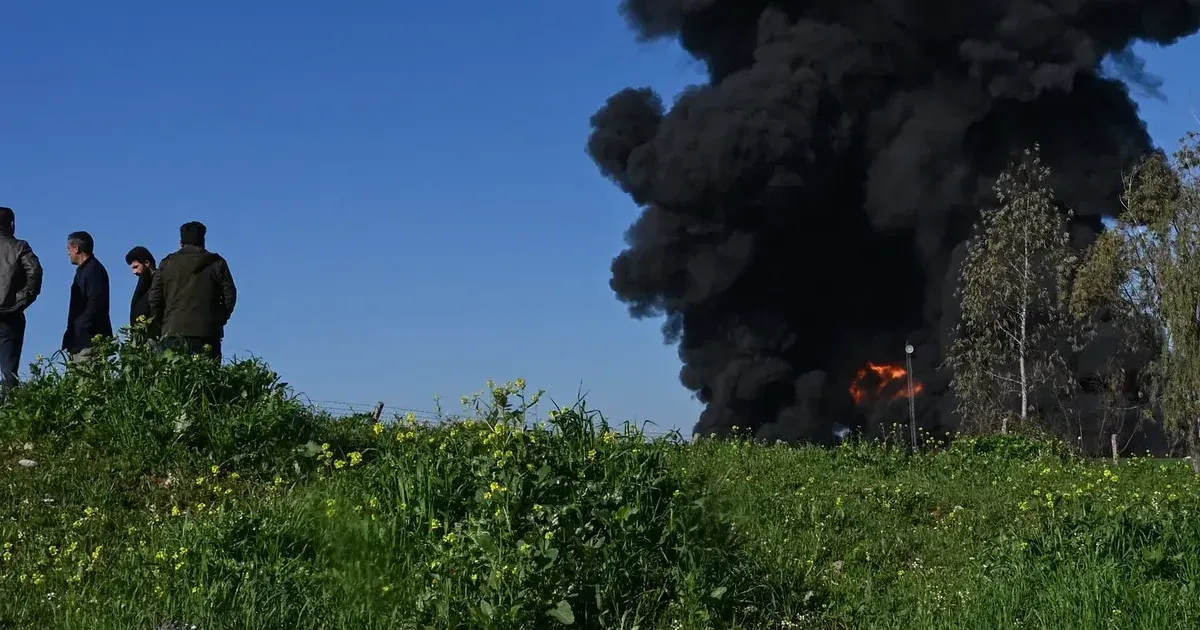
OPEC Plus delegates warned that the oil-market recovery after the conflict in Iran would be slow even after active hostilities ended. The group pointed to damaged infrastructure, weak spare capacity and uneven production discipline across member states. A quota increase could calm headlines, but it could not repair export terminals or restore field operations by itself. The assessment came on April 5, 2026, as officials paired higher ceilings with a sober admission that paper targets do not automatically create more barrels when facilities and export systems remain constrained.
Saudi Arabian energy leaders led the discussion, emphasizing the need for stability in a market that has fluctuated wildly since the outbreak of violence. While the group officially announced an increase in production quotas, analysts at major financial institutions categorized the move as almost entirely performative. Most member nations are currently struggling to meet their existing targets, making the new, higher ceilings a mathematical abstraction rather than a functional shift in supply. This gap between stated policy and actual pumping capacity is a primary concern for traders in London and New York.
OPEC Plus Production Quotas and Market Realities
Member states agreed to raise their collective output by 600,000 barrels per day starting next month. This decision attempts to project confidence to global consumers who are dealing with persistent energy inflation. Industry data, however, reveals that the cartel is currently under-producing its existing quotas by nearly 1.2 million barrels daily. Internal reports from the meeting indicate that only Saudi Arabia and the United Arab Emirates possess the spare capacity to actually increase flow to the pipes.
Russia continues to play a central role in these negotiations. Despite its own domestic economic constraints, Moscow has pushed for higher quotas to maintain its nominal market share and diplomatic influence within the organization. Russian delegates argued during the April 5, 2026, session that higher paper quotas would discourage Western nations from releasing further strategic reserves. The strategy relies on psychological signaling to prevent a total price collapse while the global economy teeters on the edge of recession.
Infrastructure Damage and Iranian Export Capacity
Tehran faces a difficult task in rehabilitating its energy sector. Damage to the primary export terminal at Kharg Island is more extensive than initial satellite imagery suggested, with several loading berths completely destroyed during the height of the conflict. Engineering firms estimate that the cost of rebuilding these facilities will exceed $11 billion over the next three fiscal years. Without these terminals, Iran cannot physically move its crude to the international market, regardless of what the OPEC Plus quotas allow.
Satellite reconnaissance confirms that several key pumping stations along the Goureh-Jask pipeline are offline. Experts from the International Energy Agency believe it will take at least eighteen months just to secure the necessary specialized components to repair these high-pressure systems. Sanctions and trade barriers continue to complicate the procurement of these parts, leaving the Iranian energy sector in a state of suspended animation. Investors are hesitant to commit capital to a region where the threat of renewed instability persists. Global powers are increasingly prioritizing energy diversification as they look for alternatives to traditional Persian Gulf supply routes.
"The participants decided to reaffirm the decision of the 10th OPEC and non-OPEC Ministerial Meeting," an official OPEC Plus statement declared in the summary of the April 5, 2026, session notes.
Refineries within Iran are also operating at a fraction of their nameplate capacity. Domestic fuel shortages have forced the government to divert what little crude it can produce toward local consumption, further reducing the volume available for export. This internal drain on resources ensures that Iran will stay a net neutral factor in global supply for the foreseeable future. The loss of Iranian light crude has forced Asian refiners to seek alternative blends from West Africa and the United States Gulf Coast.
Global Energy Demand and Price Stability Risks
Demand in the West is showing signs of a structural decline. High-interest rates in the United States and the United Kingdom have dampened industrial activity, leading to a reduction in diesel and jet fuel consumption. On April 5, 2026, market data showed that European inventories are at their highest levels in three years, suggesting that the feared winter energy crunch did not materialize. The surplus creates a ceiling for prices, even as supply from the Middle East remains constrained.
Developing nations in Asia are also diversifying their energy mix. China and India have accelerated their investments in nuclear and solar power to insulate their economies from the volatility of Persian Gulf politics. Projections from the World Bank suggest that for every dollar oil prices rise, these nations lose approximately 0.5% of their potential GDP growth. Beijing is therefore increasingly unwilling to rely on a single, unstable region for its primary energy needs. Diversification is no longer a climate goal; it is a national security imperative.
Russian Influence and Internal Cartel Dynamics
Moscow maintains a delicate balance within the OPEC Plus alliance. Russia needs oil prices to stay above $80 per barrel to fund its state budget, yet it must also ensure that prices do not go so high that they trigger a global economic crash. The internal tension was evident during the recent deliberations, where Russian officials reportedly clashed with smaller African producers who are desperate for higher immediate revenues. The lack of consensus on long-term strategy is becoming harder to mask with symbolic quota increases.
Crude oil prices reacted modestly to the news. Brent futures rose by less than 1% before settling back to their opening levels as the market digested the reality that no new oil is actually coming online. Traders are looking past the headlines and focusing on the physical reality of empty pipelines and broken ports. The era of the cartel exerting total control over the global price of energy appears to be fading. Market participants are now more focused on the pace of the global energy transition than on the empty promises of a fractured organization.
Energy Recovery Constraint
Betting on the continued relevance of OPEC Plus is a strategy built on nostalgia for a world that died in the sands of the Iranian conflict. The April 5, 2026, announcement of increased quotas is nothing more than a cynical exercise in optics designed to soothe jittery central bankers. It is a lie. Most of these nations cannot even meet their current obligations, let alone find an extra half-million barrels behind the couch. The cartel is a ghost of its former self, haunted by its own internal contradictions and the physical ruin of one of its founding members.
Saudi Arabia is playing a dangerous game. By tethering its economic future to a Russian state that is increasingly erratic, Riyadh risks alienating its primary security guarantors in the West. The war in Iran proved that physical assets are vulnerable to 21st-century warfare in ways that a simple security detail cannot reduce. If the Kharg Island terminal can be leveled in a week, then the entire logic of the global oil trade is fundamentally broken. We are entering an era of permanent volatility where the only real hedge is local energy independence.
The era of cheap, reliable Middle Eastern oil is over. Whether the world is ready for the consequences of this shift is irrelevant. The pipes are empty, the ports are broken, and the words of the ministers in Vienna have the weight of smoke.