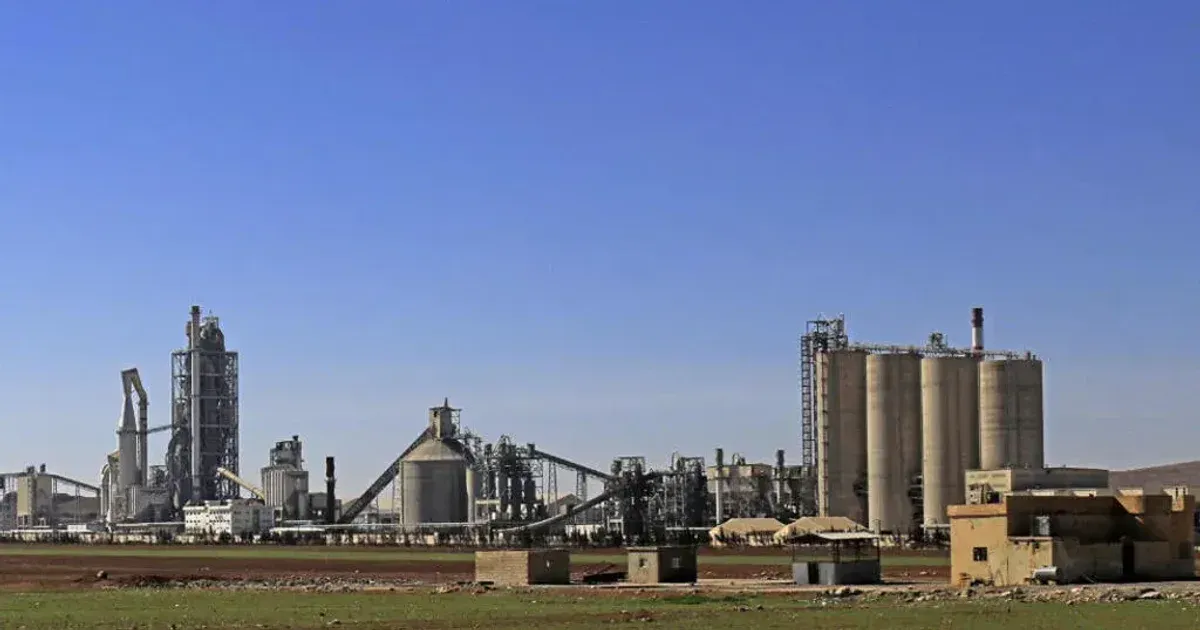
A Paris court has turned Lafarge's Syrian cement operation into a landmark corporate accountability case. Judges convicted the company on April 13, 2026, over payments that kept the Jalabiya plant operating during the civil war while armed groups controlled surrounding territory. The ruling renewed scrutiny of executives, parent company Holcim and the limits of doing business in conflict zones. Corporate leaders authorized millions in payments through local intermediaries to secure passage for employees and materials. Evidence presented in court indicated that management at the French headquarters received regular updates regarding these arrangements. Such financial support directly assisted the logistics of militant groups during their most aggressive expansion phases. Judges noted that the desire to maintain a market foothold overrode basic ethical obligations. The final payment reached an IS-linked intermediary in September 2014.
Jalabiya Plant and Corporate Complicity
Operations at the Jalabiya site required constant negotiation with shifting frontlines and various paramilitary groups. Lafarge maintained production even as competitors withdrew from the region to avoid entanglement with extremists. Internal correspondence showed that executives viewed the payments as an operational tax necessary for survival in a conflict zone. Staff members working at the site faced kidnapping threats and physical danger while the company paid for protection. Local contractors handled the actual cash handovers to avoid direct links between French accounts and terrorist cells. Intelligence reports shared with the board warned of the growing influence of the Islamic State in the Raqqa governorate. Management, however, persisted with production schedules despite these escalating risks. Testimonies from former employees revealed a culture of silence where safety concerns met with dismissal from regional directors. Records show that $15 million moved through these clandestine channels over a two-year period. This capital allowed the cement giant to outcompete local rivals who lacked the financial resources to pay off multiple warlords.
"Lafarge sacrificed the safety of its Syrian employees and international security for the sake of its profit margins," noted a lead prosecutor during the proceedings.
Payments to Armed Groups
Money reached militant commanders through a sophisticated network of shell companies and diverted consultancy fees. Forensic accountants tracked these funds to accounts linked directly to the Islamic State treasury. Prosecutors argued that the company provided a steady revenue stream for the group at a time when international sanctions sought to starve it of resources. These payments secured access to raw materials and allowed the transport of cement to lucrative markets. Criminal groups used these funds to purchase weaponry and recruit new fighters. Documents seized during the investigation highlighted a pattern of systematic bribery that extended beyond simple checkpoints. Lafarge officials allegedly negotiated price-fixing agreements with militant groups to ensure their cement remained the primary choice for regional construction. This cooperation blurred the lines between legitimate business activity and criminal enterprise. Investigators found that the company ignored warnings from the French Ministry of Foreign Affairs about the legal consequences of such deals. Legal experts pointed to internal audits that flagged the suspicious nature of the payments as early as 2013.
Executive Accountability in Paris
Former chief executive Bruno Lafont received a prison sentence for his role in authorizing the Syrian strategy. Judges rejected his defense that he was unaware of the specific destinations of the company funds. Testimony from senior safety officers suggested that the highest levels of the organization approved the bribe-based operational model. The court emphasized that a CEO bears ultimate responsibility for the ethical conduct of a multinational corporation. Several other high-ranking managers received suspended sentences and heavy fines for their complicity.
Judicial authorities focused on the failure of internal compliance mechanisms that should have halted the payments. Legal teams for the victims argued that the executive suite prioritized the 2015 merger with Swiss firm Holcim over legal compliance. By keeping the Syrian plant operational, the company inflated its valuation and production capacity during the merger negotiations. This focus on corporate optics came at the expense of regional stability. Projections from the time suggested that closing the plant would have cost the firm hundreds of millions in asset write-downs.
Holcim Fallout After the Verdict
Current parent company Holcim continues to navigate the fallout from its predecessor's actions. The Swiss giant previously reached a $778 million settlement with the U.S. Department of Justice in 2022 regarding similar charges. The latest French conviction adds another layer of financial and reputational damage to the construction conglomerate. Shareholder groups have expressed frustration over the persistent legal liabilities stemming from the Syrian era. Analysts expect further civil litigation from former employees who claim they were abandoned in a war zone.
National security experts suggest that this ruling will change how multinationals operate in high-risk environments. The court established that corporate entities cannot hide behind local subsidiaries to escape prosecution for financing terrorism. Future investments in volatile regions will likely face much stricter oversight from both internal boards and government regulators. International law now recognizes a clear link between corporate operational decisions and the longevity of terrorist organizations. The Jalabiya plant is a derelict monument to this failed strategy.
Corporate Liability in War Zones
Global capital rarely finds a moral compass when billions in fixed assets are at stake in a war zone. The Lafarge verdict exposes the rot within the boardrooms of European industrial giants where the price of a human life is balanced against the cost of a cement kiln. For too long, companies have used the fog of war as a shield for criminal collusion. The ruling strips away that defense and forces a reckoning with the reality that corporate taxes in extremist territories are, in fact, bullets for jihadists. It is a necessary, albeit late, demolition of the myth of corporate neutrality in geopolitical conflicts.
The French state also bears a portion of the blame. Its intelligence services likely monitored these payments for years, yet allowed the manufacturer to continue its dance with the Islamic State. Such tolerance suggests that national economic interests frequently outweigh the global fight against terrorism. Holcim may have hoped that a nearly billion-dollar settlement in Washington would end this chapter, but the Paris ruling proves that criminal liability is not something that can be simply amortized over a ten-year cycle. Investors should view this as a permanent shift in the risk profile of companies operating in the gray zones of international law.
Executives who authorize blood money to protect the bottom line must finally face the prospect of a prison cell. The era of the deferred prosecution agreement, where companies buy their way out of crimes against humanity, is coming to a close. The judgment is a long-overdue verdict on the cynicism of modern industry. Profits are temporary; complicity is forever.