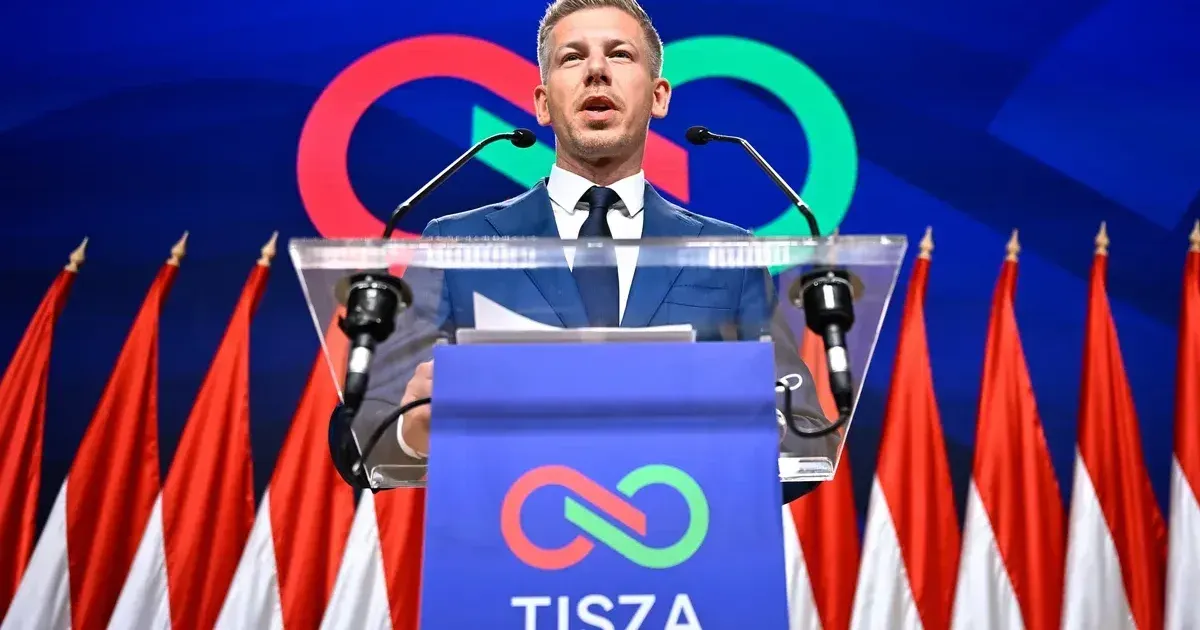
Peter Magyar's landslide victory has ended the Orbán era and given Hungary's opposition a rare governing mandate. The Tisza party secured a two-thirds supermajority in results reported on April 13, 2026, opening a path to judicial reform, media changes and a new relationship with the European Union. Voters chose a different path for the first time since 2010. The electoral shift grants the Tisza party 138 seats in the 199-member parliament, while Fidesz collapsed to just 55 seats. Such a distribution provides Magyar with a constitutional supermajority, a tool Orbán once used to consolidate power through systemic changes. Ironically, the disproportionate electoral system engineered by Fidesz to favor the largest party became the mechanism for its own downfall. Analysts at regional monitors noted that the consolidation of opposition voters behind a single charismatic figure rendered the old gerrymandered districts ineffective.
Tisza Wins a Supermajority
Constitutional experts in Budapest suggest that Magyar now possesses the legal authority to undo the 2011 Fundamental Law. For over a decade, that document was the foundation for the previous administration's centralized control over the judiciary and media. Magyar promised supporters during his victory speech that his first priority involves restoring the independence of the Constitutional Court. He intends to strip away the layers of political appointees who have shielded the executive branch from oversight.
“My administration will not just change the government; we will restore the very foundations of the Hungarian state to ensure no single man can ever hold the country hostage again, according to a statement released by Peter Magyar during the final rally in Budapest.”
Corruption investigations are expected to begin immediately after the new cabinet takes office. Thousands of citizens who gathered in Kossuth Square celebrated the prospect of Hungary rejoining the European Public Prosecutor's Office. Membership in that body was a central campaign promise intended to combat the alleged embezzlement of European Union development funds. Legal teams within Tisza have already prepared a series of decrees to freeze assets linked to specific oligarchs who benefited from state contracts during the previous era.
Reversing Institutional Capture
Judicial independence persists as a primary concern for the incoming government. Under the previous regime, the National Judicial Office held broad powers to appoint judges and transfer cases, often favoring political allies. Magyar has pledged to dissolve these structures and return power to the National Judicial Council, an independent body of peers. Removing the political influence from the courts is seen as the only way to satisfy the European Commission and unlock billions in frozen recovery funds. Hungary needs those funds to stabilize its currency and address rising energy costs. Public media outlets, long criticized for acting as government mouthpieces, face an immediate overhaul. The Media Council, currently staffed by Fidesz loyalists, will likely see its members replaced through a new bipartisan selection process. Journalists who were previously blacklisted or forced into independent digital startups are expected to return to the national broadcaster. This restructuring aims to provide the diverse ideological majority that supported Magyar with a neutral source of information.
Rights and Media Reform Mandate
Human rights organizations expressed cautious optimism regarding the planned repeal of the 2021 anti-LGBTI law. That legislation, which restricted the portrayal of homosexuality and gender reassignment in schools and media, led to serious friction with Brussels. Magyar has been clear that his version of Hungary respects all citizens regardless of their orientation. He argued throughout the campaign that a modern European nation cannot justify discriminatory practices under the guise of child protection.
Civil society groups plan to submit a formal list of grievances to the new Ministry of Justice within weeks. These groups documented hundreds of instances where the previous government restricted the activities of non-governmental organizations through the Transparency Act. Magyar intends to replace these restrictive measures with a framework that encourages civic participation. Pro-democracy advocates believe these changes will finally end the era of state-sponsored harassment against activists and critical voices.
Hungary Turns Back Toward the EU
European leaders welcomed the election results as a chance to repair the fractured relationship between Budapest and the rest of the bloc. Brussels has often been at odds with the outgoing administration over the rule of law and migration policies. By aligning with the European mainstream, Magyar seeks to end the isolation that has characterized Hungarian foreign policy for years. He has already scheduled meetings with officials in Berlin and Paris to discuss a more integrated approach to regional security.
Financial markets reacted positively to the news of a stable supermajority. The Hungarian forint gained value against both the euro and the dollar as traders anticipated a more predictable regulatory environment. Investors believe that a return to the rule of law will reduce the risk premiums associated with Hungarian assets. While the transition of power will take time, the clear mandate provides a level of certainty that the market has craved since the election cycle began.
Post-Orbán Hungary
Peter Magyar may have mastered the art of the populist uprising better than his predecessor, regardless of whether Viktor Orbán's fall means the death of the illiberal model. Conventional wisdom suggests that democracy has been restored in Budapest, yet the reality is more cynical. Magyar is not a product of the traditional liberal opposition; he is a defector from the very heart of the Fidesz machine. He understands the levers of power because he helped build them. This victory was not achieved through the high-minded rhetoric of the old guard, but by using the same aggressive, personality-driven tactics that Orbán pioneered.
Expectations for an immediate democratic utopia are misguided. Magyar holds a supermajority that allows him to govern by decree if he chooses. The temptation to use these powers to purge his enemies will be immense. While he speaks of the rule of law, his first task involves dismantling a state built specifically to resist change. Doing so without becoming a mirror image of the man he replaced requires a level of restraint rarely seen in Central European politics.
Magyar will deliver on LGBTI rights and EU cooperation because they are the currency required to buy legitimacy in the West. The real test is whether he genuinely intends to dilute the power of the prime minister's office. If he keeps the centralized structures intact while merely changing the personnel, Hungary has not escaped its trap. It has only found a more palatable jailer. The forint may rise today, but the institutional scars of the last sixteen years will take decades to heal. Watch the appointments.