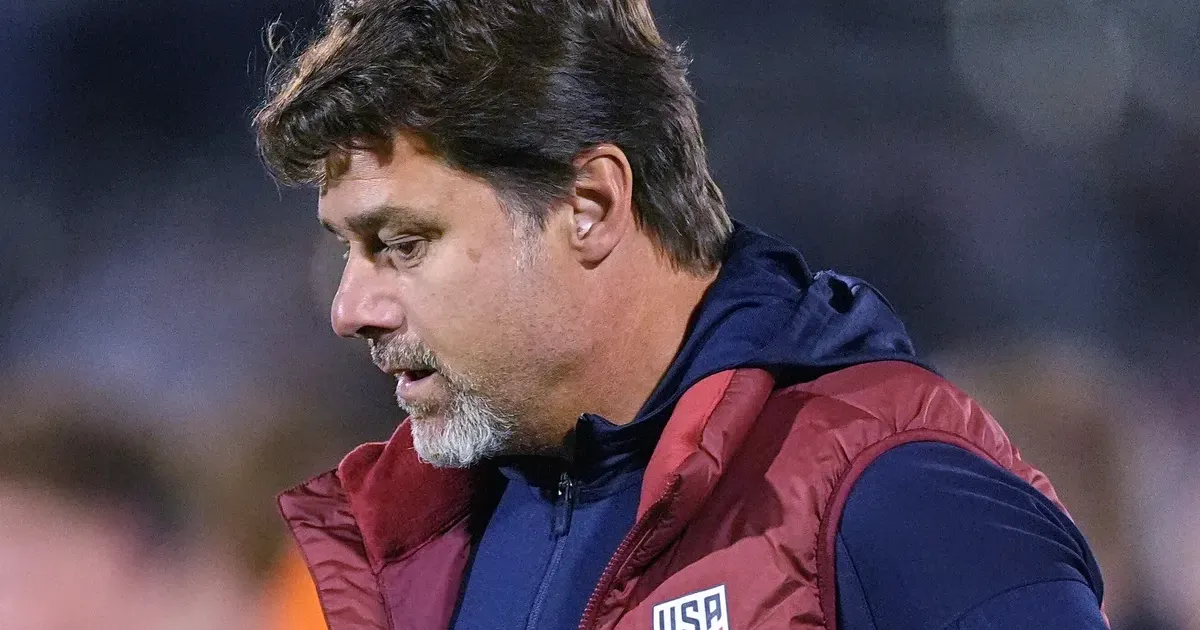
Mauricio Pochettino no longer has to answer a theoretical defensive question. Belgium's 4-1 win over the United States in the World Cup knockout stage turned a familiar concern about spacing, transition control and elite-match discipline into the defining issue of the U.S. campaign.
The exit was not a total indictment of the tournament. The U.S. won its group, beat Bosnia and Herzegovina in the earlier knockout round and showed more attacking threat than many past American teams. But the Belgium match was the first ruthless examination of whether the defensive structure could survive against an opponent with timing, patience and finishing quality.
It could not. The U.S. looked stretched, late and reactive too often, and Belgium kept finding the spaces that should have been protected before the danger reached the back line.
Belgium Exposed The Missing Control
Pochettino's best teams are supposed to defend before the opponent reaches the penalty area. Pressure, counter-pressure and compact distances should reduce the number of emergency defending moments. Against Belgium, that chain broke too often.
The American midfield struggled to slow the first forward pass. Full-backs were caught between advancing and protecting channels. Center-backs were left choosing between stepping into space and guarding the box. Those are difficult decisions against any strong opponent. Against Belgium, they became repeated chances.
The Scoreline Was Tactical, Not Just Individual
A 4-1 defeat always produces criticism of individual defenders, goalkeeping decisions and missed tackles. Some of that is fair. But the deeper issue was structural. The U.S. conceded too many situations where defenders were already solving a problem created earlier in the move.
Elite tournament defending is built on dull habits: short distances between lines, clear cover when a full-back goes, midfielders who delay counters and center-backs who are not constantly exposed to runners. The U.S. did not show enough of that discipline.
Pulisic's Injury Changed The Attack, Not The Core Problem
Christian Pulisic's injury and limited tournament impact became a major postgame story, especially after confirmation of a leg issue that would sideline him for weeks. Pulisic's absence mattered to the attack and to the public mood around the team.
But it should not obscure the defensive problem. A diminished Pulisic can explain why the U.S. lacked final-third sharpness. It does not explain why Belgium repeatedly found transition space or why the American shape looked so fragile once the match opened.
The Manager Debate Now Has Substance
Pochettino was hired to raise the ceiling of the program. He brought name value, elite club credibility and a promise of sharper standards. His reputation cuts both ways. It made the U.S. more ambitious, but it also raises the standard by which a home World Cup exit is judged.
A Round of 16 defeat is not automatically failure in historical U.S. soccer terms. A heavy home defeat after visible defensive breakdowns is different. It asks whether the manager's preferred intensity can be translated into an international team with limited training time.
The System May Need Less Romance
The next version of the USMNT cannot be built only around belief, pressing language or the idea of playing brave soccer. It needs clearer rules for when the full-backs go, who protects the center-backs, when the first tactical foul or delay arrives and how the midfield prevents the opponent from running at the back four.
The reset may require personnel changes. It may also require a less romantic version of Pochettino's instincts. International soccer gives managers fewer repetitions than club soccer. If a system needs club-level daily work to function, it has to be simplified.
Progress Cannot Hide The Defeat
The federation can fairly say pieces of the tournament showed growth. The team had attacking moments, Balogun gave the front line production and the home crowd saw a side capable of imposing itself against weaker opposition.
But knockout soccer is cruel because one exposed weakness can erase weeks of good feeling. Belgium did not discover a hidden flaw. It attacked a visible one until the U.S. ran out of answers.
The Defensive Project Is Now The Test
Pochettino's future should not be judged only by reputation or by the emotional sting of one scoreline. It should be judged by whether he can show a credible plan to make the team harder to pull apart against elite opponents.
Defensive spacing, transition insurance and match control have to become the center of the next phase. The U.S. can talk about progress, but the Belgium tape provides the evidence. A host team was beaten because its structure collapsed under pressure, a failure too serious to bury under optimism.