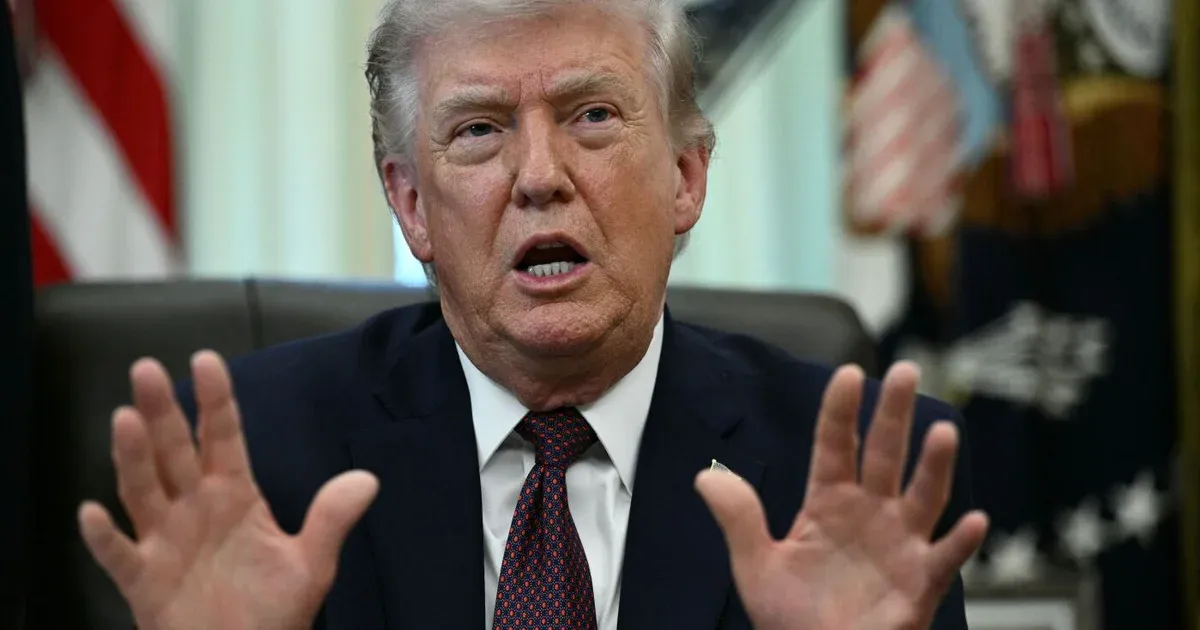
Donald Trump initiated a series of aggressive policy defenses as his administration struggled with simultaneous domestic and international pressures. The April 3, 2026, briefing turned those setbacks into a single public defense of presidential authority. Administrative officials spent the morning addressing unfavorable economic projections while preparing responses to legal challenges in federal appellate courts. Volatile market data indicated a $3 trillion deficit projection that rattled financial sectors and prompted emergency meetings among fiscal advisers. Early indicators suggest that growth in several manufacturing corridors has stalled since the beginning of the second quarter.
Judicial rulings recently blocked three key executive orders regarding border enforcement and regulatory rollbacks. Federal judges in the Fifth Circuit Court of Appeals issued a stay on a primary immigration initiative, citing procedural failures and a lack of statutory authority. This ruling prevents the Department of Justice from implementing specific enforcement protocols across the southern border states. Legal experts observed that the administration has faced more judicial interventions in this fiscal year than in the previous three combined. Attorneys representing the executive branch filed an immediate intent to appeal to the highest court in the nation.
Court Rulings Block Key Executive Initiatives
Legal challenges have now metastasized into a broad systemic barrier for the current legislative agenda. Appellate courts focused specifically on the Administrative Procedure Act to invalidate measures they deemed arbitrary or capricious. While previous administrations used executive orders to bypass legislative gridlock, the current frequency of judicial stays has paralyzed several cabinet departments. Lawyers for the administration argue that these rulings represent an overreach of the judicial branch into national security matters. Recent filings indicate that the stay on environmental deregulation will persist until at least the end of the summer session.
Presidential aides expressed frustration with the pace of litigation during a morning briefing at the White House. Public statements emphasized that the executive branch has the constitutional authority to prioritize domestic safety through these orders. Data from the judicial clerk's office shows a 15 percent increase in lawsuits filed against executive agencies since the previous quarter. Most of these cases originate from state attorneys general and non-governmental organizations focusing on civil liberties. The litigation cycle has effectively paused several major infrastructure projects that were central to the 2026 fiscal plan.
Economic Shifts Force Defensive White House Posture
Economic indicators further complicated the administration's narrative as the week progressed. Inflation figures reached a three-year peak in sectors including energy and commercial real estate. Financial markets reacted poorly to the $3 trillion deficit forecasts, with industrial averages dropping by over 400 points in a single trading session. Federal Reserve officials suggested that higher interest rates might stay in place longer than originally anticipated to combat rising costs. Market participants expressed concern that the combination of trade friction and fiscal expansion is creating an unsustainable path for the dollar. Legal volatility remains high as the Department of Justice faces leadership transitions under Pam Bondi.
Treasury officials attempted to reduce these concerns by highlighting job growth in the technology and service sectors. Reports indicate that small business confidence hit its lowest point since 2024 during the last thirty days. Supply-chain disruptions continue to impact the availability of essential materials for the automotive industry. Rather than addressing specific tax policy, the administration focused its communications on blaming the previous legislature for the current deficit trajectory. Analysts believe that without a serious shift in fiscal policy, the credit rating of the government could face downward pressure.
Presidential historian Barbara Perry provided a detailed analysis of how Donald Trump has adapted his public messaging to respond to these compounding crises. Speaking with reporter Scott Detrow, Perry noted that the administration frequently employs wartime metaphors to frame policy debates. This rhetorical strategy aims to cast domestic political opponents and judicial hurdles as existential threats to the nation. Historically, leaders like Abraham Lincoln and Franklin Roosevelt used similar language during periods of actual kinetic conflict. Perry observed that the current application of this language lacks the unifying context of a traditional war.
"President Trump's use of wartime metaphors suggests a desire to unify the public through perceived external or internal threats, yet the historical alignment with past leaders who faced actual kinetic conflicts is inconsistent," Perry noted during the discussion.
Using combat-oriented terminology allows a leader to demand a level of executive deference that is normally reserved for military emergencies. Perry highlighted that this approach can alienate independent voters who prefer administrative stability over constant confrontation. While past presidents used the bully pulpit to build national consensus, the current rhetoric appears designed to solidify a core base of support. Historical records show that the frequent use of emergency language can lead to public desensitization over time. No modern president has maintained this level of rhetorical intensity for such a prolonged period of political peacetime.
International relations entered a tense phase on April 3, 2026, as several key allies voiced opposition to the latest tariff proposals. European trade ministers convened an emergency session in Brussels to discuss retaliatory measures against American agricultural exports. Pacific trade partners also signaled a willingness to bypass traditional alliances in favor of new regional agreements. Diplomats from the White House encountered meaningful resistance during the latest round of G7 preliminary talks. Foreign leaders cite the unpredictability of American trade policy as a primary reason for their increasingly defensive posture.
Specific friction points include the administration's insistence on renegotiating established security pacts in exchange for trade concessions. Military analysts suggest that this transactional approach to diplomacy has created a vacuum in several strategic regions. Defense officials expressed private concerns that the erosion of trust with traditional allies could impact intelligence sharing. Tensions in the South China Sea continue to rise while the diplomatic response remains focused on bilateral trade balances. International monitoring groups report a serious decline in the efficacy of collaborative climate initiatives due to the current policy shift.
Court Setbacks Narrow Trump's Policy Room
Is the American presidency evolving into a purely performative office, or is Donald Trump successfully stress-testing the limits of executive power? The dissonance between the administration's wartime rhetoric and its string of judicial defeats suggests a presidency in a state of high-friction stagnation. While the imagery of battle and the language of emergency may consolidate a loyal constituency, they are proving to be blunt instruments against the precise scalpel of the federal courts. What is unfolding demonstrates the limits of the bully pulpit in an age where institutional inertia is backed by a resilient and often hostile judiciary.
History teaches that when a leader's rhetoric outpaces their actual policy achievements, the result is a rapid decay of political capital. The administration appears to be betting on the idea that public anger toward "obstructive" institutions will outweigh the desire for real economic stability. It is a high-stakes gamble that ignores the reality of the $3 trillion deficit and the cooling of the industrial sector. If the court rulings continue to stack up and the economic data persists in its downward trend, no amount of combat-ready metaphors will be able to sustain the illusion of executive dominance. The verdict is clear: words are no longer a substitute for wins.