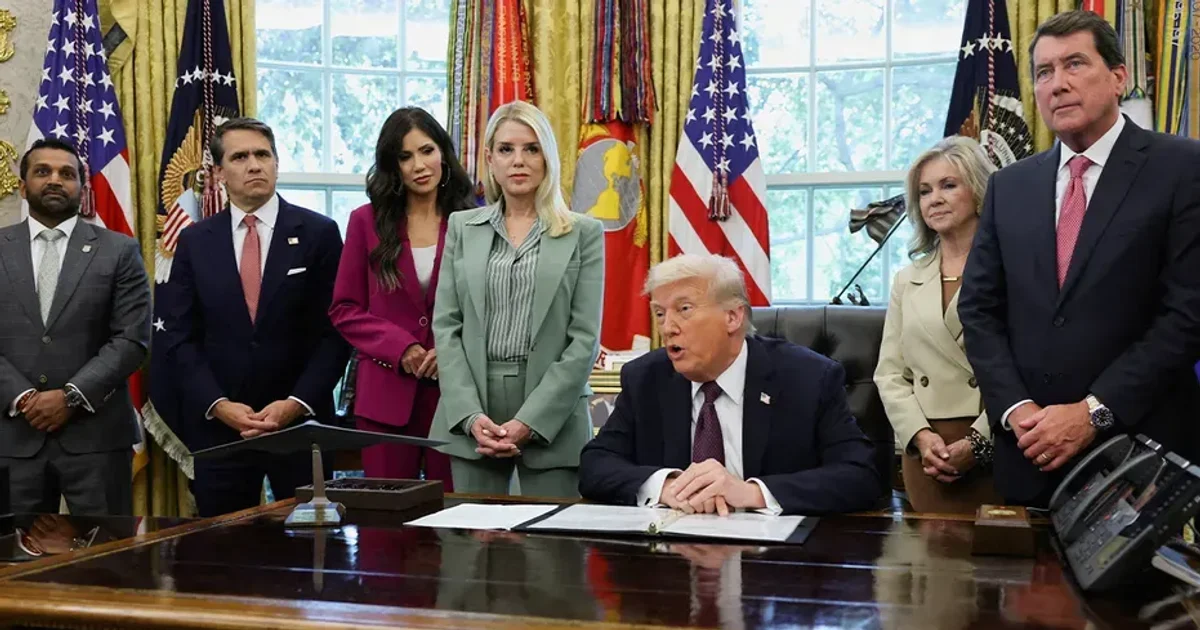
President Donald Trump signaled a radical redirection of federal priorities by proposing the total elimination of heating assistance for low-income families while purging his cabinet of high-profile loyalists. Officials framed the move as a governing reset. The April 3, 2026, budget outline and personnel notices showed the shift in concrete terms. Legislative documents released by the White House indicate a sixth attempt to shutter the Low-income Home Energy Assistance Program, widely known as LIHEAP. Administration officials argued that the program no longer aligns with the executive agenda of fiscal austerity and energy independence. Critics in both parties suggest the timing of this budget cut coincides with a period of intense internal instability within the executive branch.
Kristi Noem departed her post at the Department of Homeland Security recently, and the administration confirmed that Attorney General Pam Bondi was fired from the Department of Justice. Personnel changes often occur before critical election cycles, yet the current turnover rate exceeds typical historical patterns. Republican leaders now worry about maintaining their slim majorities in the House and Senate. Approval ratings for the president have stayed underwater for several months as a conflict with Iran continues to strain federal resources and public patience.
Kristi Noem and Pam Bondi Exit Executive Branch
Dismissal of Pam Bondi occurred via a social media post only hours after media reports indicated her position was in jeopardy. Sources close to the White House suggest the firing caught several senior staffers off guard. Bondi had been a staunch defender of the president throughout multiple legal challenges. Her departure leaves a significant vacancy at the top of the nation's primary law enforcement agency. Internal friction regarding the management of the $11 billion department budget may have contributed to her sudden exit.
Bondi left the building within hours of the announcement.
Kristi Noem likewise vacated her role at the Department of Homeland Security following a series of disagreements over border policy and administrative overhead. The Department of Homeland Security faces increasing scrutiny as the 2026 midterm elections approach. White House officials have moved to replace these figures with individuals who mirror the president's current hardline stance on both foreign and domestic policy. The recent departures form part of a broader strategy to consolidate power before the upcoming electoral contest.
Budget Proposal Targets Low-income Home Energy Assistance
Eliminating LIHEAP is central of the newest budget proposal. The program provides critical funding for heating and cooling to millions of vulnerable Americans. Administration officials state that the federal government should not be in the business of subsidizing utility bills. While Bloomberg suggests the cuts are necessary for debt reduction, Reuters' sources claim the move is a tactical shift to redirect funds toward military expenditures. Projections show that the removal of these grants would leave millions of households without a safety net during extreme weather events.
The program currently assists roughly 6 million households annually.
Legislative opposition to these cuts is expected to be fierce in cold-weather states like Maine and Michigan. Senators from both sides of the aisle have previously blocked attempts to defund the energy assistance program. This year the administration appears more determined to force the issue through the reconciliation process. Records indicate that LIHEAP has enjoyed bipartisan support since its inception in 1981. Federal grants for energy assistance have consistently been viewed as a life-saving measure for the elderly and disabled.
Tulsi Gabbard Faces Internal Pressure Over Iran Conflict
Director of National Intelligence Tulsi Gabbard finds herself in the crosshairs of a potential cabinet shakeup. Her skepticism regarding the ongoing conflict with Iran has reportedly irritated the president. Gabbard, a military veteran, has not adopted the same hawkish rhetoric as other members of the security cabinet. Internal reports suggest she may have failed to condemn Joe Kent, the former counterterrorism chief who criticized the president's decision to strike Iranian targets. Tension between the intelligence community and the West Wing continues to escalate.
“I think she's probably a little bit softer on that issue, but that's okay,” Trump said regarding Director of National Intelligence Tulsi Gabbard.
White House Communications Director Steven Cheung denied rumors of Gabbard's imminent firing on Thursday. Cheung stated that the president maintains total confidence in her leadership despite their policy differences. Public assurances often precede sudden departures in this administration. Gabbard's history as a former Democrat makes her an outsider within the core MAGA circle. Her continued presence in the cabinet depends on her willingness to align with the current military trajectory.
Republican candidates are bracing for a difficult midterm cycle as the administration's approval ratings stay low. The elimination of popular programs like LIHEAP could alienate moderate voters in swing districts. Congressional leadership has expressed concern that constant cabinet turnover creates a perception of chaos. While some loyalists applaud the purge of perceived moderates, others fear the loss of experienced administrators like Bondi. The party holds only a razor-thin margin in both chambers of Congress.
Personnel choices now hinge entirely on strict adherence to the administration's military posture in the Middle East.
National security remains the primary focus of the executive branch as the war with Iran enters a new phase. Every budget dollar saved from social programs is a dollar that can be spent on defense procurement. Voters in the Midwest and Northeast will likely decide whether this trade-off is acceptable. Political analysts note that the administration's gamble rests on the hope that a strong military showing will outweigh the domestic pain caused by budget cuts. The latest polling data from key battleground states suggest a deepening divide over these fiscal priorities.
Federal Priorities Shift Toward Loyalty and Cuts
Niccolò Machiavelli observed that a prince should always seem to have great qualities, but he actually only needs to be a master of the purge. President Trump is currently executing a textbook consolidation of power that prioritizes ideological purity over administrative stability. By removing figures like Pam Bondi and Kristi Noem, the White House is signaling that previous loyalty provides no protection against current policy disagreements. The administration is essentially stripping away the veteran political guard to make room for a war cabinet that will not question the expansion of the Iran conflict.
A gamble of desperation currently defines the West Wing. Proposing the elimination of LIHEAP for the sixth time is not an act of fiscal conservatism so much as a declaration of war against the bipartisan consensus that has governed the federal safety net for forty years. The president is betting that he can maintain his base while cutting the very services they rely on to survive. It is a strategy that assumes the electorate cares more about foreign dominance than home heating. History rarely favors those who ignore the material needs of their own citizens to fund distant quagmires. The coming midterms will serve as the ultimate referendum on whether the American public values geopolitical aggression over domestic stability.