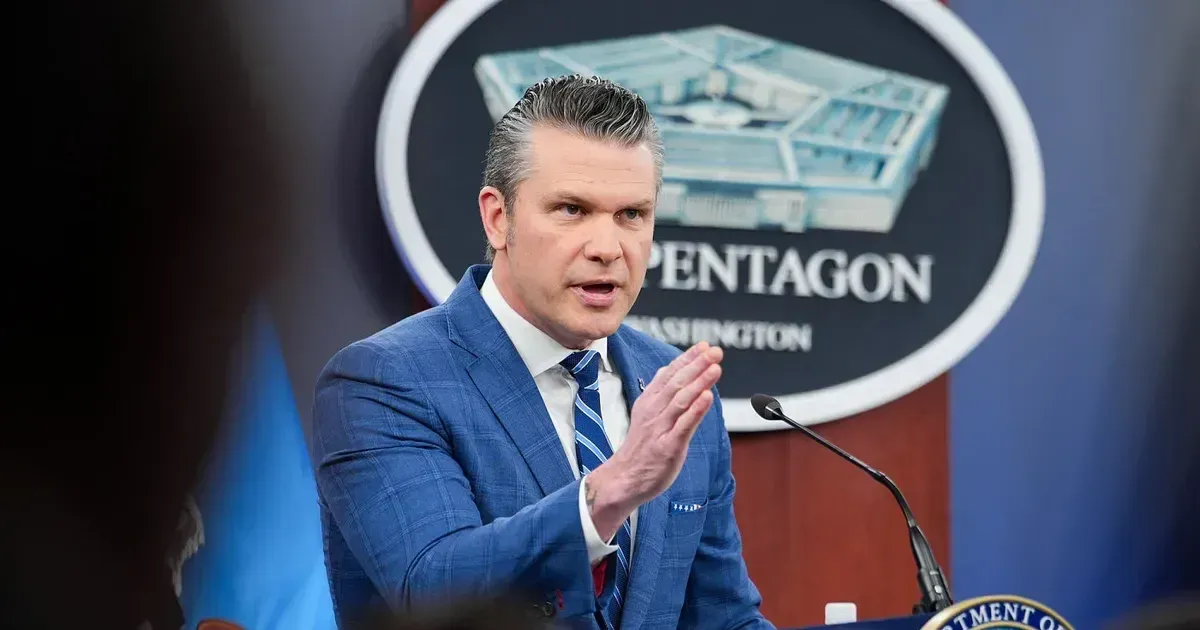
Republican defense politics are shifting as Army leadership clashes with Pentagon messaging. The dispute matters because command discipline and public loyalty are now colliding. Dan Driscoll, the Secretary of the Army, defended his service branch’s professional integrity during a House Appropriations Defense Subcommittee hearing on April 16, 2026. This testimony occurred within a tense atmosphere inside the Rayburn House Office Building. Defense Secretary Pete Hegseth and President Donald Trump have recently reshaped the Pentagon hierarchy through a series of rapid dismissals. General Randy George, the former Chief of Staff of the Army, lost his position earlier this month in a move that unsettled many within the uniformed ranks. Lawmakers now seek clarity on the administration’s long-term vision for the military command structure.
Dan Driscoll Testimony and Army Command Challenges
Republican members of the subcommittee signaled their continued confidence in Dan Driscoll throughout the morning session. Members focused their inquiries on the operational readiness of the Army during the ongoing conflict with Iran. Witnesses included Driscoll and the acting chief of staff, General Christopher LaNeve. LaNeve stepped into the role once George was removed from his post. Congressional leaders from both parties expressed concern regarding the timing of such a serious leadership change. Military operations in the Middle East require consistent oversight and stable leadership.
Subcommittee Chairman Ken Calvert asked specifically about the transition between the permanent and acting chiefs of staff. Driscoll confirmed that the Army maintains its combat focus despite the change in personnel at the very top. Projections show that the Army must maintain high deployment cycles to support regional allies. General George possessed a reputation for technical expertise and strategic caution. His removal prompted questions regarding ideological alignment between the civilian leadership and the Joint Chiefs of Staff.
Democratic representatives questioned whether the firing was politically motivated. Driscoll declined to speculate on the specific reasons provided by the White House or the Office of the Secretary of Defense. Communication between the Secretary of the Army and the Secretary of Defense has reportedly been strained. Republicans emphasized that Driscoll remains a steady hand for the service branch. Budgetary priorities dominated the second half of the hearing as officials reviewed the administration’s request.
General Randy George Removal and Christopher LaNeve Rise
General Randy George had been the Army’s top officer before his sudden departure. His exit follows a pattern of high-level personnel changes within the Department of Defense. General Christopher LaNeve now manages the daily requirements of the service in an acting capacity. Officers within the Pentagon describe LaNeve as a capable commander who inherited a difficult political situation. Every branch of the armed forces faces scrutiny under the new $1.5 trillion defense budget proposal. The firing of a confirmed service chief during an active conflict is rare in American history.
Stability at the top of the chain of command impacts troop morale and procurement timelines. Congressional aides noted that the committee received very little notice before the announcement regarding George. Republican lawmakers generally avoid criticizing the president’s personnel choices but have made an exception for Driscoll. They view the Army Secretary as an essential bridge between the administration’s political goals and the needs of the soldiers. Driscoll’s testimony highlighted the logistical challenges of supporting forces in Iran and elsewhere. The administration remains committed to securing record Pentagon funding to sustain operations during the ongoing Iran conflict.
Pete Hegseth Rhetoric Targets Media and Military Critics
Secretary Pete Hegseth took a combative stance toward those questioning the administration’s military strategy. He directed his most pointed remarks at journalists covering the Pentagon and the war effort. Media reports have scrutinized the rapid turnover of generals and the shifting goals of the Iran campaign. Hegseth suggested that negative coverage undermines national security and demoralizes the fighting force. This approach coincides with his broader effort to reform the Department of Defense culture.
During the same period, Defense Secretary Pete Hegseth escalated his attacks on the media, comparing reporters covering the Iran war to the Pharisees.
Religious metaphors have become a hallmark of Hegseth’s public communication. Comparing the press to biblical figures suggests a perceived moral divide between the administration and the media. Critics argue that such language complicates the relationship between the government and the public. Hegseth believes a more patriotic press corps would better serve the national interest. Journalists from various outlets continue to report on the internal frictions between Hegseth and the traditional military establishment.
Public statements from the Defense Secretary often bypass traditional press channels. Hegseth prefers direct communication through social media and friendly news outlets. Journalists have documented several instances where Hegseth criticized senior officers for being too focused on non-combat initiatives. He argues that the Army must return to a singular focus on winning wars. General Randy George was reportedly seen as too traditional in his approach to force modernization. Hegseth desires a faster, more disruptive transformation of the military.
Federal Defense Budget Allocations for Iran Conflict
President Trump’s $1.5 trillion defense budget request is the backdrop for these leadership disputes. A meaningful portion of this funding is dedicated to the ongoing war against Iran. Subcommittee members analyzed specific line items for munitions, long-range fires, and drone defense systems. Driscoll testified that the Army requires sustained investment to outpace regional adversaries. Proponents of the budget argue it provides the necessary resources for a decisive victory. Opponents suggest the spending is unsustainable and lacks sufficient oversight.
Funding for the Army specifically targets the replenishment of stockpiles depleted by recent operations. Procurement of new technology remains a priority for both Driscoll and LaNeve. House Appropriations Defense Subcommittee members must decide how much of the $1.5 trillion to approve. Each dollar spent on the Iran conflict is a dollar unavailable for other global priorities. Financial documents indicate that the cost of the war has exceeded initial projections by 20%. The fiscal year 2026 request represents one of the largest defense asks in decades.
Documentation provided to the committee shows that personnel costs account for nearly one-third of the total request. Army Secretary Driscoll emphasized that soldier welfare and housing are essential for retention. Acting Chief of Staff LaNeve echoed these sentiments during his portion of the testimony. Lawmakers expressed concern that internal leadership clashes might distract from these critical funding needs. Republican support for Driscoll provides him with some leverage as budget negotiations proceed. The hearing concluded with a promise of further transparency regarding the firing of General George.
Army Politics Moves Into the Open
Does the dismissal of a respected general improve military lethality or merely ensure political compliance? The sudden removal of General Randy George suggests that Secretary Pete Hegseth prioritizes ideological loyalty over the institutional stability of the Army. By purging the top brass during an active conflict with Iran, the administration risks a dangerous disconnect between political directives and tactical reality. Hegseth is not just reforming the Pentagon; he is dismantling the firewall that has traditionally protected the professional officer corps from partisan whims.
Driscoll finds himself in an unsustainable position. He must maintain the confidence of a restive officer corps while satisfying a Defense Secretary who views the traditional military establishment with open contempt. That congressional Republicans are rallying around Driscoll rather than Hegseth indicates a growing rift within the party. This internal friction will likely slow the approval of the $1.5 trillion budget. A military cannot effectively fight a two-front war against a foreign adversary and its own civilian leadership.
Hegseth’s comparison of the media to the Pharisees is more than colorful rhetoric. It is a declaration that dissent is heresy. When a Secretary of Defense uses religious exclusionary language to delegitimize oversight, the democratic check on military power begins to erode. The Army needs a Chief of Staff who can focus on the Iran war, not an acting placeholder wondering who will be the next to fall. Hegseth is playing a high-stakes game with national security. The result will be a hollowed-out command structure.