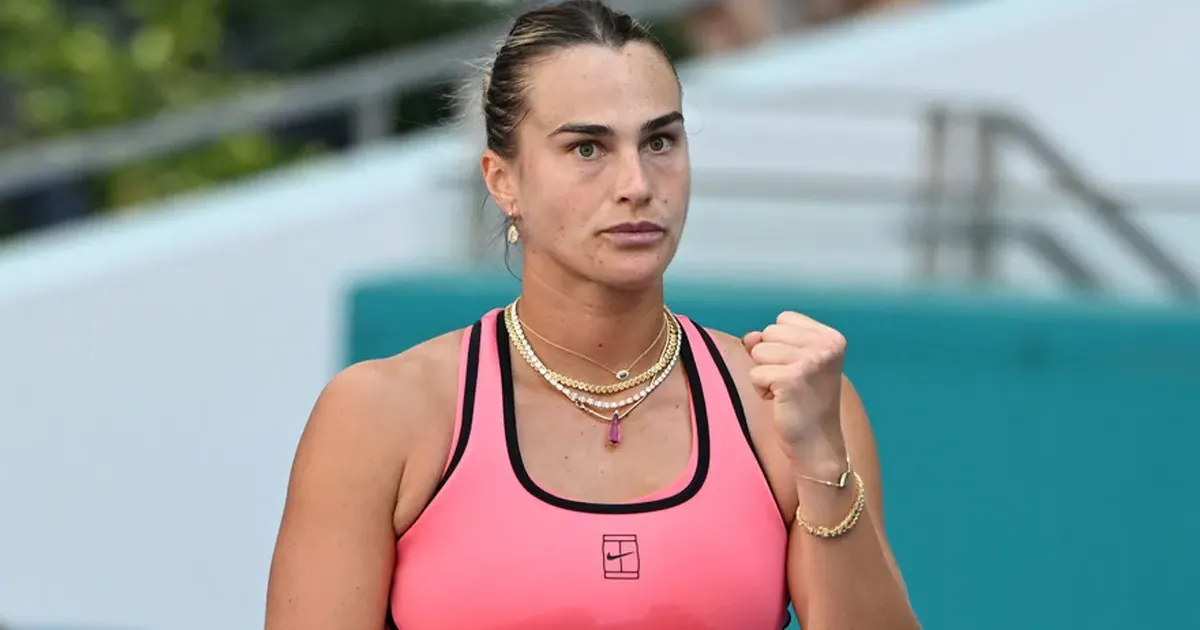
Aryna Sabalenka turned a tense Miami Open final into another statement win over Coco Gauff. Sabalenka won 6-2, 4-6, 6-3 on March 28, 2026, defending her Miami title and completing the Sunshine Double after her Indian Wells triumph.
That is rare territory. The Miami Open and WTA records framed Sabalenka as only the fifth woman to win Indian Wells and Miami back-to-back in singles, joining a short list of players whose hard-court dominance carried across both stops.
Gauff made the final competitive by taking the second set, but Sabalenka controlled enough of the first-strike tennis to keep the match on her terms. Even when Gauff extended rallies, she spent too many points recovering neutral court position after Sabalenka's opening attack.
Sabalenka Controlled the First Strike
Sabalenka's advantage came from the first heavy ball. When she landed a strong return or stepped inside the baseline early, Gauff defended from uncomfortable positions. That pattern made the opening set move quickly and made Gauff's service games feel fragile.
Gauff's second-set response mattered because it showed she can still change the emotional direction of this matchup. She extended rallies, forced extra shots and found enough depth to stop the final from becoming one-way traffic.
The third set restored the hierarchy: Sabalenka dictated first, and Gauff had to answer from behind the point.
Sabalenka did not need to redline every exchange. She needed enough depth to stop Gauff from turning defense into offense. That controlled aggression is the more mature version of her hard-court game, and it is why the Sunshine Double felt like confirmation rather than surprise.
Gauff Has a Clear Adjustment List
The loss does not erase Gauff's week, but it gives her team a precise list of pressure points. Her movement and defensive range still make her one of the few players who can survive Sabalenka's best spells. The next step is turning survival into control.
Against Sabalenka, short forehands and cautious second serves are punished quickly. Gauff needs more consistent depth and more cheap points on serve if she wants to flip this matchup in finals.
That is a technical challenge, not a reputational one. Gauff does not need a new identity as a player. She needs more reliable ways to start points on even terms against the opponent most capable of rushing her mechanics.
Miami Clarified the Hard-Court Order
For Sabalenka, Miami confirmed that her 2026 hard-court form was not just a hot streak. Winning Indian Wells and Miami in the same season requires recovery, tactical discipline and emotional control across two demanding events.
The title also gave her breathing room before the clay swing. She will not enter every surface as the same favorite, but she built a points cushion and a psychological edge over the field. Chasing players now have to solve a version of Sabalenka that is more patient than the older all-or-nothing hitter.
The hard read is that Miami did not close the Sabalenka-Gauff rivalry. It clarified where it stands. Sabalenka owns the more reliable attacking pattern on hard courts. Gauff has enough movement and competitive range to make the matchup uncomfortable, but not yet enough first-strike authority to own the biggest points. Until that changes, Sabalenka is setting the terms.