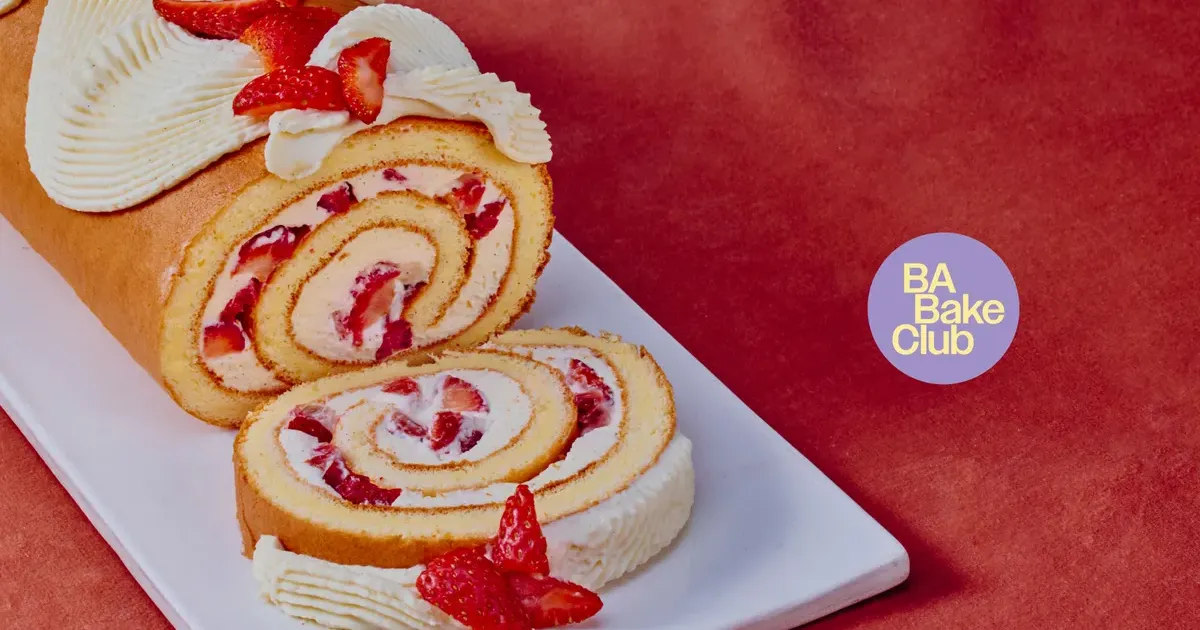
On April 1, 2026, Shilpa Uskokovic debuted a refined Strawberry Shortcake Roll through the Bon Appétit Bake Club, marking a specific evolution in seasonal pastry design. This recipe arrived as the flagship entry for spring programming, aiming to resolve enduring structural issues associated with the Swiss roll format. Editorial staff at both Bon Appétit and Epicurious designated the dessert a birthday favorite within their shared test kitchen facilities. Success in a professional kitchen environment usually translates to viral popularity among home cooks seeking technical precision. Documentation suggests the development process involved over 4,000 professional test kitchen hours.
Swiss rolls require a specific type of sponge cake that maintains flexibility without sacrificing the airy density required for a traditional shortcake flavor profile. Most sponge cakes rely on mechanical aeration of eggs to achieve loft. Uskokovic modified this standard by adjusting the protein-to-fat ratios, ensuring the cake remains pliable enough to roll without cracking. Traditional American shortcakes typically use a crumbly biscuit base, but the Bake Club version adopts a European biscuit style. This structural shift allows for a higher ratio of cream and fruit per bite. External analysts note that consumer interest in technical baking increased by 14% over the last fiscal year.
Bon Appétit Test Kitchen Refines Sponge Mechanics
Bakers often face the frustrating reality of a sponge cake that splits during the rolling process. Achieving a perfect cylinder requires the cake to be rolled while still warm, a technique that traps residual steam to keep the fibers hydrated. Uskokovic emphasizes the use of parchment paper as a stabilizer during this critical cooling phase. Many home bakers ignore the temperature of the eggs, yet room-temperature proteins whip into more stable foams. Stable foams create smaller, more uniform air pockets. These air pockets act as the primary structural support for the finished dessert.
"Shilpa has outdone herself with this birthday-worthy dessert that has become a staple in our professional kitchen space," stated the editorial team at Bon Appétit.
Precision in measurement remains the deciding factor between success and failure in high-stakes baking. The Bon Appétit team advocates for weight-based measurements rather than volume, a standard that is increasingly common in high-end American kitchens. Flour density fluctuates based on humidity and storage conditions. A single gram of deviation can alter the moisture absorption of the batter. Test kitchen data indicates that weight-consistent recipes see a 40% higher success rate among amateur followers. Uskokovic used a specific blend of cake flour to minimize gluten development.
Spring Produce Drives Domestic Baking Trends
Agricultural cycles dictate the timing of these high-profile recipe releases. April marks the beginning of the domestic strawberry harvest in several key southern states. Strawberries picked at peak ripeness contain the highest natural sugar levels and the lowest water content. High water content in fruit can degrade the stability of whipped cream over time. Bakers who source berries early in the season often find the fruit too acidic for traditional shortcake. This acidity requires a higher sugar concentration in the maceration process. The collaborative recipe testing at Bon Appétit and Epicurious reflects a broader trend of shared recipes across major media.
Market analysts track the intersection of seasonal produce and digital engagement. Retailers reported a serious surge in heavy cream and organic strawberry sales following the Bake Club announcement. The specialized nature of the Strawberry Shortcake Roll encourages consumers to purchase high-quality dairy. Domestic dairy producers see a 12% increase in premium cream sales during the spring baking season. Premium cream typically contains 36% to 40% milkfat, providing the necessary stiffness for a rolled filling. Most grocery store brands offer lower fat content which often fails to hold its shape.
Shilpa Uskokovic Modernizes Classic Shortcake Flavors
Flavor profiles in the 2026 recipe move away from the cloying sweetness of late 20th-century desserts. Uskokovic incorporates subtle acidic notes, likely from lemon zest or specialized vanillas, to balance the richness of the sponge. Modern palates increasingly favor complex, less sugary finishes. Vanilla bean paste provides a visual indicator of quality through small black specks distributed in the cream. Pure vanilla extract, while functional, lacks the aromatic depth of the paste. The choice of sweetener also impacts the final texture of the macerated strawberries.
Refined white sugar draws moisture out of the fruit through osmosis, creating a natural syrup. Over-maceration leads to soggy berries that bleed red dye into the white cream filling. Uskokovic recommends a brief 15-minute maceration period to preserve the integrity of the fruit. The timing ensures the berries retain a slight crunch while still releasing enough juice to flavor the surrounding cream. Professional pastry chefs often use a light coating of apricot glaze or simple syrup to seal the cake surface before adding cream. The barrier prevents the sponge from absorbing the moisture of the filling too quickly.
Logistical Challenges of the Perfect Swiss Roll
Rolling the cake requires a combination of speed and gentle pressure. A tight roll creates a beautiful spiral but risks squeezing the cream out of the ends. Loose rolls lack the structural integrity to stand upright once sliced. The Epicurious test kitchen suggests using a damp kitchen towel to maintain humidity during the initial roll. The method prevents the outer skin of the sponge from drying out and peeling. Once the cake cools completely, it is unrolled, filled, and rerolled. Patience during the cooling phase determines the final aesthetic quality of the cross-section.
Visual appeal drives the success of recipes in the modern media environment. A perfectly centered strawberry spiral is the primary marketing image for the Bake Club. Slicing the roll requires a hot, sharp knife to ensure clean edges through the soft cream and sponge. Professional bakers often chill the finished roll for at least two hours before serving. The chilling period allows the fats in the cream to set, locking the structure in place. If the cake is sliced too early, the filling collapses under the weight of the knife. Each slice should be approximately one inch thick for optimal portioning.
The Elite Tribune Strategic Analysis
Luxury baking culture thrives on the illusion of accessibility while raising the bar for domestic competence. The Bon Appétit Bake Club operates as a sophisticated marketing engine, transforming basic ingredients into high-status social currency. By positioning a Strawberry Shortcake Roll as a birthday-worthy challenge, these publications create an artificial hierarchy of skill. Home bakers are no longer merely making dessert; they are performing a technical ritual designed to be documented and shared. The shift from consumption to performance is the primary driver of the $11 billion specialty baking market.
Culinary institutions like Epicurious and Bon Appétit are effectively selling anxiety packaged as expertise. They provide the solution to a problem they helped create: the fear of the imperfect roll. While the technical improvements suggested by Uskokovic are grounded in chemistry, the real message remains exclusionary. If you do not possess a digital scale, premium vanilla paste, and high-fat cream, your results are framed as inherently inferior. The democratization of elite technique is actually a consolidation of brand loyalty through perceived complexity. It is a brilliant, if cynical, method of maintaining relevance in a crowded digital media space.
Success in this environment is measured by how many people feel compelled to attempt a recipe they are statistically likely to fail. Performance over flavor.