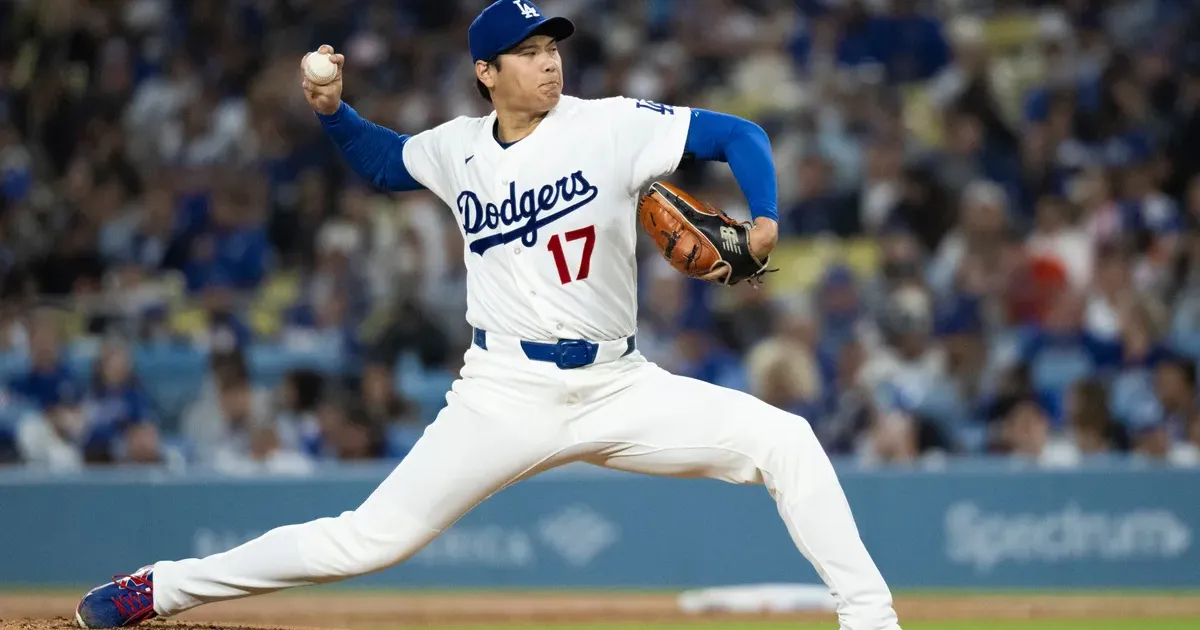
Shohei Ohtani's six scoreless innings against the Cleveland Guardians looked like a clean comeback story on March 31. Three months later, the outing reads as both a template and a warning. It showed the Dodgers that the two-way version of Ohtani could still dominate a major league game. It also began a workload experiment that now has to be managed around knee irritation, skipped pitching assignments and All-Star restraint.
The debut itself was excellent: six innings, one hit, three walks, six strikeouts and 87 pitches in a 4-1 Dodgers win. In the moment, that answered the narrow question of whether Ohtani's pitching stuff could return under game pressure. The season since has raised the larger question of how long one body can carry this much value.
The Cleveland Start Proved the Stuff Was Back
Ohtani's first official pitching start of 2026 was not built on reputation alone. His fastball had enough life to reach the upper 90s, and his breaking pitches carried much of the swing-and-miss. Cleveland could not turn its contact-oriented approach into sustained pressure, and the Dodgers avoided the early bullpen scramble that short starts create.
The evidence mattered because Ohtani was not returning as an ordinary starter. Every pitch doubled as evidence for the Dodgers' roster design. A healthy Ohtani on the mound gives Los Angeles a high-end starter while his bat remains part of the everyday plan. No other roster asset works that way.
The Season Made the Debut Look Less Fluky
The Cleveland game did not stand alone for long. Ohtani kept giving the Dodgers length and run prevention through the first half, often reaching at least six innings and keeping his run prevention near the top of the league. That turned the debut from a good night into the opening note of a real pitching season.
For the Dodgers, that changed the shape of the staff. When Ohtani is supplying six innings with strikeout power, bullpen roles become cleaner and the rotation has more margin. The club is not simply getting star shine. It is getting roster economy, which is far more valuable over six months.
The Knee Issue Reintroduced the Cost
July brought the reminder that Ohtani's value is inseparable from management. Left-knee irritation led the Dodgers to scratch him from a pitching appearance and keep him out of All-Star pitching plans while he remained available as a designated hitter. That is exactly the kind of split decision only Ohtani creates.
Most players are either available or not. Ohtani can be healthy enough to hit and still too important to risk on the mound. The Dodgers have to manage him as two players occupying one body, which means every physical issue carries two separate roster consequences.
The Dodgers Cannot Normalize the Abnormal
The danger after a start like the Cleveland debut is that it makes the unreasonable look routine. Six efficient innings from a hitter who also anchors the lineup can feel like a cheat code. It is also a strain calculation. Pitching recovery, hitting preparation, baserunning, travel and media pressure all sit on the same frame.
Los Angeles can manage pitch counts, rest windows and skipped starts. It cannot make the role ordinary. The more Ohtani succeeds, the more tempting it becomes to ask for more. The club's discipline will be measured by whether it can resist that temptation when the division race or postseason seeding tightens.
The Debut Still Set the Standard
Ohtani's first pitching start gave the Dodgers a true glimpse of their best-case roster. He gave them length, strikeouts, lineup presence and competitive control in one package. The two-way potential keeps the Cleveland game important even after later starts and later health checks.
But the same game also set a standard the Dodgers cannot demand every week without consequence. Ohtani is special because the workload is abnormal. The six scoreless innings showed the promise. The knee management showed the price. Los Angeles has to win by honoring both parts of the bargain.