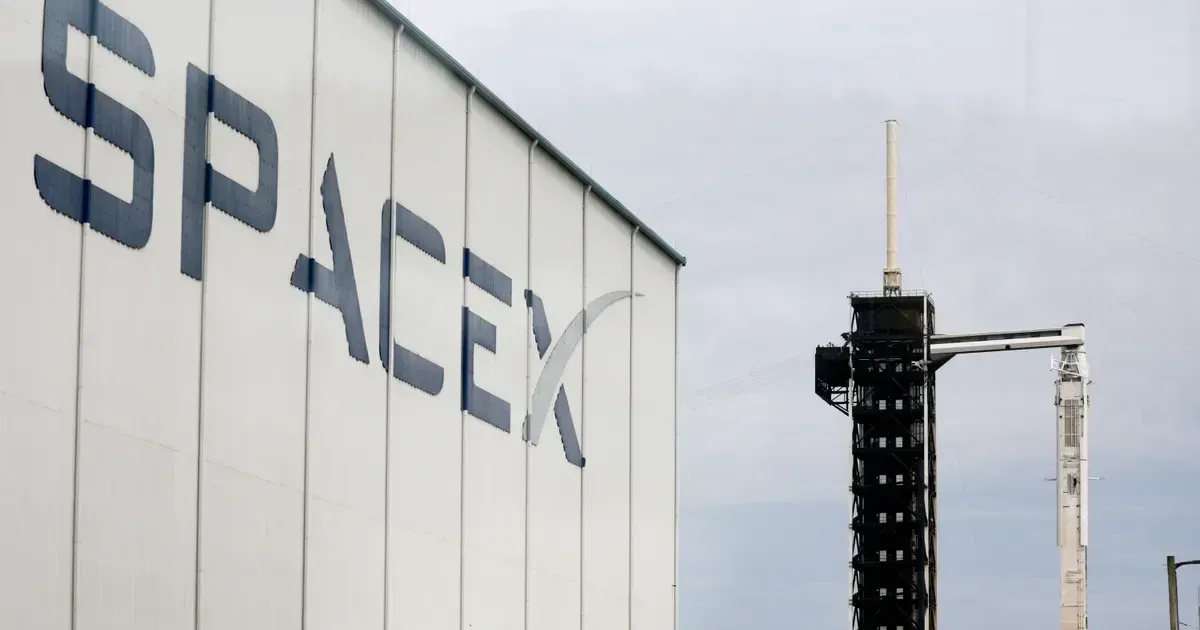
SpaceX launched its upgraded Starship V3 from Starbase after a scrubbed attempt, giving the company a high-profile rocket test just as investors are studying its public offering plans. The flight put the newest version of the world's most powerful launch vehicle in the air and immediately turned a technical milestone into a market story. It also gave the company a public demonstration at the exact moment when questions about capital spending, launch reliability and future revenue are moving from private investors to a wider market.
The launch followed a failed Thursday window and lifted off on Friday, May 22, 2026, from the company's Texas site near the Mexican border. SpaceX had delayed the first attempt for technical checks, then returned to the pad with the redesigned vehicle as the company tried to show that the V3 architecture can move from promise to repeatable flight.
The timing mattered because Elon Musk's company had recently made its IPO filing public. SpaceX's earlier filing and investor materials tied the business case to Starship's ability to carry larger payloads, support Starlink expansion and eventually serve NASA lunar commitments. A clean launch does not settle those questions, but it gives the company a stronger proof point than another ground delay would have offered. It also helps explain why a single flight test can influence a broader financial narrative: Starship is not a side project in the filing, but one of the systems expected to support the company's next stage of growth.
Flight controllers tracked stage separation and early ascent performance while engineers watched how the larger vehicle handled the stress of launch. The V3 version is designed to carry more mass than previous Starship vehicles, with a stronger structure and upgraded systems intended to support heavier missions. That makes each flight less like a demonstration and more like a test of the commercial model SpaceX is presenting to investors.
The scrubbed first attempt also showed why the rocket remains a development program rather than a routine launch system. Starship has advanced through rapid testing, but each new configuration brings fresh hardware risk. SpaceX's decision to pause for checks preserved the vehicle and kept attention on engineering discipline rather than a rushed countdown.
Starship V3 Test Raises the IPO Stakes
For investors, the flight sits beside a larger question raised by the company's public filing: whether Starship can become a reliable industrial platform rather than an experimental rocket. SpaceX already dominates much of the commercial launch market, but the valuation argument around an IPO depends on future capacity, lower cost per kilogram and regular heavy-lift operations.
The company has also linked Starship to next-generation satellite deployment. A reliable V3 cadence could help SpaceX launch larger Starlink hardware and reduce dependence on smaller rockets for some missions. That would strengthen the case that the launch business, broadband network and long-range exploration plans are part of one integrated infrastructure system.
NASA and other government customers are watching for different reasons. Starship is central to lunar landing plans, and the upgraded vehicle must prove not only that it can fly, but that it can support repeated operations, recovery work and mission-specific modifications. A successful test flight gives engineers more data, but it also raises expectations for the next attempt. The agency and commercial satellite customers need a system that can move from spectacular test events to scheduled service, because contracts and deployment plans depend on dates, payload capacity and confidence in the vehicle's risk profile.
The market reaction will depend on consistency rather than one launch. Public investors may reward the symbolism of the V3 debut, yet regulators, customers and analysts will look for a string of flights that show the vehicle can survive the transition from test article to working transportation system. That is why the next launches may matter as much as this one. The same logic applies to SpaceX's internal manufacturing rhythm: a larger rocket only becomes a business advantage if the company can build, inspect and fly vehicles without letting each test become a long interruption.
Repeatable Flight Will Decide Whether V3 Supports the IPO Case
SpaceX now has to turn a visible launch into repeatable progress. Future missions are expected to focus on recovery, turnaround time, thermal protection and payload operations, all of which matter more to revenue than raw liftoff power. The company can celebrate the V3 milestone, but the business case still depends on proving that the rocket can fly often and safely. That is especially true for a vehicle whose commercial promise rests on scale, because a larger rocket only changes the economics if customers can plan around predictable service.
The IPO filing gives those engineering tests a financial audience. If Starship keeps moving forward, SpaceX can argue that its valuation rests on infrastructure already taking shape. If delays return, investors will have to decide how much patience they have for a rocket system that remains essential to the company's most ambitious promises. The flight therefore marks a step forward, not the end of the risk story. Engineers will also compare this flight with prior Starship tests to show investors whether the vehicle is moving toward repeatable operations rather than isolated milestones. That evidence matters before valuation claims become public-market commitments.