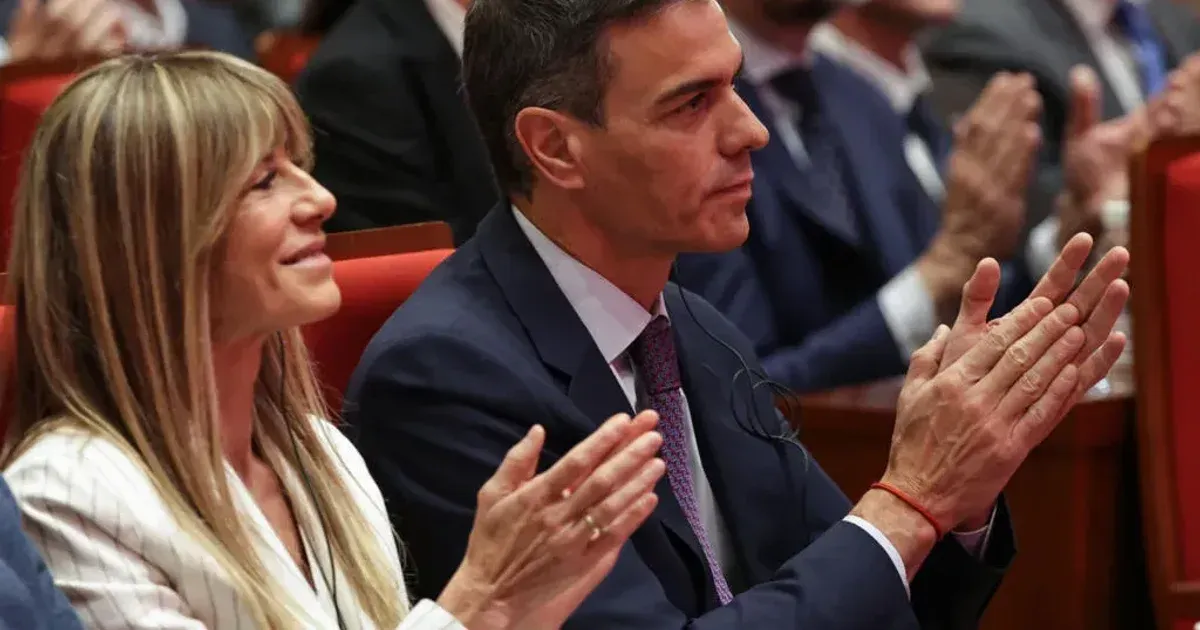
A Madrid court has formally charged Begoña Gómez, raising the legal and political pressure on Spain's minority government. The case immediately moved from reputational problem to governing threat for Prime Minister Pedro Sánchez. The corruption and influence-peddling charges were announced on April 13, 2026, after a long-running investigation into whether Gómez used her position to benefit private work and associates.
Madrid Court Details the Charges
Spanish law defines influence peddling as the use of a personal relationship with a public official to achieve a beneficial outcome for oneself or a third party. Prosecutors in Madrid allege that Gómez enabled meetings between business leaders and government decision-makers. Such interactions, according to the prosecution, resulted in an unfair advantage for the companies involved. The indictment specifically mentions several infrastructure and technology firms that reportedly saw increased success in public tenders shortly after engaging with Gómez in a professional capacity. Court records show that the investigation began following a complaint by a group known as Manos Limpias, or Clean Hands. While critics originally dismissed the complaint as a frivolous attempt to destabilize the government, the presiding judge found sufficient merit to authorize subpoenas and forensic accounting reviews. These reviews focused heavily on the master's degree program Gómez directed at the Complutense University of Madrid. Documents suggest that sponsorship for the program increased sharply during her husband's tenure as Prime Minister. Judicial officers have spent months interviewing witnesses from both the university and the private sector. One anonymous source within the university administration reportedly testified about pressure to approve certain funding initiatives linked to Gómez. The prosecution also examines whether travel expenses for Gómez's private business trips were occasionally covered by public funds or by the entities seeking government favors. Each charge carries a potential prison sentence of several years under the current Spanish penal code.
Minority Government Faces New Pressure
Prime Minister Pedro Sánchez leads a fragile minority government that relies on the support of various regional and ideological factions. These partners, including the left-wing Sumar party and Catalan separatist groups, now face intense pressure to distance themselves from the administration. Historically, Spanish governments have struggled to survive corruption scandals involving family members of the executive. The ongoing nature of this probe has already delayed key legislative priorities, including the national budget and labor reforms. Legislative allies have expressed private concern about the longevity of the current coalition. If the partners withdraw their support, Sánchez might be forced to call for early elections, a scenario that current polling suggests would favor the conservative opposition. Government ministers have spent the afternoon holding emergency meetings to coordinate a unified response to the latest court ruling. They maintain that the Prime Minister has no intention of stepping down despite the mounting legal costs and public scrutiny. Political analysts note that the timing of these charges complicates Spain's role in European diplomacy. With Spain currently seeking a larger voice in EU fiscal policy, a domestic scandal of this magnitude weakens the prime minister's negotiating position in Brussels. Leaders from other European nations have so far refrained from commenting on the case, treating it as an internal judicial matter. The volatility of the Spanish stock market on Monday reflected investor anxiety regarding potential government instability.
"The allegations lack legal foundation and serve a clear political agenda," according to a statement released by the legal defense of Begoña Gómez.
Public opinion remains deeply divided along partisan lines. Pro-government supporters gathered outside the court to protest what they call the judicialization of politics. By contrast, anti-government demonstrators held rallies in central Madrid, carrying signs that called for transparency and accountability. The polarization of the electorate has reached levels not seen in years, making any bipartisan resolution to the crisis unlikely.
Gómez Defense Challenges the Case
Defense attorneys for Gómez have already filed motions to dismiss several key components of the prosecution's case. They argue that the documents obtained by the court do not prove a direct causal link between the actions of Gómez and the awarding of any specific government contracts. According to the defense, Gómez has a legitimate professional career that predates her husband's entry into the Moncloa Palace. They contend that her success is a result of her own qualifications and networking rather than any abuse of her husband's office.
Legal experts observe that the prosecution must meet a high burden of proof to secure a conviction for influence peddling. Under Spanish law, it is not enough to show that a relationship existed; the state must prove that the relationship was actively used to distort a public process. The defense team plans to call a series of business executives to testify that their interactions with Gómez were strictly professional and unrelated to government procurement. This strategy seeks to decouple the private career of Gómez from the public duties of Sánchez.
Gómez herself has stated that she followed all ethical guidelines required by the university and the companies she worked for. She points out that all contracts mentioned in the probe underwent standard oversight procedures. If the court finds that these procedures were followed, the prosecution's case might collapse before reaching a final verdict. The judge, however, maintains that the sheer volume of coincidences warrants a full public airing of the facts.
The Socialist Party fallout is now spreading beyond the courtroom. Socialist organizations across Europe are watching the developments in Spain with increasing alarm. The Spanish Socialist Party has been one of the most successful left-wing movements in the region, providing a template for other parties struggling against the rise of the far-right. A conviction or a prolonged scandal could tarnish the brand of social democracy across the continent. International media outlets have provided extensive coverage of the case, highlighting the potential for a shift in the Mediterranean political balance.
European Union officials in Strasbourg have expressed concerns about the impact on regional cooperation. Spain is a major recipient of EU recovery funds, and any perception of corruption in the highest levels of government could trigger stricter oversight from the European Commission. While there is no evidence that EU funds were involved in the Gómez case, the atmospheric damage to Spain's reputation for transparency is meaningful. The European Public Prosecutor's Office has reportedly requested a briefing on the case to determine if any EU interests are at stake.
Sánchez has attempted to pivot the national conversation toward economic growth and environmental policy. Despite these efforts, every public appearance is now dominated by questions regarding his wife's legal status. The Prime Minister's communication team has restricted press access in an attempt to control the narrative. The court has scheduled the first round of public testimony for the upcoming month.
Legal Pressure on Sánchez
The formal charging of Begoña Gómez means the end of the honeymoon period for the Sánchez administration and the beginning of a period of institutional paralysis. While the Prime Minister attempts to frame this as a partisan witch hunt, the reality is that the Spanish judiciary has demonstrated an uncomfortable level of independence from the executive branch. This collision extends beyond a legal hurdle to become a stress test for the constitutional framework of a country that still feels the echoes of its authoritarian past. If Sánchez believes he can simply outlast the judicial calendar, he is gravely mistaken about the mechanics of public trust.
Power in a democracy is not just about holding office but about maintaining the appearance of integrity. When the personal business interests of a leader's spouse intersect with the state's procurement processes, the resulting shadow obscures every legislative achievement. The Socialist Party is currently making a dangerous bet by tethering its entire future to the legal fate of a single family. By refusing to acknowledge the ethical lapses inherent in these business arrangements, the party risks alienating the very voters who look to it for moral leadership against corporate greed.
The defense's insistence that Gómez is a victim of her husband's success is a rhetorical shield that has already begun to crack under the weight of documented correspondence. Spanish voters are sophisticated enough to distinguish between a political smear and a legitimate inquiry into the privatization of public access. Systemic failure is imminent.