Las Vegas bookmakers spent the early hours of Saturday morning adjusting lines for a slate of games that will define the 2026 postseason. Championship Saturday has arrived, bringing with it the high-stakes culmination of the conference tournament cycle. Conference tournament models are shaping bettor behavior before a slate that will decide automatic bids and move national seeding lines. Professional bettors and casual fans alike are pouring resources into the betting markets, seeking an edge in three high-profile matchups. These games will determine automatic bids for the national tournament while shifting the seeding for the remaining at-large candidates. Estimates from industry trackers suggest the total handle for this weekend could surpass $11 billion across legal US sportsbooks. The volume of wagers reflects a growing reliance on complex data models over traditional scouting methods. SportsLine and other analytical platforms have released simulations for the Big Ten, Big East, and ACC finales. These models process thousands of data points, including offensive efficiency, defensive rotations, and even individual player fatigue levels. Winning in March requires not only talent; it requires the ability to withstand the mental grind of playing three or four games in as many days. Analysts note that fatigue often manifests in the second half of these title games, leading to a dip in three-point shooting percentages. This particular reality has forced oddsmakers to keep point totals lower than their regular-season averages.
Conference Finals Drive Betting Interest
Michigan enters the Big Ten Tournament semifinal as a team looking to solidify its resume for a high seed in the national bracket. Led by the versatile play of Yaxel Lendeborg, the Wolverines have demonstrated a capacity to dominate the interior. But their opponent on Saturday represents one of the most disciplined defensive units in the country. The Badgers have built a reputation for slowing the tempo and forcing opponents into contested jump shots at the end of the shot clock. According to recent simulations, the key to this game lies in the turnover margin. Wisconsin rarely beats itself, meaning the Wolverines must play a nearly flawless game in transition to find easy scoring opportunities. The pressure has never been higher. Success for the Badgers depends on their ability to limit Lendeborg's touches in the paint.
Models Turn Matchups Into Probabilities
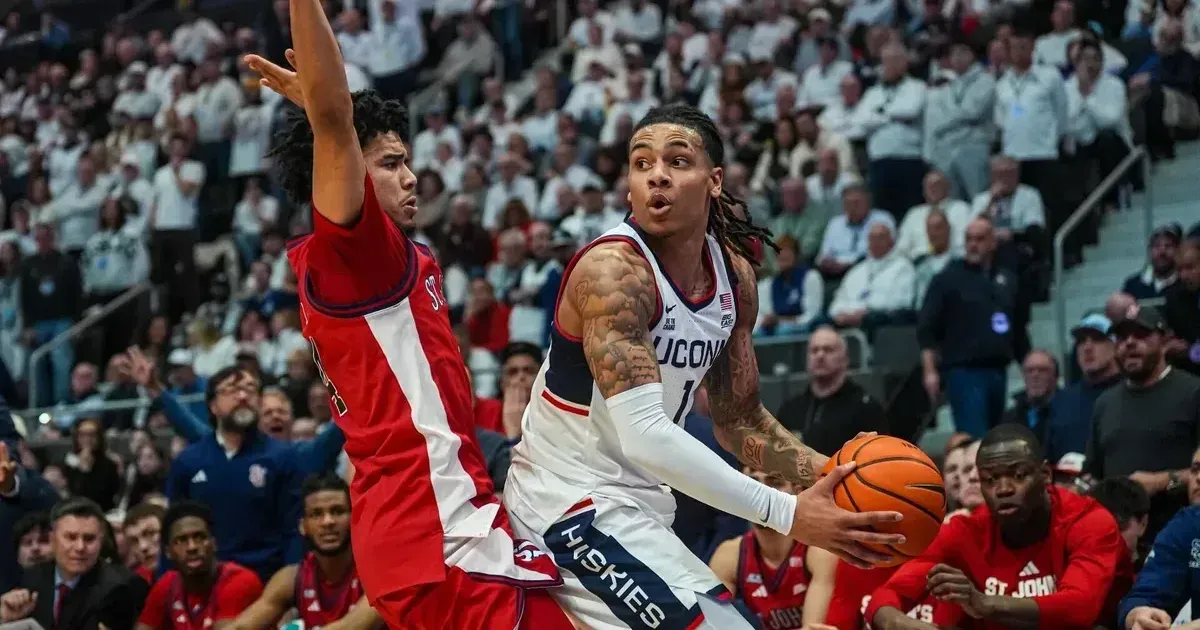
Madison Square Garden will host a clash between two programs with deeply intertwined histories in the Big East. UConn arrives in New York City with the pressure of a defending champion on its shoulders. Solo Ball has become the primary engine for the Huskies, providing consistent scoring from both the wing and the free-throw line. St. John's has used its home-court advantage in Manhattan to fuel an aggressive, full-court press that rattled opponents in the earlier rounds. The ball-handling duties for the Huskies will be under intense scrutiny throughout the forty-minute contest. The simulation accounts for over 10,000 game-day scenarios to identify value where the public might be biased. SportsLine's model has run thousands of simulations for this particular title game. It highlights a critical discrepancy in the rebounding metrics between the two squads. The Red Storm have proven they can win games even when they lose the battle on the glass by relying on points off turnovers. In particular, the matchup between Solo Ball and the St. John's defensive specialists will likely dictate the flow of the game.
Defense remains the primary metric for the Cavaliers.
Boozer will be forced to operate in tight spaces, as the Virginia coaching staff is known for double-teaming elite post threats. Meanwhile, the Blue Devils have improved their own defensive intensity over the last month, proving they can win low-scoring grinds as well as track meets. For instance, in their last three outings, the Blue Devils held opponents to under 30 percent from beyond the arc. This trend is a nightmare for a Virginia team that relies on timely three-pointers to supplement its deliberate offensive sets. The total for this game has dropped three points since the initial numbers were posted by the offshore books.
Data-driven predictions have largely replaced the traditional gut feelings of the sports betting world. SportsLine's simulations provide a probability percentage for every possible outcome, allowing bettors to identify where the bookmakers have mispriced a line. The model identifies value in the underdog in nearly 40 percent of conference tournament games. The goal is to filter out the noise of the crowd and focus on the cold, hard numbers of efficiency ratings. Saturday's slate offers three prime examples of how these models can provide a clearer picture than the headlines might suggest.
Bettors are increasingly wary of backing a favorite simply because of their brand name or previous success. The betting volume on mid-tier programs has risen, as models highlight their statistical advantages in particular matchups. The ACC final, for example, shows a much tighter margin in the simulations than the public perception of the Duke roster would imply. By focusing on the nuances of the Pack Line defense against Boozer's offensive gravity, the models offer a distinct perspective. The final buzzer in each of these three games will provide the ultimate validation for the algorithms. Professional gamblers will be watching the closing lines to see where the late money moves the market. The final totals for the weekend will likely break every previous wagering record in the state of Nevada.
Models Should Not Replace Watching
Why do we still cling to the myth of parity when the financial and analytical gap between the top tier and the rest of the field is widening into a chasm? The rise of complex models like those at SportsLine is not a tool for the average fan; it is a weapon for a new class of technocratic bettors who treat the tournament like a high-frequency trading floor. We are no longer watching a game of emotional momentum or locker-room speeches. Instead, we are observing a series of cold simulations playing out in physical space.
The romanticism of the underdog is dead, killed by 10,000 simulations that tell us exactly how often a team like Virginia will suffocate a talent like Cameron Boozer. If you are betting on heart, you are betting on a ghost. The smart money has already moved on to the next data set, indifferent to the traditions of the ACC or the Big East. College basketball has become a math problem, and the only question left is who has the better algorithm to solve it. The reality might offend the purists, but the betting windows do not care about your feelings.
They only care about the spread.