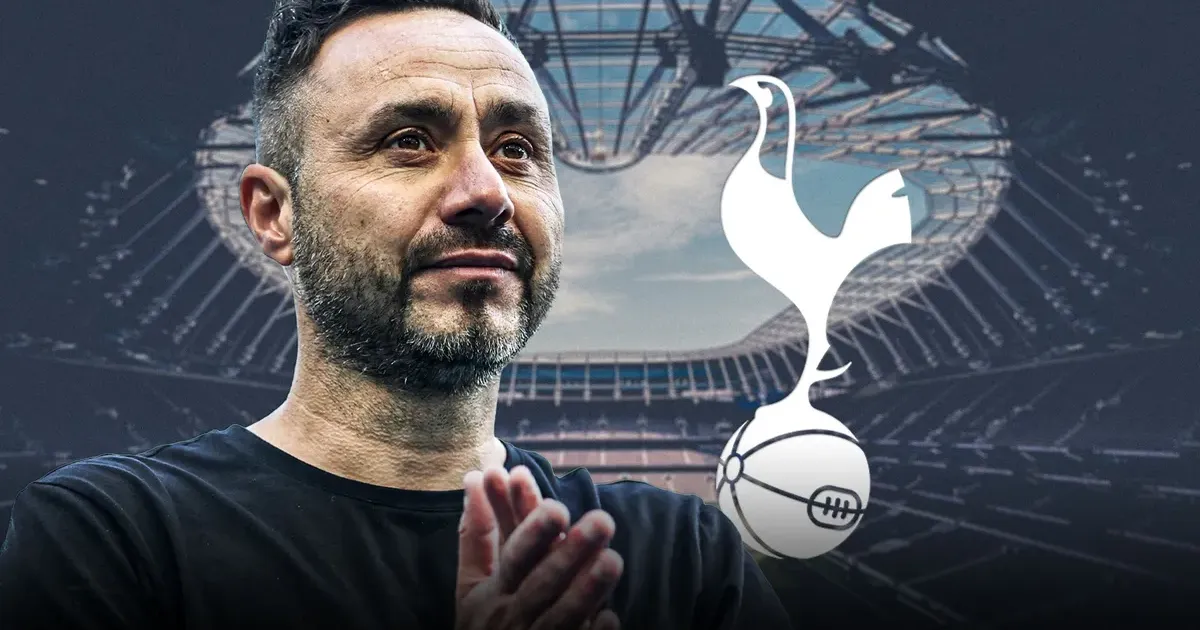
Roberto De Zerbi's Tottenham appointment turned a managerial search into an identity gamble. Spurs were not simply hiring a coach at the end of March. They were trying to recover a football idea, avoid a deeper collapse and convince supporters that the club still knew what it wanted to be.
The timing raised the stakes. Tottenham moved for De Zerbi with the team near the bottom of the Premier League, after another short managerial cycle had failed. Sky Sports reported he had agreed a five-year deal, and the club confirmed his appointment on March 31 on a long-term contract, subject to a work permit. That was not a gentle summer reset. It was an emergency appointment with a long-term label.
Spurs Needed More Than A Name
De Zerbi's appeal has always been tactical clarity. His teams build under pressure, invite risk, create passing angles and try to turn opponent pressure into space. For Tottenham, that carried obvious attraction. Supporters have lived through too many abrupt changes of style, from pragmatic managers to attacking idealists to stopgap solutions.
The problem is that clarity on the whiteboard does not guarantee clarity in the squad. De Zerbi football asks a lot of centre-backs, goalkeepers, deep midfielders and full-backs. If players cannot receive under pressure or defend large spaces, the system can look brave one week and reckless the next.
The Relegation Scare Changed The Frame
When De Zerbi arrived, Tottenham were not debating abstract aesthetics. They were trying to stay in the division. AP described the appointment as a last-ditch bid by a major club to avoid costly relegation. Later Guardian reporting carried the view from within the squad that his arrival had helped Spurs avoid disaster.
Survival changes how the appointment is judged. De Zerbi did not arrive into a stable club choosing between several polished futures. He arrived into a club that had to patch confidence first and build identity second. Keeping Spurs up bought the project time, but it did not prove the project was complete.
Recruitment Has To Match The Coach
Recruitment will decide whether the project can become coherent. A tactical manager becomes vulnerable when the club buys players for a different game. Tottenham's recent history has left the squad carrying pieces from several football ideas. That creates expensive imbalance: players who are useful in one system, awkward in another and difficult to sell at full value.
De Zerbi needs technical security, speed in recovery, midfield courage and defenders who can survive isolation. If the board backs him with mismatched players, Spurs will repeat the old mistake of hiring an identity and then refusing to fund its requirements.
Patience Is Part Of The System
De Zerbi football can produce ugly errors before it produces control. Playing out under pressure invites turnovers. High positioning can expose defenders. Supporters may want proactive football, but moods turn quickly when proactive football concedes soft goals.
Daniel Levy and the football department therefore face a restraint test. If the club wanted a short-term mood lift, the long contract makes little sense. If it wanted a new playing model, it has to absorb the early cost of that model. Identity is not real if it disappears after the first bad month.
The Summer Spending Question Is A Warning
Tottenham's summer activity has been framed around giving De Zerbi immediate tools. Immediate spending may be necessary after a relegation scare, but it also raises the old Spurs question: is the club building a squad for the next three years or buying urgency for the next three months?
Big fees can look like ambition. They can also become evidence of panic if they do not solve structural gaps. A De Zerbi rebuild has to be coherent, not simply expensive. The club needs players who fit the way he wants to move the ball, press after losses and defend space.
The Identity Gamble Is Now Real
The earlier pursuit made sense because De Zerbi offered a footballing identity. The appointment made the risk real. Tottenham have rented too many managerial moods. This one has to become a club plan or it will become another expensive detour.
Spurs did not hire De Zerbi to be another personality in the cycle. They hired him because the club needed a recognizable game again. If recruitment, patience and board discipline line up behind him, the gamble can become a reset. If they do not, Tottenham will have proved only that even a strong tactical idea can be swallowed by a weak institutional one.