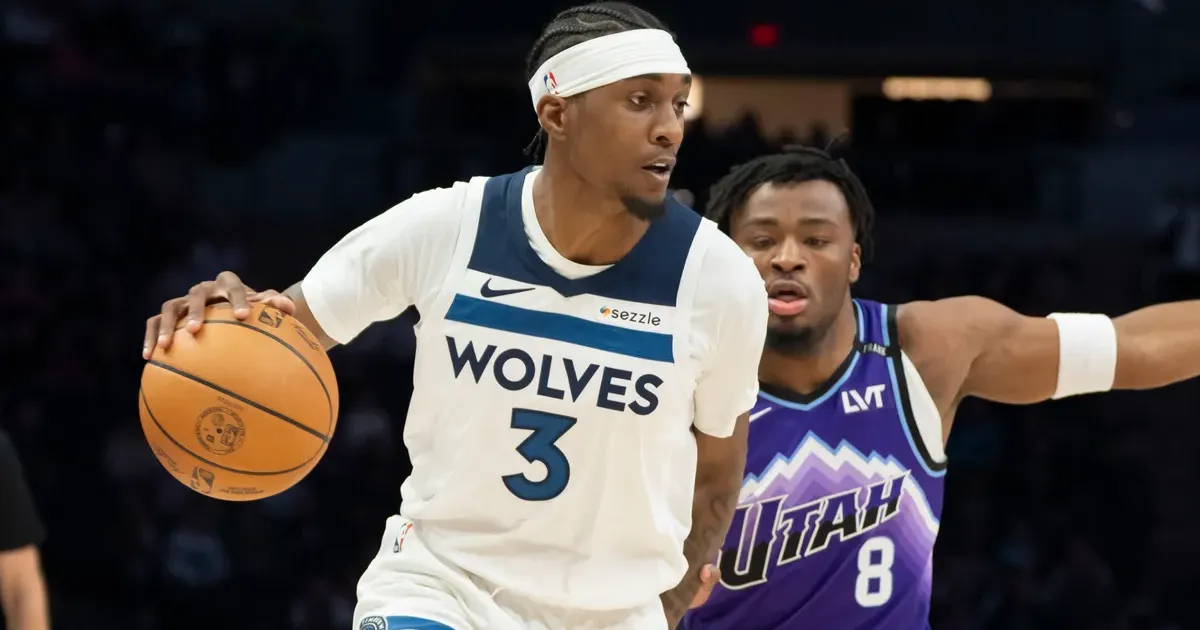
The Timberwolves' 124-94 win over the Mavericks looked clean in the box score, but it was never a simple comfort result. Anthony Edwards returned after a knee issue, Minnesota controlled Dallas with size and balance, and the playoff push steadied. At the same time, Jaden McDaniels was out with left knee patella tendinopathy and a bone bruise, putting the team's defensive structure under immediate pressure.
The March result now reads better as a warning than as a celebration. Minnesota still had enough to beat Dallas decisively. It later had enough to eliminate Denver in the first round. But the postseason also showed how thin the margin could become when health, wing defense and star workload all tightened at once.
Edwards Changed The Floor Immediately
Edwards did not need a huge scoring night against Dallas for his return to matter. He finished with 17 points in limited minutes, and his presence changed the shape of Minnesota's offense. Defenders had to account for his downhill pressure, pull-up threat and transition speed, which gave the rest of the lineup cleaner decisions.
The spacing matters in a playoff offense. Minnesota can run through Julius Randle, use Rudy Gobert's screening and punish mismatches with size, but Edwards remains the player who bends the defense before the play fully develops. Without him, possessions can become heavier and more predictable.
The Dallas Rout Showed Real Depth
The Mavericks game also showed why Minnesota was more than a one-star team. The Wolves controlled the glass, moved the ball and built a game that did not depend on Edwards forcing every late-clock answer. The balance was not cosmetic. It became important when the postseason grew chaotic.
Against Denver, Minnesota won a six-game first-round series even while dealing with injuries and lineup stress. The Wolves' ability to lean on size, role-player scoring and defensive possession work gave them a path through a dangerous opponent. The Dallas win had already hinted at that version of the team: physical, deep and able to turn defensive stops into early offense.
McDaniels Was The Harder Absence To Replace
McDaniels' injury mattered because his role is not easily replaced by spreading shots around. He gives Minnesota length against elite wings, switching flexibility and a calmer first line of resistance. Patella tendinopathy can linger, and a bone bruise is often more about impact tolerance than a simple pain threshold.
When he is limited or absent, assignments slide across the roster. Bigger players have to chase quicker scorers. Guards have to absorb more size. Bench defenders get pulled into matchups that usually belong to a starter. The adjustment can work for a week. It becomes more dangerous across a playoff series, where opponents keep returning to the same stress point.
The first round did not produce a neat injury narrative. Minnesota still found enough answers, and McDaniels later showed how valuable he could be when he was available and aggressive. His scoring and defense in the Denver series reinforced the point that the March concern was not theoretical: the Wolves needed him as more than a background stopper.
The Dallas game should not be remembered only as Edwards coming back. It was also a reminder that Minnesota's best version required several specific bodies doing specific jobs. The roster had depth, but not every skill had a duplicate.
The Spurs Exposed The Ceiling Question
Minnesota's second-round loss to San Antonio made the lesson harsher. The Wolves opened the series with a narrow road win, but the Spurs' size, pace and shot-making eventually overwhelmed them. By Game 6, a 139-109 defeat ended the run and turned earlier injury concerns into part of a bigger question about ceiling.
The issue was not that one March injury doomed the season. That would be too simple. Minnesota's path depended on Edwards being explosive, McDaniels being mobile, the frontcourt winning physical battles and the bench holding shape. When enough of those pieces wobble, the team still looks dangerous, but it stops looking inevitable.
The Playoff Lesson Was About Margin
The Mavericks rout was a useful snapshot because it contained both sides of Minnesota. Edwards gave the offense its pressure point back. The team had enough balance to crush an opponent without asking him to carry every possession. McDaniels' knee issue, however, showed how quickly the defensive foundation could become a concern.
Minnesota was never just waiting to be healthy and dominant. It was trying to keep a narrow playoff formula intact. The Dallas result made the Wolves look stable; the postseason showed why that stability was fragile. Edwards raises the ceiling, but McDaniels and the defensive structure decide how long that ceiling can survive against the West's best teams.