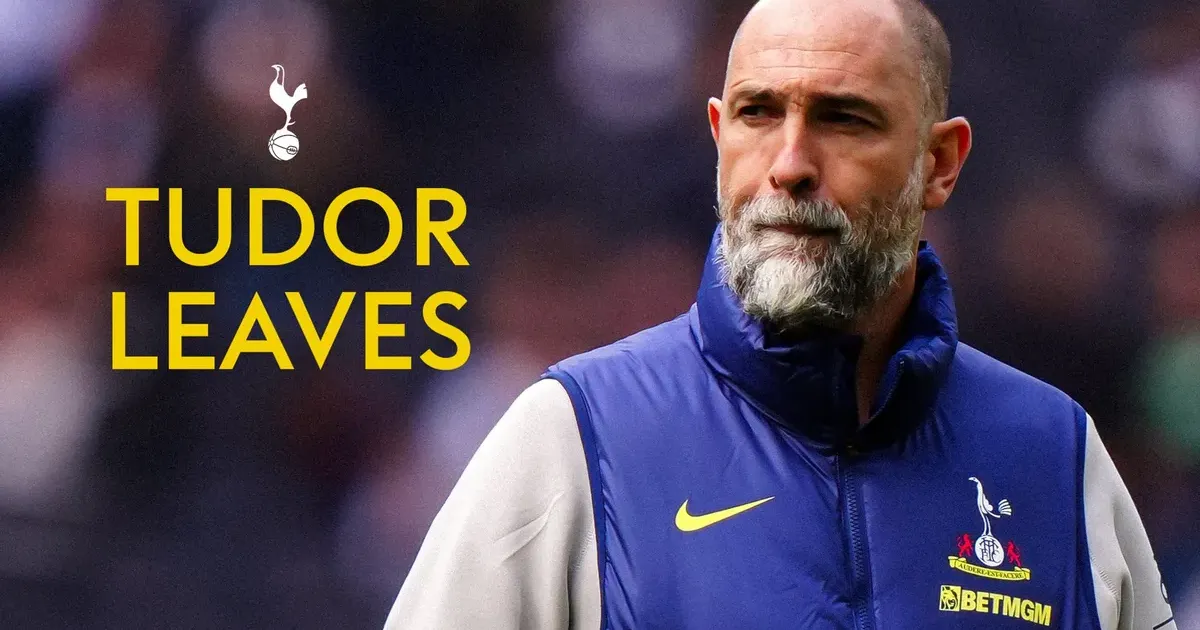
Igor Tudor's Tottenham exit by mutual consent turned a failing interim spell into a board-level crisis. He lasted only 44 days and seven matches. The final blow was a 3-0 home defeat to Nottingham Forest that left Spurs one point above the Premier League relegation zone with seven games remaining. For a club built around elite-stadium revenue, global commercial reach and European ambition, that table position was the real emergency.
Tudor's record made the decision understandable, but the shortness of the spell made Tottenham look structurally lost. A manager appointed in February is not given time to build a culture, install a full tactical identity or reshape the squad. He is hired to create an immediate response. Tudor did not deliver that response, but the club's need for such a rescue appointment already showed how badly the season had been mismanaged.
The Seven Games Became A Verdict
Tottenham lost five of Tudor's seven matches, and the Forest defeat carried more weight than an ordinary bad result. It was a home loss to a direct survival rival at the point of the season when performances stop being interpreted as process and start being counted as damage. The margin, the opponent and the table made patience difficult to defend.
There were human complications too, including reporting that Tudor was dealing with a family bereavement after the Forest match. That context should temper the tone around the individual. The football verdict, though, was still brutal. Tottenham had taken another managerial turn and looked no steadier for it.
The Board Cannot Hide Behind The Dugout
A 44-day tenure rarely explains a full-season collapse. Tudor inherited a squad already low on confidence, an atmosphere already sour and a club already drifting from ambition into fear. When several managers appear trapped by the same problems, the dugout is not the only failure point.
That is the part Tottenham's hierarchy cannot easily package. Changing the head coach can be necessary, but it can also become a way of postponing the central question: why did a club with Tottenham's resources reach late March needing a survival firefighter? The answer sits in recruitment, succession planning, squad balance, dressing-room belief and the board's repeated failure to align ambition with football stability.
Relegation Changes Every Calculation
Tottenham's financial model assumes Premier League status. Matchday income, broadcast money, sponsorship visibility and player recruitment all depend on remaining inside the top division. Relegation would damage any major club. For Spurs, with their stadium expectations and global brand, it would also be a public humiliation.
The next appointment therefore could not be judged like a normal long-term project. There was no pre-season, no transfer-window reset and no time for aesthetic arguments. Linked names, including Roberto De Zerbi and other rescue options, were stepping into a job where points mattered before philosophy. The next manager's first duty was to stop the slide, not to restore romance.
Survival Comes Before Identity
Tottenham supporters have spent years debating style, risk, ownership, Daniel Levy's decisions and the club's sense of direction. A relegation fight strips those arguments down to the simplest standard of competence. Can the team defend properly? Can it create enough chances? Can the players stop staring at the table and start controlling matches again?
Tudor became the name attached to the crisis, but he was not the origin of it. Spurs reached the point where project language no longer protected the board. One point above the bottom three, the only project is survival. The next appointment could change the mood, but it could not erase the deeper indictment: Tottenham should never have needed an emergency manager in March to prove they still belonged in the Premier League.