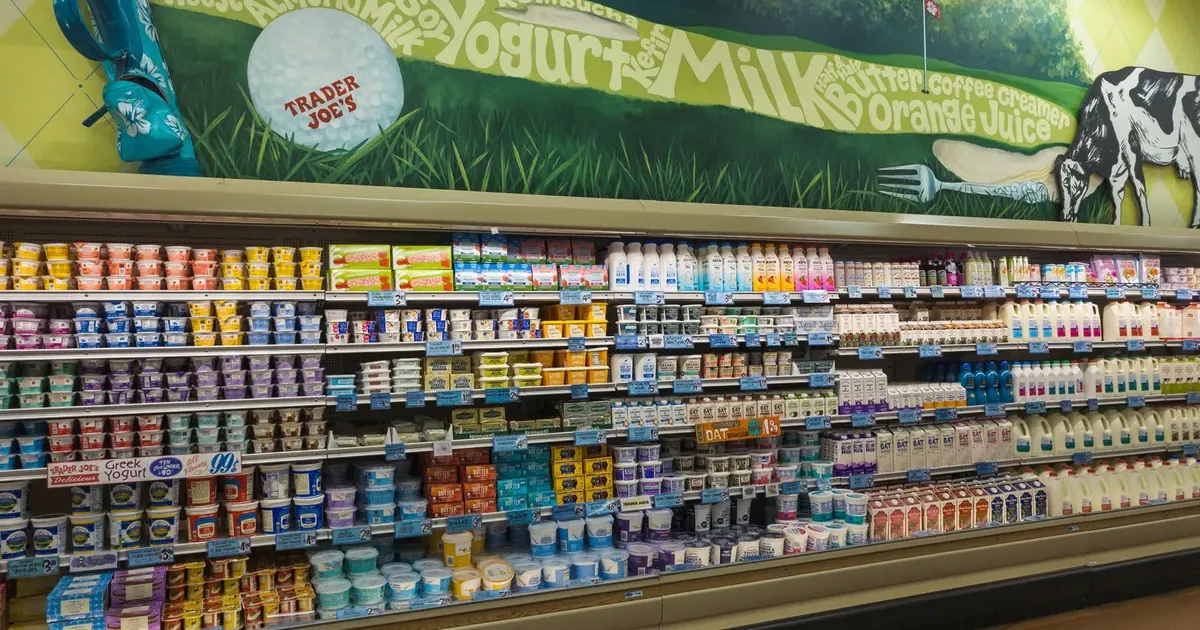
Trader Joe's began April 4, 2026, facing a rare wave of consumer pushback against its normally bulletproof product lineup. Investigative reports from Tasting Table and The Takeout highlight a disconnect between the brand's curated image and actual product performance. Loyalists who once praised every shelf arrival now identify recurring failures in the dairy and frozen aisles. Consumer expectations for low-cost luxury often collide with the harsh realities of mass-produced dairy.
Reports from Tasting Table suggest that a specific yogurt variety fails to justify its place in the grocery cart. Customers find the texture inconsistent and the flavor profile lacking compared to national brands. Grocery analysts suggest that the pressure to maintain low price points often leads to corners being cut during the manufacturing process. Private labels generally rely on external vendors who may prioritize volume over artisanal quality.
Trader Joe's Yogurt Quality and Consumer Disappointment
Dairy products represent a foundation of the Monrovia-based retailer's daily sales volume. When a staple like yogurt fails to meet expectations, the impact ripples through the entire store perception. Critics at Tasting Table noted that while the store brand yogurt is inexpensive, the quality gap between it and competitors has widened sharply. This specific yogurt variety suffers from a watery consistency that shoppers find unappealing. Many consumers have shifted back to name-brand alternatives despite the higher cost.
Retail success for a discount grocer depends on the reliability of its staples. If a shopper cannot trust the quality of their morning yogurt, they are less likely to experiment with high-margin seasonal items. Market data indicates that dairy sales are highly sensitive to negative social media sentiment. Dissatisfied customers often post photos of separated or thin yogurt on community forums. Trader Joe's typically addresses these concerns by discontinuing products that fail to maintain high ratings, yet these duds continue to appear on shelves.
Mexican Freezer Entrees Struggle With Authentic Flavor
Frozen food has historically been the primary growth engine for the chain. Recent feedback from The Takeout indicates that a Mexican-themed freezer find is missing the mark for many loyal shoppers. Critics describe the dish as bland and underwhelming, a sharp contrast to the bold flavors usually associated with the region. Authentic spices appear to be absent, replaced by a generic saltiness that fails to satisfy. The Takeout observes that the dish lacks the heat and depth required to compete in a crowded frozen food market.
"Trader Joe's has plenty of successes in its store, but this freezer find is a Mexican-themed dish that comes across as bland and underwhelming for most," according to a report from The Takeout.
Authenticity is a difficult balance for a retailer that caters to a broad demographic. This Mexican-themed dish reflects a broader trend of flavor homogenization aimed at avoiding polarization. The result is a product that offends no one but delights few. Frequent shoppers have noted that earlier iterations of their frozen Mexican line possessed stronger profiles. Supply-chain shifts often result in reformulated recipes that prioritize shelf life over culinary integrity. One disgruntled customer reported that the texture of the beans was indistinguishable from the surrounding sauce.
Dairy Section Staples See Decline in Performance
Dairy production costs have risen sharply since the start of the decade. Maintaining a price floor requires retailers to seek out smaller, more efficient production facilities. Internal standards at Trader Joe's are famously secretive, yet the quality of their dairy offerings suggests a transition toward high-yield vendors. Tasting Table researchers found that the yogurt in question lacks the probiotic richness found in premium brands. This reduction in nutritional value is a common trade-off in the private label industry. Reliability persists as the primary currency of grocery retail.
Economic shifts have forced many middle-class households to rely more heavily on store-brand products. When these products fail, the frustration is more than culinary; it is financial. Every failed meal is a loss of trust in the benefit of the retailer. Trader Joe's built its empire on the idea that quality food need not be expensive. If the quality disappears, the low price becomes irrelevant. These dairy failures suggest a vulnerability in a company that rarely faces negative press.
Private Label Integrity at Trader Joe's Under Pressure
Mass production of fermented products like yogurt requires careful climate control and precise ingredient ratios. Any deviation in the supply-chain leads to the thin, sour results documented by Tasting Table. Analysts at financial firms estimated the grocery chain's annual revenue at over $13 billion, yet the margin for error on individual products is strikingly slim. Because the company does not disclose its third-party manufacturers, consumers have no way of knowing if their favorite items have changed hands. Vendor changes occur frequently to optimize logistics and lower costs.
Management at the corporate office in California maintains a strategy of silent iteration. They rarely defend products publicly, choosing instead to let the inventory turnover speak for itself. If a product like the Mexican freezer meal continues to sell despite negative reviews, it stays. Looking back at the history of the brand, many iconic items began with lukewarm receptions before being reformulated. The current wave of criticism may simply be a precursor to a recipe overhaul. Retailers typically cycle these products within eighteen months.
The Elite Tribune Strategic Analysis
Corporate survival in the modern grocery sector demands a ruthlessness that Trader Joe's seems to have swapped for whimsical packaging and friendly Hawaiian shirts. The recent failures in the dairy and frozen aisles are not merely isolated incidents of bad taste; they are symptoms of a brand that has grown too comfortable with its cult status. When Tasting Table and The Takeout align on product deficiencies, it indicates a systemic rot in quality control that no clever labeling can mask. For years, the company has coasted on the "treasure hunt" excitement of its narrow aisles, but the modern consumer is too savvy to be bribed by a low price for an inedible meal.
Exposing the mediocrity of a Mexican freezer dish or a thin yogurt is the first step in dismantling the myth of the benevolent grocery giant. These products are manufactured by the same enormous white-label conglomerates that supply every other bargain bin in the country. The only difference is the colorful font and the illusion of curation. Trader Joe's must either reinvest in the culinary rigor that defined its early years or accept its destiny as a boutique version of a dollar store. The brand is currently trading on legacy rather than innovation. The strategy is unsustainable.