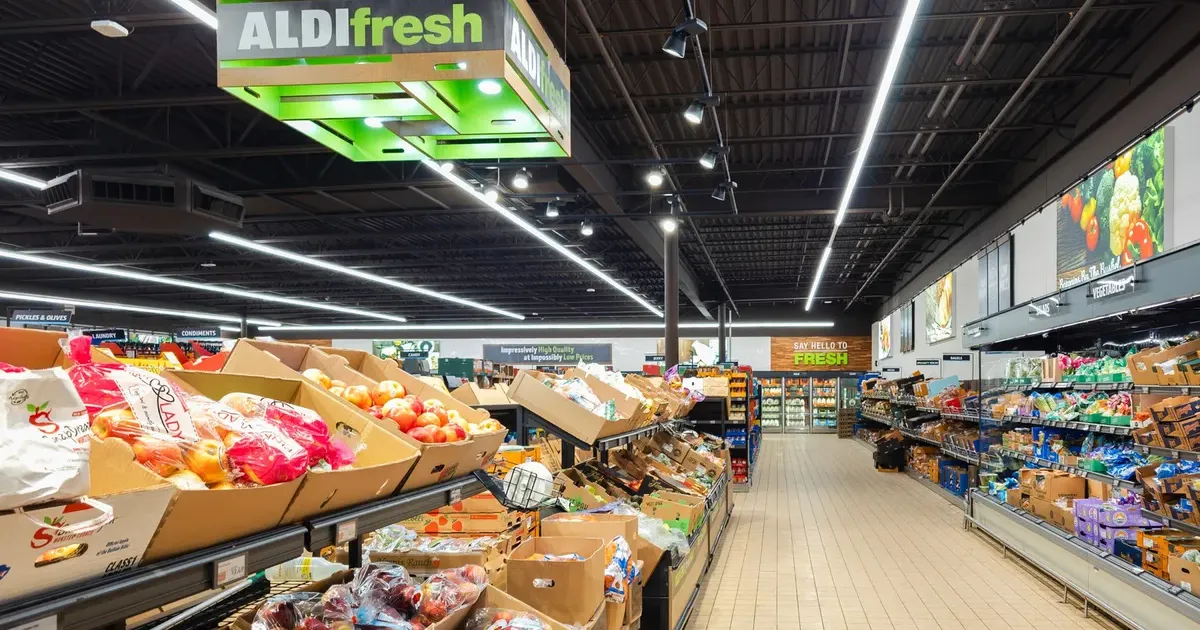
Aldi expanded its footprint across the United States on April 7, 2026, while maintaining a rigid staffing protocol that keeps store floor counts at historical lows. Consumers walking through the aisles of this discount giant often notice a striking absence of floor associates, baggers, or dedicated customer service desks. This organizational leanness is not a symptom of a labor shortage but a calculated foundation of a business model designed to undercut traditional supermarkets like Kroger or Walmart. By limiting the number of employees present during a shift, the company sharply reduces its overhead, passing those savings directly to shoppers who prioritize low price points over white-glove service.
Retail analysts point to the multi-tasking requirements of the workforce as the primary driver of this efficiency. Unlike traditional grocery stores where workers are siloed into specific roles, every employee at this chain is trained to handle every aspect of the operation. A single worker might spend twenty minutes stocking heavy pallets of canned goods before rushing to an open register when a line forms. Efficiency dictates that no employee stands idle, and the transition between tasks happens in seconds rather than minutes.
Employee Efficiency and Multi-Tasking Protocols
Management structures within Aldi prioritize a cross-functional training regime that ensures the store can operate with as few as three to five people during off-peak hours. Cross-training eliminates the need for specialized departments like a butcher counter or a full-service bakery, which typically require dedicated, high-cost labor. Instead, the company relies on pre-packaged goods that employees can stock quickly by sliding entire cardboard shipping containers onto the shelves. This technique, known as "shelf-ready packaging," reduces the time spent handling individual items and allows a small team to manage thousands of units of inventory daily.
Workers receive higher-than-average hourly wages compared to other retail sectors, but the physical demands of the job are considerably more intense. Productivity is tracked with rigorous data points, from the speed of scanning items at the register to the time it takes to clear the parking lot. Because the staff is so small, every absence or slow-moving employee is felt immediately by the rest of the team. The pressure to maintain high throughput ensures that the labor cost per transaction stays among the lowest in the global grocery industry.
Our goal has always been to provide the best quality products at the lowest possible prices by eliminating all unnecessary costs from the retail process, according to a statement from the Aldi corporate communications office.
Cart Management and Logistics Savings
Shoppers often find the quarter-deposit cart system a curiosity, yet it is a masterfully simple labor-saving device. By requiring a 25-cent deposit to release a shopping cart, the retailer encourages customers to return the carts to the designated bay themselves. This simple psychological nudge removes the need for a dedicated "cart wrangler" position that traditional supermarkets must staff throughout the day. Over a calendar year, the elimination of this single role across thousands of locations saves the company tens of millions of dollars in wages and benefits.
Logistics also plays a role in why the sales floor feels sparsely populated. Most locations stock fewer than 1,500 core items, whereas a standard American supermarket may carry upwards of 30,000 unique stock-keeping units. Fewer items mean fewer deliveries to manage, less time spent on inventory audits, and a simplified stocking process that a skeleton crew can handle. Private label brands make up about 90 percent of the inventory, which allows the company to control the packaging dimensions and shipping efficiency from the factory to the shelf.
Checkout Velocity and Product Packaging Design
Checkout speeds at these stores frequently outperform competitors by a wide margin. Cashiers are permitted to sit while working, a practice common in Germany but rare in the United States. While this might appear to be a concession to employee comfort, it is primarily a strategy to increase scanning speed and reduce physical fatigue during long shifts. Sitting allows the cashier to maintain a consistent ergonomic position, enabling a rapid-fire scanning motion that is further aided by unique product packaging.
Packaging design at the retailer includes oversized or multiple barcodes that wrap around the entire product container. The design choice ensures that the laser scanner catches the code on the first pass, regardless of how the item is oriented on the belt. Cashiers do not have to flip or rotate items to find a small, hidden barcode, which shaves seconds off every transaction. These accumulated seconds allow the store to move more customers through fewer registers, further reducing the number of cashiers needed on a shift.
Empty boxes are left on the shelves for customers to use for their own bagging. The shift in responsibility from the employee to the customer removes the need for baggers or the purchase of plastic bags. By forcing the consumer to handle the final stage of the retail process, the store maintains its lean staffing levels without sacrificing the speed of the checkout line.
Comparing Aldi Staffing to Traditional Supermarkets
Historical roots of this model trace back to Karl Albrecht and Theo Albrecht, who founded the company on the principle of extreme frugality. The brothers realized that the largest controllable expense in retail is labor, and they designed every aspect of the store to minimize human intervention. By the time the brand entered the American market, the blueprint for a low-staff, high-efficiency grocery store was already perfected. Competitors like Lidl have since adopted similar strategies, but the original Albrecht model remains the gold standard for labor productivity in the sector.
Traditional supermarkets often justify higher staffing levels by highlighting the "customer experience" and the availability of helpful staff on the floor. Market data indicates that a growing segment of the population is willing to trade that personal interaction for a 20 to 40 percent reduction in their weekly grocery bill. The lack of staff is not seen by these consumers as a service failure, but as a visual confirmation that they are not paying for unnecessary labor costs. As inflation persists, the appeal of this spartan environment continues to grow among middle-class households.
Small store footprints further reduce the need for large teams. Most locations are roughly 12,000 square feet, making them easy to navigate and simple to monitor with just a few people. Modern security technology and strategically placed mirrors allow a single manager to oversee much of the floor while simultaneously working on administrative tasks or assisting at the front. The architecture of the store is as much a part of the labor strategy as the employee handbook itself.
The Elite Tribune Strategic Analysis
The rise of the ultra-efficient retail model is a cold indictment of the modern consumer's priorities and the brutal reality of current economic pressures. The record confirms a fundamental rejection of the mid-tier service model in favor of a transactional, almost robotic efficiency that strips away the human element of commerce. While critics might decry the lack of floor assistance or the physical toll on multi-tasking employees, the financial results are indisputable. The brand has proved that the American shopper values a lower price on a carton of eggs more than they value the presence of a friendly associate in the dairy aisle.
Is this the endgame for retail labor? The trend suggests a future where the "unseen worker" becomes the industry standard, and any store offering human help will be forced to charge a premium that most families can no longer afford. We are moving toward a bifurcated market where high-touch service is a luxury and the rest of society is left to navigate spartan, self-service warehouses. The efficiency of Aldi is not just a clever business plan; it is a preview of a world where human labor is treated as a luxury good.
Retailers who fail to adopt this level of austerity will eventually find themselves priced out of existence by competitors who have successfully automated their customers into doing the work for them. Efficiency wins every time.