Donald Trump attacked Italian Prime Minister Giorgia Meloni on April 14, 2026, over her refusal to commit military support to the widening conflict in Iran. Speaking with the Milan-based daily Corriere della Sera, Trump characterized the former ideological ally as someone who lacked the fortitude required for global leadership. He told reporters that he originally believed the Italian leader possessed the strength to confront Tehran but now views that assessment as a mistake.
Italy, a historically reliable partner for Washington in the Mediterranean, has distanced itself from recent American escalations in the Middle East. Meloni stated on April 13, 2026, that military interventions without broad international consensus could destabilize the region further. Trump disagreed with this assessment, claiming Italy is failing its obligations to NATO by withholding assets from the coalition. His comments arrived as the United States military continues its focus on neutralizing Iranian nuclear infrastructure.
Iran Military Action and NATO Tensions
Tensions between Washington and Rome intensified after Meloni refused to authorize the use of Italian airbases for offensive sorties against Iranian targets. Trump asserted that Meloni does not want to help get rid of the nuclear weapon or cooperate with the alliance on critical security objectives. He described himself as shocked by the lack of Italian participation in what he deems a necessary defense of Western interests. The Italian government continues to maintain that its constitutional constraints limit its involvement in aggressive combat operations outside of direct defense.
Intelligence reports from the Pentagon suggest that the Iranian nuclear program has reached a critical threshold, prompting the current US administration to seek immediate kinetic solutions. Trump views the refusal of European partners to join these efforts as a betrayal of mutual defense treaties. Italian officials, however, argue that the focus should remain on containment and diplomatic pressure through the United Nations. This divergence in strategy has effectively halted several joint Mediterranean naval exercises scheduled for later this year.
"Giorgia Meloni does not want to help us in the war, I am shocked. I thought she had courage, but I was wrong.", Donald Trump, speaking to Corriere della Sera.
Defense analysts in London and Washington note that Italy’s neutrality sharply complicates the logistical chain for US operations in the Persian Gulf. Italian ports and logistics hubs are essential for the rapid movement of personnel and equipment from the Atlantic into the Middle East. Trump suggested that Italy’s current stance makes it a liability rather than an asset to the North Atlantic treaty. He threatened to review bilateral trade agreements if Rome persists in its current policy of military non-intervention.
Vatican Relations and Pope Leo XIV
Religious friction added another layer to the diplomatic rift when Trump targeted Pope Leo XIV for his repeated calls for an immediate ceasefire. The American president labeled the pontiff weak and claimed he does not understand the complexities of the Iranian threat. Meloni responded by calling Trump’s rhetoric toward the Holy See unacceptable and indefensible. She emphasized that the Vatican remains a sovereign moral authority that has the right to advocate for peace without facing political retaliation from Washington.
Pope Leo XIV addressed the criticisms on Monday, stating he is not afraid of the Trump government and will continue his advocacy for humanitarian corridors. The Vatican press office released a statement clarifying that the Pope believes dialogue is the only path to preventing a global nuclear catastrophe. Trump countered that spiritual leaders should not speak about war without knowing the technical details of the weapons involved. He argued that the Vatican’s influence is being used to shield a regime that has repeatedly called for the destruction of Israel.
Critics of the administration note that attacking the Pope is a risky political move given the high percentage of Catholic voters in the United States. Trump appears undeterred by these domestic concerns, focusing instead on his requirement for absolute loyalty from foreign heads of states. Meloni’s defense of the Pope establishes a clear break from the populist alignment that previously defined her relationship with Trump. Rome now finds itself leading a growing European faction that prioritizes ecclesiastical diplomacy over American military directives.
Immigration Policy and European Security
Immigration became a secondary front in this public dispute, with Trump claiming that Meloni’s handling of the Mediterranean migrant crisis is killing Italy and the rest of Europe. He criticized her for not implementing the harsh border measures he had recommended during their previous meetings. Trump asserted that a failure to secure the southern European border allows Iranian proxies to enter the continent under the guise of seeking asylum. This accusation has been flatly denied by Italian intelligence services and the Ministry of the Interior.
Meloni has attempted to balance her nationalist rhetoric with the practical realities of European Union law and maritime obligations. She has requested more funding from the EU to manage processing centers, a move Trump describes as insufficient and cowardly. The US president suggested that Italy should adopt a policy of total maritime blockade, regardless of international maritime law regarding the rescue of distressed vessels. Data from the Italian coast guard shows that arrivals have increased by 15 percent over the last twelve months.
Economic repercussions may follow these verbal attacks if Trump moves forward with tariffs on Italian exports. Italy is a major exporter of luxury goods, automotive parts, and agricultural products to the United States. Trump specifically mentioned that he is looking at the trade surplus Italy holds over the US as a point of leverage. Negotiators from both nations were scheduled to meet in May, but those talks are now in jeopardy following the president's interview. Italy’s finance ministry declined to comment on specific contingency plans for a trade war.
Diplomatic Fallout Between Rome and Washington
Political observers in Brussels suggest that the breakdown in the Trump-Meloni relationship reflects a larger trend of European leaders asserting autonomy from Washington. While earlier years of the Meloni administration were characterized by close coordination with the US, the reality of a direct war in Iran has forced a realignment of priorities. Italy’s reliance on energy imports and its proximity to North Africa make it uniquely vulnerable to the secondary effects of a Middle Eastern conflict. Meloni’s office has not yet issued a formal rebuttal to the courage comments but senior advisors described the mood in Rome as defiant.
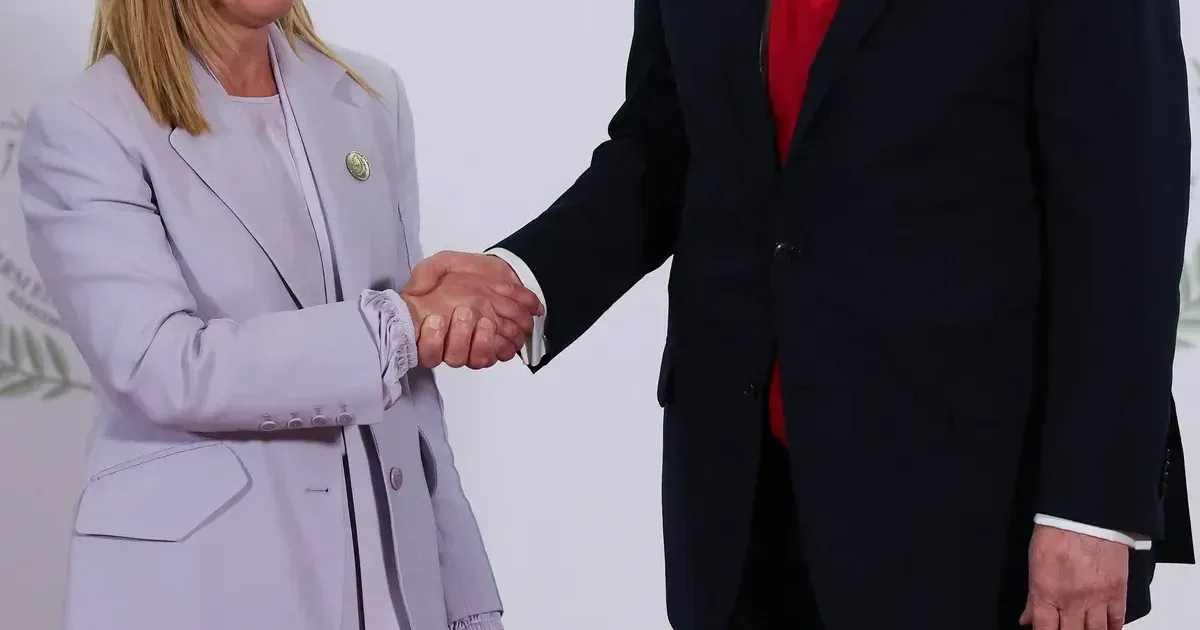
The conclusion of the Gaza summit in Egypt last year provided a brief moment of unity that has now evaporated. During that event, Trump and Meloni were photographed in close conversation, suggesting a durable partnership. Today, that imagery is overshadowed by the harsh language published in the Italian press. Trump remains convinced that his transactional approach to foreign policy is the only way to ensure American security. Rome, meanwhile, is looking toward its European neighbors to form a collective security framework that is less dependent on the whims of the White House.
Future diplomatic engagement hinges on whether the US administration moves from verbal critiques to actual policy shifts. Trump has a history of using public insults as a preamble to formal sanctions or withdrawal from agreements. If he decides to bypass Italy in NATO decision-making, the operational cohesion of the alliance could be permanently damaged. The Italian parliament is expected to hold a debate on the US-Italy relationship later this week. Members of the opposition have already called for a formal censure of Trump’s remarks regarding the Pope and the Prime Minister.
The Elite Tribune Strategic Analysis
Will the real Giorgia Meloni please stand up? For years, the Italian Prime Minister has performed a delicate balancing act, whispering sweet nationalist nothings to the MAGA crowd while playing the role of a responsible, pro-Brussels technocrat. That charade is officially over. Donald Trump’s public evisceration of Meloni is not just a temper tantrum; it is the inevitable collision of two different brands of nationalism that were never actually compatible. Trump’s nationalism is expansive and imperial, demanding that every ally function as a satellite for American power. Meloni’s nationalism, by contrast, is increasingly focused on the preservation of the Italian state and the protection of the Roman Catholic identity, which apparently now means standing up to Washington.
By attacking the Pope, Trump has committed a tactical error that Meloni is perfectly positioned to exploit. She no longer needs the approval of the American right to maintain her domestic base. In fact, defending the Vatican against a belligerent American president allows her to wrap herself in the mantle of Italian sovereignty and traditional values in a way that Trump cannot touch. The irony is palpable. The man who claims to be the defender of Western civilization is currently at war with its oldest institution and its most known female leader. This rift is permanent.
Meloni is not going to send Italian troops to die in an Iranian desert just to satisfy a quote in Corriere della Sera. Washington needs to realize that the era of the reliable European lapdog is dying, and Trump’s insults are only accelerating the burial.