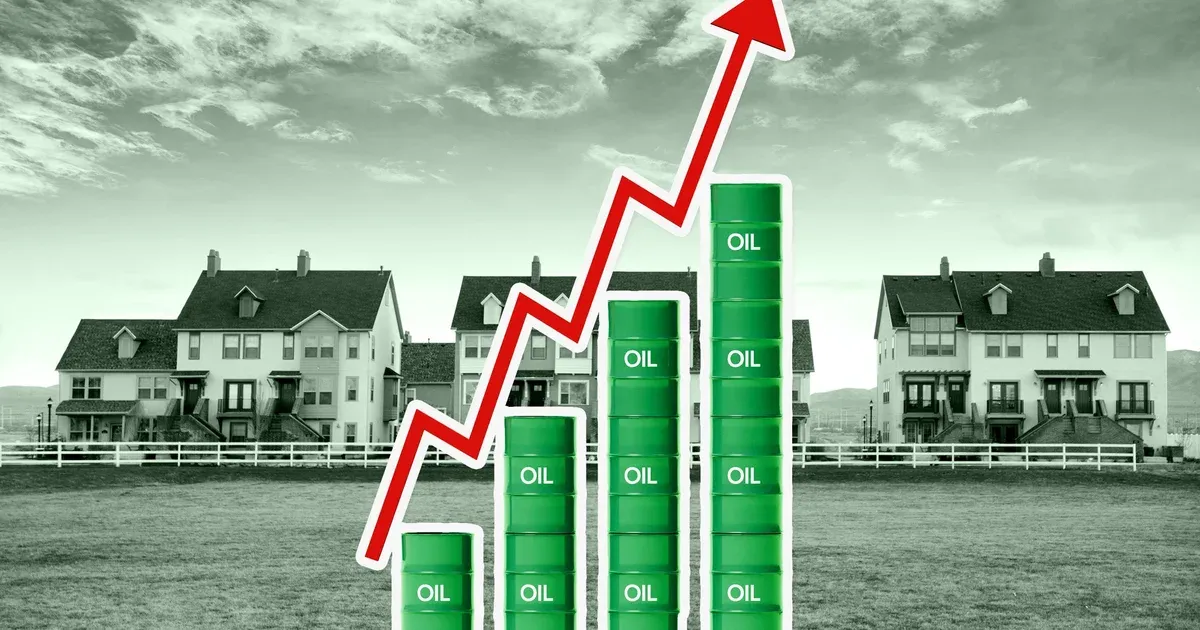
Oil trading opened with the kind of volatility that seasoned commodities traders usually see only once in a generation. On March 10, 2026, Brent crude, the international benchmark for the energy market, had surged to $119.50 a barrel during Monday morning trading as fears of a prolonged Middle East supply crisis gripped the globe. The threat to fragile recoveries in the United Kingdom and the United States was obvious, but the narrative shifted with a single set of remarks from Washington. Donald Trump declared that the war against Iran would end very soon, describing the military campaign as very complete. This assessment, delivered with characteristic bluntness, suggested that the offensive capabilities of the Islamic Republic had been systematically dismantled. Intelligence reports gathered by major news outlets like CBS indicated the administration believed the Iranian navy, air force, and primary communication networks were effectively nonexistent. Such a total degradation of military capacity signaled to the markets that the period of maximum risk had passed. Wall Street responded with a collective sigh of relief that manifested in a dramatic price correction. By the time the closing bells rang in New York on Monday afternoon, oil prices had retreated from their triple-digit highs to settle around $85 a barrel. That $34 swing within a single day represents one of the most significant price collapses in the history of the energy sector. Investors who had been bracing for a global recession triggered by $150 oil suddenly found themselves buying back into equities.
The London Exchange and European Resilience
London's FTSE 100 opened higher on Tuesday morning, mirroring a broader recovery across European bourses. European markets had spent the previous week in a state of paralysis, terrified that a closed Strait of Hormuz would starve the continent of essential energy supplies. Trump's rhetoric acted as a pressure valve. If the war is indeed very complete, the risk of a regional conflagration that draws in neighboring oil producers begins to evaporate. Traders in the City of London focused heavily on the rebound of transport and manufacturing stocks, which had been battered by the fuel price spike. The shift in sentiment was nearly instantaneous. While Brent crude sat at four-year highs just hours earlier, the sudden injection of geopolitical optimism allowed the FTSE to claw back its weekly losses. Analysts at several major banks noted that the speed of the decline in oil prices was just as unprecedented as the initial spike. Goldman Sachs appeared particularly well-positioned for this reversal. The firm had reportedly been utilizing a discrete shorting strategy throughout the peak of the panic, betting that the military phase of the conflict would be shorter than the public anticipated. This strategy, while controversial among those who expected a years-long quagmire, proved remarkably prescient. It highlights a growing divide between retail investors, who often react to headlines, and institutional giants that analyze the actual degradation of a target nation's infrastructure.
Assessing the Damage to Iranian Infrastructure
Washington's confidence stems from a series of high-precision strikes that took place over the last forty-eight hours. According to White House sources, the Iranian navy was the first to go, followed by the systematic targeting of command and control centers. Without a navy, Iran cannot effectively threaten the shipping lanes that carry a fifth of the world's oil. Without communications, the decentralized units of the Revolutionary Guard are left blind and unable to coordinate a meaningful counter-attack.
This move toward de-escalation by destruction has left the Iranian air force in ruins. Military analysts suggest that the lack of air cover makes any further conventional resistance nearly impossible. Such a vacuum of power in Tehran is what allowed Trump to claim the war is pretty much over. It was a brutal, swift application of force designed to minimize the duration of market instability.
Goldman Sachs had tracked these developments closely. Their discrete shorting strategy relied on the assumption that modern electronic warfare and drone dominance would prevent the kind of protracted trench warfare seen in previous decades. By betting against the long-term survival of high oil prices, the bank successfully navigated the most dangerous geopolitical event of 2026.
Oil Price Relief
Before the crash to $85, the brief period where oil traded above $100 a barrel caused significant damage to global supply chains. Logistics companies had already begun implementing fuel surcharges that threatened to reignite inflation. Central banks in the US and UK were reportedly considering emergency interest rate hikes to combat the rising cost of energy-dependent goods.
Those plans have likely been shelved now that prices have stabilized. The March 2026 pullback in Brent crude gave markets a rare sense of recession risk receding rather than intensifying. US stock markets closed at record highs for the month, driven by a surge in technology and consumer discretionary sectors. When energy costs fall, consumer confidence usually follows a similar upward trajectory.
The Brent crude oil price drop in March 2026 will be remembered as a moment when the world stood on the edge of a depression and stepped back.
Still, some analysts remain cautious about the long-term implications of such a rapid victory. A completely defeated Iran creates a power vacuum in the Persian Gulf that could be filled by other regional actors. However, for the men and women on the trading floors of the NYSE and the LSE, the immediate concern was the price of a barrel of crude, and that price is now firmly in territory that supports economic growth.
Everything changed in a single afternoon.
Traders who had gone to lunch expecting a global collapse returned to their desks to find a bull market. The math of the war changed the moment the Iranian communications infrastructure was confirmed as destroyed. Without the ability to signal a counter-strike, the threat to the global economy vanished.
That decision to declare victory early may be a political gamble, but the financial markets have already cashed their chips. The war is over, or so the ticker tape says.