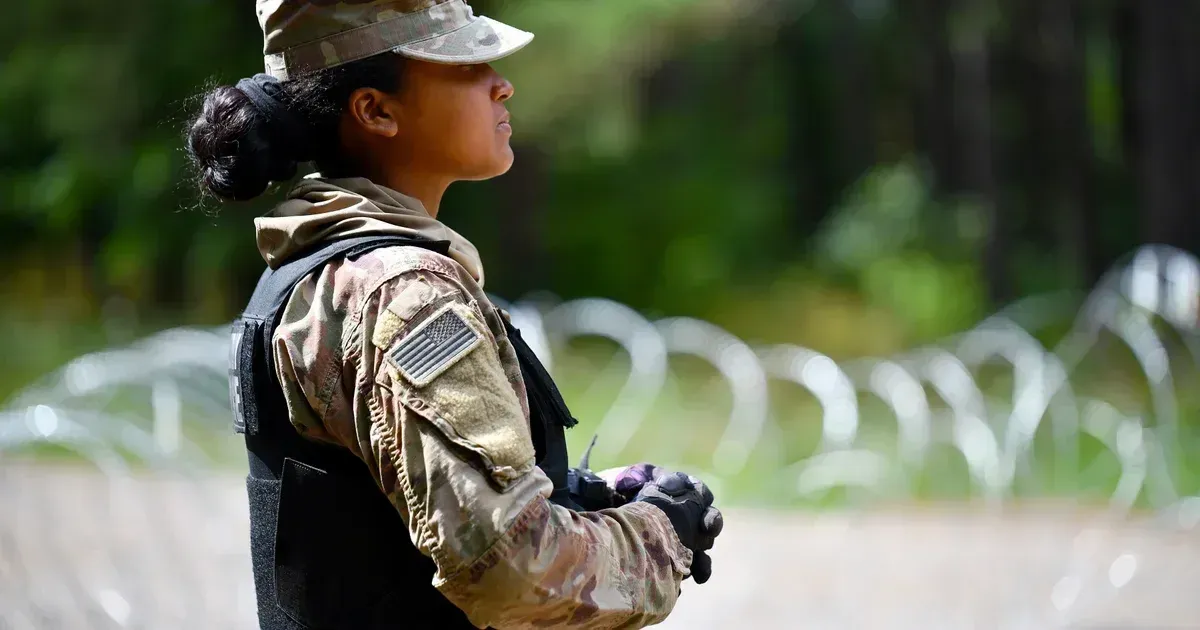
President Donald Trump announced a surge of 5,000 additional American soldiers to Poland. The deployment gives Warsaw a visible security guarantee at a moment of renewed pressure on NATO’s eastern flank. It also complicates Trump’s earlier promise to shrink the American military footprint in Europe. The official notification, delivered through social media on May 21, 2026, is a sharp reversal of his earlier pledges to reduce the US military footprint on the European continent. This deployment brings 5,000 troops into one of the most sensitive geopolitical corridors in the world.
Reversing a previous decision to cancel such maneuvers, the White House indicated that the deployment responds to Warsaw's commitment to defense spending. President Trump had previously threatened to pull forces from traditional allies as a form of retaliation for what he described as a lack of support from within NATO. Polish officials, however, have distanced themselves from those critiques by sharply exceeding the alliance's minimum spending requirements.
News of the troop movement appeared to catch some corners of the defense establishment off guard. Military planners at the Pentagon had recently issued statements suggesting that no further expansion of the Polish rotation was under consideration. Such a discrepancy highlights a persistent gap between executive-level diplomatic promises and the established logistical frameworks of the Department of Defense.
Polish President Karol Nawrocki welcomed the decision as a foundation of his administration's national security policy. Nawrocki, a nationalist leader who won a hard-fought election last year, has positioned his country as the primary anchor for American power in Eastern Europe. The relationship between the two presidents has deepened since Trump provided a public endorsement during the Polish electoral cycle.
Nationalist alignment between the two capitals has paved the way for bilateral agreements that often bypass multilateral consultation. Trump frequently highlights his rapport with Nawrocki as a model for how the United States should interact with foreign partners who prioritize sovereign defense over collective security bureaucracy. During the announcement, the American president emphasized his personal trust in the Polish leadership.
"I am proud to have endorsed Karol Nawrocki in the elections he won last year, and we are working very closely together on these security measures," Trump stated during his remarks regarding the new deployment.
Success in securing these additional troops follows years of lobbying by Warsaw for a permanent American presence, a project once colloquially termed Fort Trump. While the new 5,000 soldiers will likely operate on a rotational basis, the sheer volume of personnel indicates a more durable shift in the regional balance of power. The Polish government continues to offer subsidies for the construction of barracks and support infrastructure for visiting units.
Reversal of European Defense Strategy
Defense analysts suggest the sudden pivot reflects a strategic move to reward specific allies while continuing to pressure Germany and France. By shifting assets toward Poland, the administration sends a clear signal to Western European capitals that American protection is contingent upon direct financial contributions and political alignment. This transactional approach to security has become a hallmark of the current White House's foreign policy. This surge follows a broader shift in strategy that previously saw a reduction of the US military footprint in Germany.
Security pacts in the region are now being re-evaluated as 5,000 more boots on the ground change the tactical calculus along the Suwalki Gap. The narrow stretch of land, connecting Poland to the Baltic states, is widely considered the most vulnerable point in the defense of the eastern flank. Positioning more American assets in this vicinity increases the immediate deterrent capability against potential incursions from the east.
Strategic planners must now identify which specific units will be rerouted to fulfill the 5,000-man requirement. Most experts anticipate a mix of armored cavalry and logistical support elements drawn from existing bases in the United States or redirected from other European stations. The administrative burden of such a move requires close coordination with the Polish Ministry of National Defense to ensure adequate training grounds and fuel supplies.
Logistical Challenges and Border Security
Units assigned to this new mission will likely be stationed near the border with Belarus, where tensions have remained high over the last two years. The arrival of five thousand additional personnel requires a major expansion of supply lines and maintenance facilities. Local economies in towns like Orzysz and Bemowo Piskie are expected to see a sharp increase in activity as US contractors arrive to manage the surge.
Border security remains the primary justification cited by both Washington and Warsaw for the expansion. The Polish government has consistently argued that a strong American presence is the only credible way to ensure stability despite unconventional threats and military posturing from neighboring states. Recent exercises involving Polish and American paratroopers provided a blueprint for the kind of integrated operations these new forces will perform.
Despite the high-level announcement, the specific timeline for the arrival of the first battalions has not been finalized. Operational security concerns usually dictate that such movements remain classified until units are in transit. The deployment will likely take place in phases over the next twelve months to avoid overwhelming existing infrastructure in the designated host zones.
Poland Deployment Reorders Trump's NATO Alliances
Elevating Poland to the status of a primary military hub creates a new hierarchy within the transatlantic alliance. By concentrating 5,000 additional troops in a single country, the United States is effectively creating a center of gravity that pulls attention and resources away from the traditional headquarters in Brussels and Stuttgart. The shift benefits Warsaw's regional influence while potentially alienating allies who favor a more distributed and consultative defense posture.
The move also forces a reaction from Moscow and Minsk, where the buildup of American forces on their doorstep is viewed as an escalatory act. The cycle of deployment and counter-deployment increases the risk of accidental friction along the border, placing a heavy premium on clear communication channels between military commanders. For the Trump administration, the priority is demonstrating that loyalty to the White House translates into real security assets. The long-term stability of the region now depends on whether this bilateral surge can be integrated into the broader European security architecture without triggering a wider breakdown in alliance cohesion.