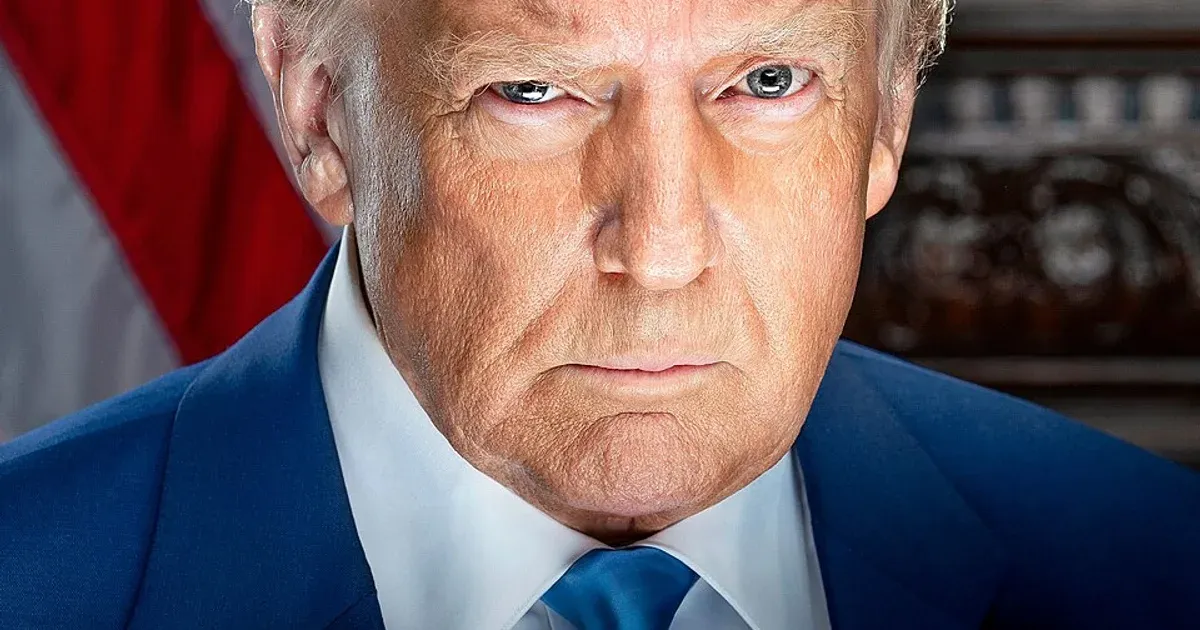
Donald Trump lauded United States special operations units after a high-risk rescue operation deep within Iranian territory. The successful extraction gave the White House a national-security message at a politically useful moment. On April 6, 2026, the raid became a centerpiece of Trump's effort to project control while domestic economic pressure mounted. Successful extraction of intelligence assets took place overnight, involving elements of the Joint Special Operations Command. Success on the battlefield provides a reprieve for a commander-in-chief facing serious domestic scrutiny. Political analysts note the aggressive tone marks a shift in communications strategy before the upcoming election cycle.
Intelligence officials confirmed the raid targeted a facility near Isfahan where three American contractors were being held. Hostile fire greeted the transport helicopters, yet no American casualties were reported during the twenty-minute extraction window. Trump used his social media platforms to broadcast images of the returning aircraft within minutes of their departure from Iranian airspace. Direct confrontation with Iranian Revolutionary Guard Corps units occurred briefly on the perimeter. Pentagon reports describe the opposition as disorganized and ineffective.
Rescue Mission Details and Tactical Success
Military planners spent three months coordinating the logistics for this specific breach of Iranian sovereignty. Satellite imagery from early April showed increased activity around the target site, prompting the immediate green light from the White House. Specialized drone swarms provided electronic warfare cover, blinding local radar systems for the duration of the flight. Stealth-capable transport variants were used to minimize the risk of detection by surface-to-air missile batteries. Iranian state media initially denied the breach occurred before later acknowledging a security incident at a government warehouse.
Donald Trump framed the success as evidence of his administration's willingness to project force without engaging in a full-scale ground war. Strategists believe this messaging aims to appeal to a conservative base that favors strength but remains wary of long-term foreign entanglements. Previous attempts at diplomatic reconciliation with Tehran have stalled over nuclear enrichment disputes. Current intelligence suggests the extracted assets hold critical data regarding the $11 billion Iranian ballistic missile program. Defense contractors saw immediate stock price increases following the public announcement of the operation.
Operational security remained high until the moment the helicopters crossed back into neutral territory. Radio silence was maintained by all participating units, including naval support groups positioned in the Persian Gulf. Trump praised the precision of the strike during a televised address from the Oval Office. Republican allies in Congress quickly amplified the narrative, calling for increased defense spending to maintain technical advantages. Tehran has vowed retaliation for the violation of its borders.
“Military success provides the leverage needed to ensure that American citizens are never used as bargaining chips by hostile regimes, and our actions on April 6 prove that no location is beyond our reach.”
Congressional skepticism about a broader conflict persists, as many lawmakers remain wary of deeper involvement.
Foreign policy experts suggest the rescue mission is a dual-purpose maneuver to test Iranian air defenses. Testing these systems reveals vulnerabilities that planners can exploit in future engagements. Trump has frequently criticized the perceived weakness of prior administrations in dealing with Middle Eastern provocations. Polling data indicates a five-point jump in his approval ratings among independent voters following the news. Regional allies like Israel and Saudi Arabia expressed private support for the tactical boldness displayed by Washington.
Domestic Political Pressure and Reelection Strategy
Economic indicators show a slowing growth rate that has threatened the president's reelection prospects. Inflation remains a primary concern for suburban voters in swing states like Pennsylvania and Michigan. Trump has attempted to pivot the national conversation toward national security to distract from domestic fiscal challenges. Campaign advisers have prioritized visuals of military hardware and returning heroes in recent advertising buys. Messaging emphasizes a world in chaos that only a strong leader can stabilize. Recent focus group data shows that military competence ranks higher than economic policy for a meaningful portion of his core supporters.
Donald Trump faces a complicated landscape as he balances war rhetoric with a promise to end foreign interventions. Isolationist wings of the Republican Party have expressed concern that aggressive posturing could lead to a broader conflict. Trump addressed these concerns by stating that precision strikes actually prevent larger wars by establishing clear boundaries. Critics in the Democratic Party argue that the Isfahan raid was a calculated distraction from ongoing legal challenges facing the administration. Congressional investigators are currently looking into several executive branch appointments. This strategy of high-stakes foreign policy gambles has become a hallmark of the Trump era.
Iranian Escalation and Regional Deterrence
Tehran responded to the raid by increasing its enrichment of uranium to 85% purity at the Fordow facility. High-level Iranian officials announced that the United States would face a crushing response at a time and place of their choosing. Cyberattacks originating from Iranian-linked groups targeted several small municipal utility grids in the American Midwest shortly after the rescue. Security agencies reported no long-term damage, though several websites remained offline for forty-eight hours. Oil prices fluctuated as traders weighed the possibility of a closure of the Strait of Hormuz.
Strategic analysts at the Pentagon believe Iran is unlikely to engage in a conventional war it cannot win. Tehran relies on proxy forces in Lebanon, Yemen, and Iraq to exert pressure on American interests. Donald Trump has warned that any proxy attack will be met with a direct strike on Iranian soil. This is a departure from the traditional policy of strategic ambiguity maintained by previous leaders. Military assets in the region are currently at their highest readiness levels in three years. Four carrier strike groups are now operating within striking distance of the Iranian coast.
Congressional Resistance and Budget Limits
Lawmakers on Capitol Hill remain divided over the funding requirements for a potential conflict. Senate Democrats have threatened to block supplemental defense appropriations unless domestic infrastructure goals are met. Trump has characterized this resistance as a betrayal of the troops currently stationed in harm's way. Budget deficits have reached $2.4 trillion, limiting the flexibility of the Treasury to finance a major mobilization. Trump maintains that the cost of inaction is far higher than the price of a proactive defense posture. National debt concerns continue to dominate the discussion among fiscal conservatives in the House of Representatives.
Trump remains in a difficult position as he tries to satisfy both the hawkish and the populist branches of his coalition. Populist supporters have grown weary of the financial burden associated with policing the Middle East. By contrast, defense hawks insist that the withdrawal from regional bases has emboldened Iranian aggression. Donald Trump must thread the needle by delivering short, decisive military victories that do not require long-term troop deployments. Public opinion on the Isfahan raid is largely positive, yet skepticism remains regarding the long-term impact on regional stability. The president plans to hold a series of rallies in the coming weeks to solidify this support.
Iran Rescue Political Risk
Presidential candidates historically use foreign crises to strengthen their standing, but the Trump administration's current approach to Iran is a high-stakes gamble with diminishing returns. Washington is betting that surgical strikes and rescue missions can substitute for a coherent regional strategy. This assumption ignores the reality that tactical brilliance rarely solves underlying geopolitical friction. Trump is attempting to use the Isfahan rescue as a political shield against domestic failures, a tactic that works only as long as the casualties remain at zero. One failed mission or one downed helicopter would instantly transform this perceived strength into a liability that the opposition would exploit relentlessly.
Donald Trump is essentially playing a game of chicken with a regime that has spent decades preparing for asymmetrical warfare. While the $11 billion missile program is a legitimate threat, the administration's fixation on military theater suggests a lack of long-term vision. Relying on the technical superiority of special operations to distract from a $2.4 trillion deficit is a temporary fix for a structural problem. The American public may cheer for a rescue, but they will not tolerate another open-ended conflict in the desert. Trump's political survival depends on maintaining this narrow balance of aggression without escalation.
A single miscalculation in the Persian Gulf could collapse his reelection bid before the first primary vote is cast. The risk is high and the reward is limited.