Republicans and Donald Trump reached a deal to end the partial shutdown of the Department of Homeland Security. Negotiations culminated in a legislative framework designed to restore operations for 240,000 employees who have worked without pay for 46 days. The deal was announced on April 1, 2026. This record-breaking stoppage resulted in meaningful backlogs at ports of entry and administrative delays in immigration processing. Resistance inside the House GOP conference collapsed overnight.
House and Senate leaders jointly announced a two-track funding mechanism to bypass the partisan deadlock. One track provides immediate funding for general Department of Homeland Security operations through the remainder of the fiscal year. Legislative text indicates that ICE and U.S. Customs and Border Protection will receive funding through a separate, dedicated measure. House Republicans previously rejected similar proposals but eventually moved toward the Senate position to avoid further political fallout. The final agreement carries the potential for floor votes as early as Thursday morning.
Republicans Resolve Department of Homeland Security Deadlock
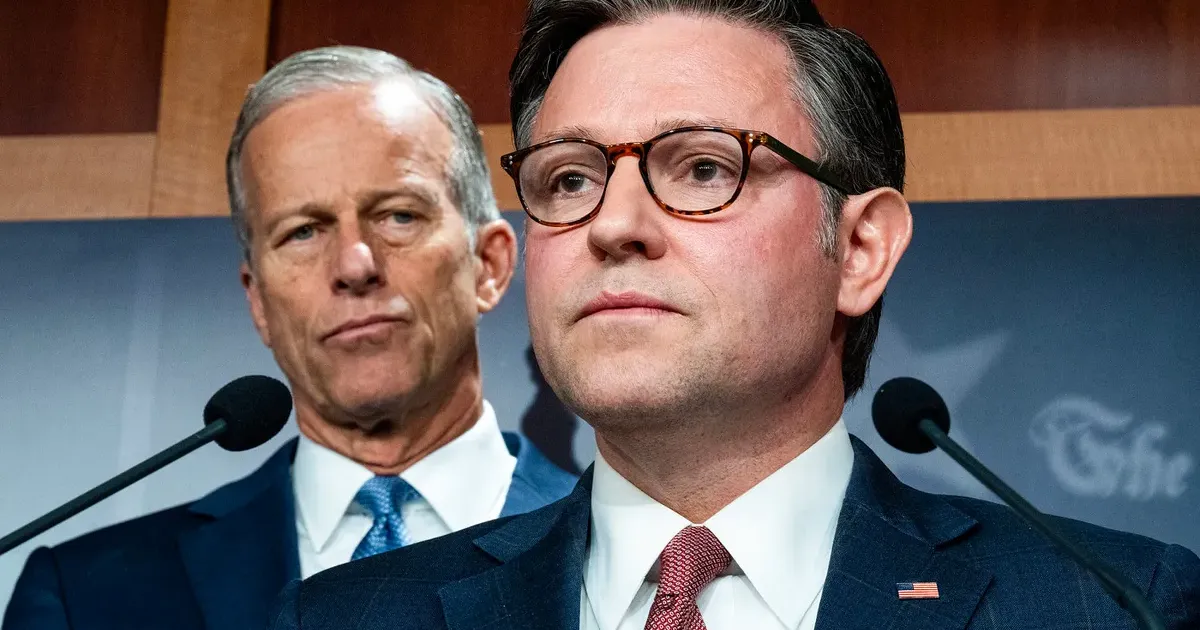
Senate Republicans led by John Thune collaborated with House Speaker Mike Johnson to secure Donald Trump’s endorsement for the current plan. Previous iterations of the deal failed because the White House demanded thorough border security concessions as a requirement for any funding. Current legislation decouples these broader policy disputes from the essential task of paying federal law enforcement officers. Security analysts at various agencies warned that the 46-day lapse created vulnerabilities in national defense systems. Documents from the Treasury Department indicate the shutdown cost the federal government billions in lost productivity and delayed revenue collection.
Donald Trump expressed support for the revised strategy during a brief briefing with party leadership. Sources close to the negotiations suggest the president prioritized the resumption of funding for ICE to maintain deportation operations. While previous rhetoric suggested a refusal to compromise, the reality of a paralyzed border infrastructure forced a tactical retreat. Political advisors noted that polling data showed increasing public frustration with the prolonged closure. Congressional leaders now expect broad bipartisan support in the Senate while the House vote margin appears narrower.
"We are going forward to fund our incredible ICE, as well as US Customs and Border Protection, to ensure our country stays safe during these difficult times," Donald Trump stated during the deal announcement.
Separating the agencies into two distinct funding vehicles allows lawmakers to vote for general department operations while debating more controversial enforcement budgets later. Critics of the plan argue this creates a precedent where specific federal functions are held hostage for political leverage. Proponents claim it is the only viable path to reopen the Department of Homeland Security in a divided legislature. Staffing levels at major airports began to stabilize as news of the deal reached local union chapters. Operational readiness at the southern border is expected to return to normal levels by the end of the month.
Two Track Plan Separates ICE and Border Operations
Provisions in the two-track plan allocate nearly $11 billion specifically for administrative functions and disaster relief. Funding for ICE remains a volatile subject among House Republicans who seek stricter enforcement protocols. Senate negotiators insisted that ICE must operate under a separate budget to prevent future shutdowns from affecting the entire Department of Homeland Security. Lawmakers in the House GOP eventually conceded that a total department freeze was unsustainable. This shift in strategy came after several leading Republicans broke ranks to support a clean funding bill last Friday. Internal fractures within the House GOP conference had previously stalled progress on ending the record-breaking shutdown.
Agencies like the Transportation Security Administration and the Secret Service will see their budgets restored under the first track of the legislation. These departments were among the most heavily impacted by the lapse in appropriations. Internal memos suggest that the Secret Service had to reallocate funds from investigative divisions to maintain protective details during the shutdown. Payroll systems are being prepared to issue retroactive payments to all affected personnel within the next two pay cycles. Total back pay for the 240,000 workers is estimated to exceed 2.4 million individual checks.
Critical security operations at the border now face a complex funding bifurcation.
Congressional staffers worked through the night on April 1, 2026, to finalize the legal language required for the Thursday vote. Donald Trump has promised to sign both pieces of legislation immediately upon their arrival at his desk. House Republicans are expected to provide the bulk of the votes required for passage despite some internal dissent from the most conservative members. Market analysts observed a slight uptick in government bond prices following the announcement. Reliable funding for the Department of Homeland Security is seen as a stabilizing factor for international trade and travel.
Financial Fallout for Department of Homeland Security Staff
Economic experts estimate that the 46-day shutdown drained $6.5 billion from the national economy due to lost wages and stalled contracts. Thousands of small businesses that provide services to the Department of Homeland Security faced bankruptcy risks during the funding gap. Federal contractors do not typically receive the same retroactive pay as government employees. Legal challenges regarding the treatment of these contractors are likely to persist in federal courts for years. The Donald Trump administration has not yet addressed the specific financial grievances of the private-sector workforce.
Recruitment and retention within ICE and other border agencies suffered during the standoff. Job applications for federal law enforcement positions dropped sharply during the first-quarter of 2026. Current employees reported high levels of stress and financial hardship while working essential shifts without compensation. Union representatives from the American Federation of Government Employees described the deal as a necessary but late resolution. The human cost of the record-breaking shutdown continues to manifest in lower morale across the civil service. Many veteran officers chose to retire early rather than endure the uncertainty of future budget cycles.
Legislative analysts suggest the two-track model may become the new standard for funding agencies with disputed missions. Using ICE as a separate line item protects the broader functions of the Department of Homeland Security from being used as bargaining chips. Congressional leaders on both sides of the aisle expressed a desire to avoid a repeat of the 2026 crisis. Future budget resolutions will likely reflect this new architectural approach to federal spending. Final passage of the reopening bills will mark the conclusion of the longest departmental shutdown in American history.
Shutdown Deal Political Cost
Does any modern administration actually understand the logistical wreckage left behind by a 46-day lapse in federal authority? The capitulation of the House GOP and the sudden pivot by Donald Trump suggest that the political cost of a paralyzed Department of Homeland Security eventually outweighed the perceived benefits of hardline border posturing. By moving to a two-track funding system, the Republican leadership has essentially admitted that holding the entire security apparatus hostage is a failed strategy. This move does not signal a peace treaty; it marks a tactical retreat into a more manageable form of gridlock where ICE can be targeted in isolation.
The long-term damage to the federal workforce is perhaps the most overlooked casualty of this 46-day theater. Highly trained professionals in the Department of Homeland Security are being treated as expendable pawns in a seasonal game of budget brinkmanship. While the immediate crisis concludes with the April 1, 2026, announcement, the precedent of bifurcation invites future legislatures to carve up departments until they are functionally unrecognizable. Using ICE as a standalone target for funding disputes merely shifts the battlefield without solving the underlying policy contradictions. It is a hollow victory for governance.