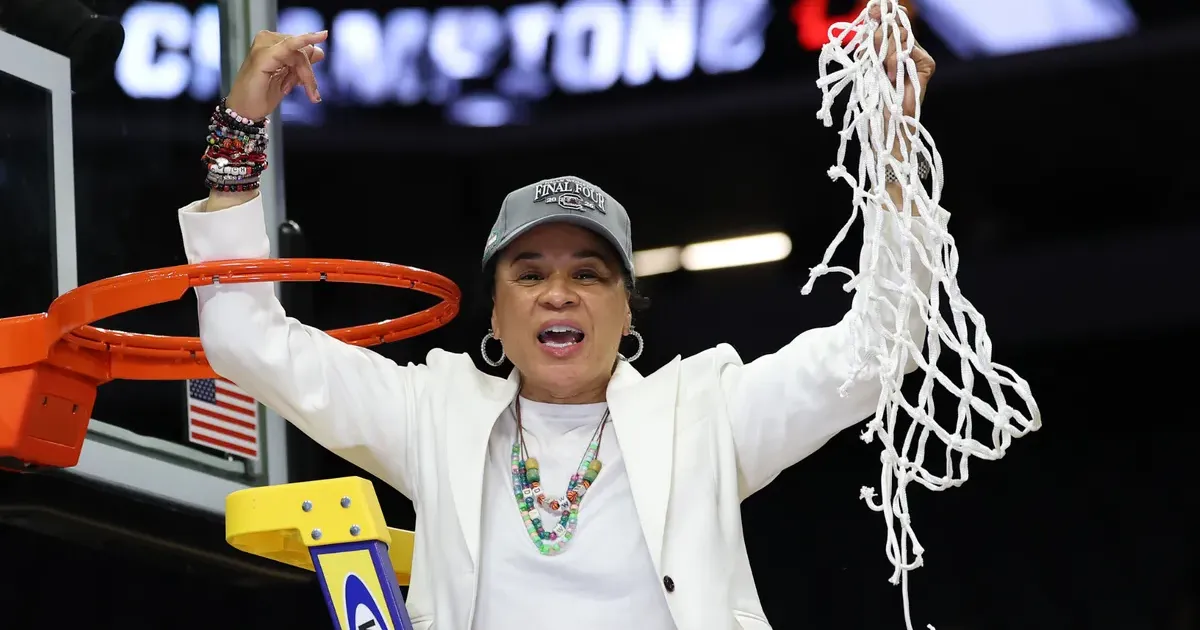
The 2026 women's Final Four opened as evidence of concentration and ended as evidence of movement. UConn, UCLA, Texas and South Carolina returned as No. 1 seeds for a second straight season, a bracket shape that could have made the sport look closed to outsiders. Then UCLA beat South Carolina 79-51 for its first NCAA-era women's basketball championship and changed the meaning of the weekend.
The top of the sport is still crowded with familiar names. South Carolina reached another Final Four after handling TCU. UConn arrived unbeaten before losing to the Gamecocks in Phoenix. Texas returned with the size and guard play to threaten another title run. UCLA had already proved it belonged near that group, but the Bruins had not finished the climb. This time they did more than arrive. They took the trophy from the program that had become the sport's most reliable measuring stick.
The Repeat Field Was Not Empty Drama
Four No. 1 seeds can make a tournament sound predictable. This version carried real tension because the programs represented different kinds of power. South Carolina brought physical identity and championship muscle. UConn brought history, shot-making and the pressure of an unbeaten season. Texas brought roster depth and another sign of how quickly it has become a yearly threat. UCLA brought Lauren Betts, defensive size and a team ready to turn promise into proof.
The semifinals sharpened that contrast. South Carolina's 62-48 win ended UConn's perfect run and reinforced the Gamecocks' ability to make elite opponents uncomfortable. UCLA's 51-44 win over Texas showed a different kind of control. The Bruins did not need a clean offensive showcase to survive. They could win a tight, physical game and still have another gear left for the final.
UCLA Made the Final Feel Like a Breakthrough
The championship game was not close enough to be framed as one lucky night. UCLA's 28-point win over South Carolina was a statement about readiness. The Bruins defended with force, controlled the glass and kept South Carolina from turning the game into the kind of pressure contest it usually owns. Betts gave UCLA the interior anchor it needed, and the supporting pieces played with the calm of a team that had stopped treating the stage as new.
The margin matters because first titles can sometimes look like a surprise run. This one did not. UCLA had already reached the elite tier; the final showed it had become strong enough to dictate terms inside it. The win was not a disruption from outside the hierarchy. It was a promotion within the hierarchy.
Concentration Is Still the Sport's Challenge
The same four programs reaching the final weekend in consecutive years says something uncomfortable about women's college basketball. Talent, resources, facilities, coaching continuity, NIL reach and recruiting gravity are not evenly spread. The road into the last weekend remains brutally narrow for most of the field.
The concentration is not a reason to dismiss the tournament. It is a reason to be precise about what changed. UCLA's title did not prove broad parity. It proved that the top tier is not locked into one ending. For the NCAA, the distinction is important. The sport can live with elite brands returning if the audience believes the trophy is genuinely in play among them. It becomes a problem only when the bracket starts to feel like a procession.
South Carolina and UConn Remain the Standards
One UCLA title does not erase the programs that built the current era. South Carolina remains a physical and recruiting standard. UConn remains the historical reference point and, after an unbeaten run to Phoenix, hardly looked like a fading power. Texas has turned itself into a repeat Final Four presence. The question is not whether those programs have fallen. They have not.
The question is whether UCLA has joined them as a title-level constant rather than a one-season peak. Sustaining that level is the next test for Cori Close's program. Winning once proves the ceiling. Returning to this level after every opponent spends a year measuring itself against the Bruins will say more about staying power.
The Healthier Ending Was a New Champion
The 2026 tournament did not tell every program it has an equal path to the title. It told the sport something narrower and more useful: the top is hard to enter, but it can still move. UCLA made dominance less monotonous by turning an all-No. 1 Final Four into a first-time NCAA-era champion.
A new champion makes the concentration healthier. Star programs remain visible, the games carry heavyweight stakes, and the ending does not feel prewritten. UCLA did not crash the event from nowhere. It climbed into the room, stayed there and then beat South Carolina by 28. That is not chaos. It is a power shift earned on the floor.