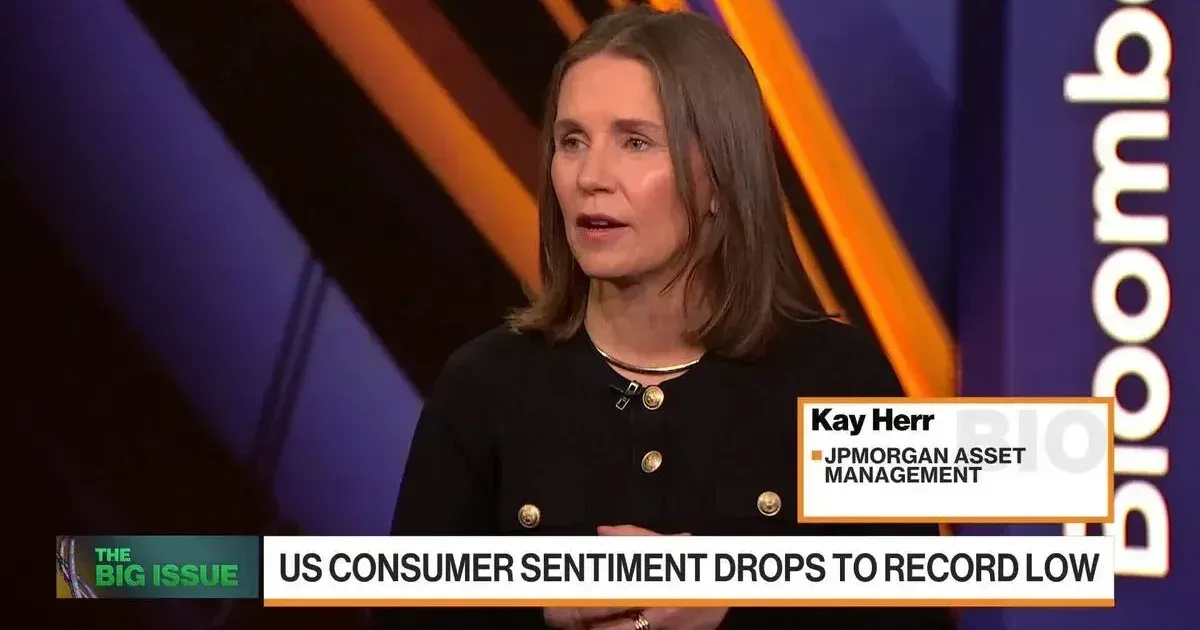
Market participants gathered for the latest broadcast of Bloomberg Real Yield to analyze the deteriorating psychological state of the American shopper. Herr, who is the U.S. chief investment officer for global fixed income, currency, and commodities at JPMorgan Asset Management, identified a direct correlation between the ongoing conflict in the Middle East and the domestic cost-of-living crisis. Household expectations for future financial stability have eroded at a pace faster than witnessed during the 2008 financial crisis or the 1970s stagflation era. Rising energy costs drove the downturn in confidence. Households reacted to inflation and job-market anxiety on April 10, 2026, as the confidence reading was released. Every major metric tracking household outlooks showed a uniform decline across all income brackets.
Economic analysts observed that the suddenness of the drop caught many institutional investors by surprise. Internal surveys conducted by major financial institutions confirmed that consumers no longer view current price hikes as transitory. Fixed income markets reacted to the sentiment data by pricing in a more aggressive stance from the Federal Reserve. Bond yields fluctuated wildly in the minutes following the public release of the sentiment index. The decline in morale suggests a fundamental withdrawal from discretionary consumption. Retailers reported a 15 percent drop in foot traffic at high-end shopping centers. Fuel prices remain the primary driver of this widespread pessimism. Petroleum costs at the pump reached $5.50 per gallon in several major metropolitan areas yesterday.
Rising Inflation Erodes American Consumer Sentiment
Price increases across the consumer basket have outpaced wage growth for six consecutive months. Kay Herr told Katie Greifeld during the interview that the duration of the conflict in Iran is the primary variable for future projections. Market volatility increased as the GFICC group adjusted its portfolio allocations to account for the sentiment data. Institutional investors typically view consumer sentiment as a leading indicator for future GDP growth. A contraction in sentiment often precedes a reduction in manufacturing orders. Factories in the Midwest reported a slowing rate of new business during the first quarter. Small business owners expressed concern that they cannot pass further cost increases to a weary public. The sentiment index now sits at 48.2 points.
Fixed income strategies are shifting to defensive postures. Herr noted that the fixed income, currency, and commodities group must remain agile to preserve capital. Inflationary expectations among the public are now anchored at 3.8 percent for the next five years. This number exceeds the central bank's comfort zone by a significant margin. Investors are selling off long-term Treasury bonds in anticipation of higher interest rates. The correlation between geopolitical instability and domestic anxiety has tightened. Financial advisors reported an influx of calls from retirees worried about the purchasing power of their fixed pensions. High prices at grocery stores have forced many families to shift toward generic brands. Food inflation stayed above 9 percent in the latest report.
Iran War Disrupts Global Energy Markets
Oil supply chains faced immediate blockages as the conflict intensified last month. Analysts at JPMorgan Chase suggested that the disruption in the Strait of Hormuz could lead to a permanent shift in energy pricing. European markets are also feeling the pinch as Brent Crude surpassed $130 per barrel earlier this week. American refineries are operating at near-maximum capacity but cannot keep up with the demand for diesel. Transport costs for consumer goods rose by 22 percent since the beginning of the hostilities. Shipping companies added war risk surcharges to every container arriving at West Coast ports.
These costs eventually land on the desks of American families. Energy analysts predict that gasoline prices will stay elevated for the duration of the calendar year. U.S. consumer sentiment fell in recent weeks to a record low, indicating Americans’ increasing worries about mounting inflation due to the Iran war.
Supply-chain experts pointed out that the Iran war affects more than oil. Global trade routes for critical minerals and agricultural products pass through regions now designated as active combat zones. Fertilizer prices increased by 30 percent in three weeks. This specific spike guarantees higher food costs for the next harvest cycle. Consumer sentiment reflects a sophisticated understanding of these interconnected risks. Americans are watching their savings accounts diminish in real terms. The average household savings rate fell to 2.4 percent. This marks the lowest point for personal savings in over a decade. Financial stress is contributing to a broader slowdown in the housing market.
JPMorgan Asset Management Forecasts Market Volatility
Portfolio managers are currently re-evaluating their exposure to consumer-facing equities. Kay Herr emphasized that the Bloomberg Real Yield audience should prepare for continued turbulence. Market liquidity tightened as large-scale investors moved toward cash and short-term equivalents. Credit card debt in the United States reached a new peak of $1.13 trillion last month. Consumers are using revolving credit to bridge the gap between their income and rising expenses. The behavior creates a fragile foundation for the broader economy. Banks are responding by tightening lending standards for personal loans. The cost of borrowing for a new vehicle rose to an average of 8.2 percent. Car dealerships reported a glut of inventory as buyers walked away from high-interest contracts.
Currency markets are also reacting to the shift in U.S. consumer sentiment. The dollar strengthened against a basket of currencies as investors sought a safe haven. A strong dollar typically lowers the cost of imports but hurts American exporters. Multinational corporations warned that their international earnings would suffer in the second quarter. The GFICC team at JPMorgan Chase is monitoring these currency fluctuations for potential arbitrage opportunities. Volatility in the yen and euro added another layer of complexity to the global outlook. Fixed income traders are focusing on the spread between two-year and ten-year Treasury notes. The yield curve remained inverted for the 450th consecutive day. The inversion historically is a precursor to a technical recession.
Commodity Price Surges Stress Household Budgets
Commodity markets showed no signs of cooling as the trading day ended. Wheat and corn futures rose by 4 percent on the Chicago Board of Trade. These increases impact the price of bread, meat, and dairy products. Consumers in the U.S. are particularly sensitive to fluctuations in protein prices. Cattle futures reached a five-year high due to increased transport and feed costs. The consumer sentiment survey captured a growing sense of hopelessness among younger workers. Many individuals under the age of 30 believe they will never own a home. Rental prices in urban centers stayed stubbornly high despite the drop in overall sentiment. The cost of shelter remains the largest single expense for most American households.
Labor market data provided the only counterpoint to the negative sentiment. Unemployment remains low, yet the quality of jobs is a subject of debate. Many workers are taking on second or third positions to maintain their standard of living. The labor market tightness has not translated into real-term wealth gains. Corporate profit margins are under pressure from both rising input costs and the threat of declining sales. CEOs in the retail sector are bracing for a difficult holiday season. The sentiment data is a warning for the entire corporate world. Management teams are cutting capital expenditure budgets to preserve liquidity. JPMorgan Chase analysts expect a cooling in business investment throughout the summer.