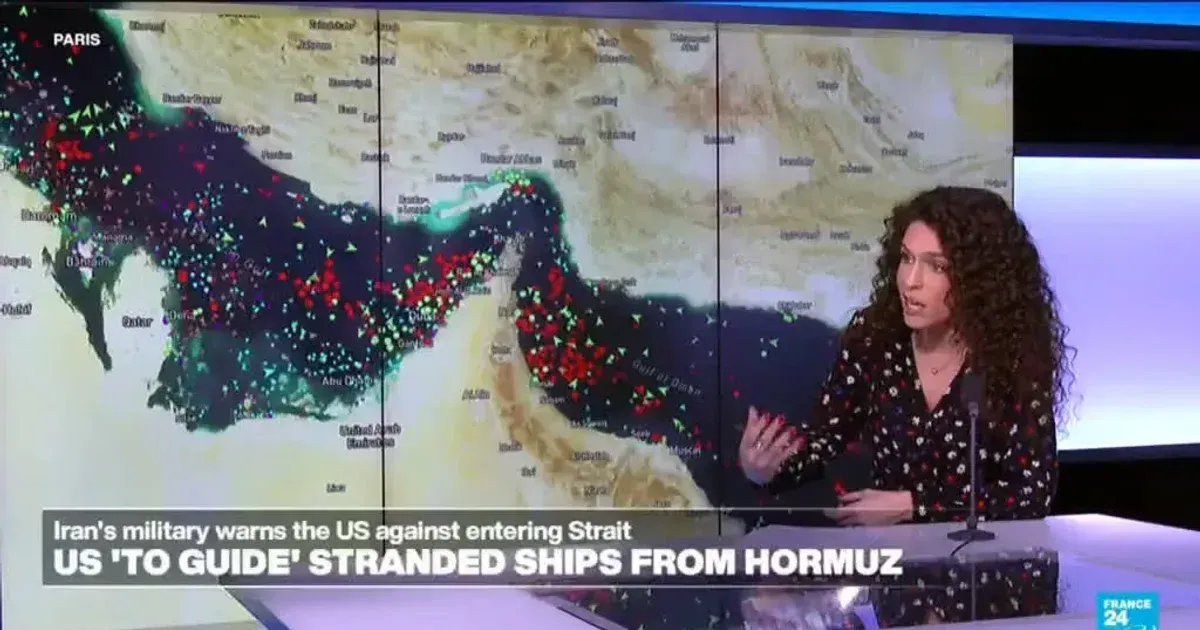
Project Freedom is the administration's most direct attempt yet to reopen blocked Gulf traffic. The mission ties naval power to commercial shipping and energy security. It also increases the chance that a local encounter becomes a regional escalation. Washington moved to dissolve a maritime bottleneck in the Persian Gulf after weeks of escalating naval friction. President Donald Trump confirmed the start of the initiative on May 4, 2026, describing the mission as a necessary intervention to protect commercial interests and ensure the safety of neutral vessels. Project Freedom is a coordinated military and logistical response to a blockade that has effectively halted traffic through one of the world's most critical energy corridors.
Forces under the command of the U.S. Navy began the process of identifying and organizing merchant ships that have been unable to move through the Strait of Hormuz. American military officials indicated the operation is designed to help ships from neutral countries that found themselves caught in the middle of the ongoing war between Israel and Iran. Many of these commercial crews have reported dwindling stocks of fresh water and food while anchored in dangerous waters.
Operational details released by the Pentagon suggest a large commitment of resources to ensure the success of the corridor. The mission involves approximately 15,000 service members and a fleet of more than 100 aircraft ranging from surveillance drones to fighter jets. Guided-missile destroyers have been positioned to provide a protective screen for tankers as they navigate the narrow passage. Thousands of sailors are now moving toward the primary shipping lanes.
Deployment of Naval and Air Assets
Officials at the Joint Maritime Information Center have established an enhanced security area to manage the flow of traffic. This zone is located primarily within the territorial waters of Oman, providing a pathway that avoids the most heavily contested Iranian coastal positions. Military planners intend to use a combination of aerial overwatch and naval escorts to deter interference from the Iranian Revolutionary Guard Corps.
Tehran, however, signaled immediate opposition to the American presence. A senior Iranian military official warned that any US interference in the waterway would be treated as a ceasefire violation. This statement followed several days of aggressive maneuvers by Iranian fast-attack boats near commercial anchoring sites. Iranian officials and allied outlets argue that Washington's role risks breaching the fragile ceasefire.
Commercial vessels are being advised to coordinate directly with U.S. naval commanders before attempting a transit. The guidance issued on Monday morning instructs captains to maintain specific headings and communication frequencies to remain under the protective umbrella of the American fleet. Logistics experts believe this structured approach is the only way to prevent accidental engagements in the crowded waters of the strait.
Logistics of the Omani Corridor
President Trump framed the operation as a humanitarian effort to assist crews that have been trapped for several weeks. Many of the stranded vessels are registered to countries with no direct involvement in the regional war, yet their sailors have faced increasing hardship. Trump emphasized the urgency of the situation during a weekend briefing, noting that some ships were running dangerously low on essential supplies.
President Trump described the mission as a "humanitarian gesture" to aid neutral countries that have seen their ships and crews "locked up" by the Iranian blockade.
Resource management on these stranded tankers has reached an acute stage. Records from maritime unions show that over 40 ships have been waiting for a safe window to exit the gulf since late April. Project Freedom intends to clear this backlog by organizing ships into small, manageable convoys that can be defended more easily against asymmetric threats. Each convoy will receive a dedicated escort of destroyers and constant aerial monitoring.
Retaliation remains a core risk in the Iranian defensive posture. Iranian state media has frequently broadcast images of missile batteries along the coast, suggesting that any attempt to break the blockade could lead to a wider kinetic exchange. Naval analysts in Washington are monitoring these sites for any signs of activation as the first convoys begin their movement.
The Humanitarian Crisis at Sea
Global markets have reacted with extreme volatility to the prolonged closure of the strait. Energy prices rose sharply as reports of the blockade reached trading floors in London and New York. The successful implementation of Project Freedom could be one immediate way to stabilize prices and ensure that energy supplies reach international destinations. Ship owners remain cautious despite the promise of American protection.
Omani officials have cooperated with the American military to define the boundaries of the safe corridor. The agreement allows the U.S. Navy to operate within specific zones that are less likely to trigger a direct confrontation with Iranian shore-based units. The logistical complexity of moving dozens of huge oil tankers through a narrow strip of water requires precise timing and flawless communication between multiple national navies.
Supply chains for food and medicine in several neutral nations depend on the cargo currently sitting idle in the Persian Gulf. If the blockade continues, the economic damage could extend far beyond the immediate region. The American initiative is designed to reduce these broader consequences while maintaining a firm military stance against Iranian interference. Convoys are expected to move in 24-hour cycles to maximize the number of ships rescued.
Project Freedom Could Turn a Shipping Corridor Into a Naval Battlefield
Regional stability depends on whether Tehran views these escorts as a protective shield or a direct provocation. The deployment of 15,000 service members and more than 100 aircraft creates an enormous military footprint in a zone that is already primed for conflict. While the humanitarian justification provides a clear public rationale, the tactical reality is one of high-stakes deterrence. Iran has historically used the threat of closing the strait as its primary leverage against Western pressure, and a successful U.S.-led breach of that blockade would sharply diminish Tehran's strategic position.
Miscalculation is the primary danger in this environment. A single engagement between a U.S. destroyer and an Iranian fast boat could quickly escalate into a full-scale naval engagement involving missile exchanges and air strikes. The operation is about more than guiding merchant ships; it is an assertion of naval dominance in a contested waterway. Success depends on the ability of American commanders to maintain a defensive posture while ensuring that the Iranian military understands the cost of interference. The margin for error in the Strait of Hormuz is now thinner than it has been in decades.