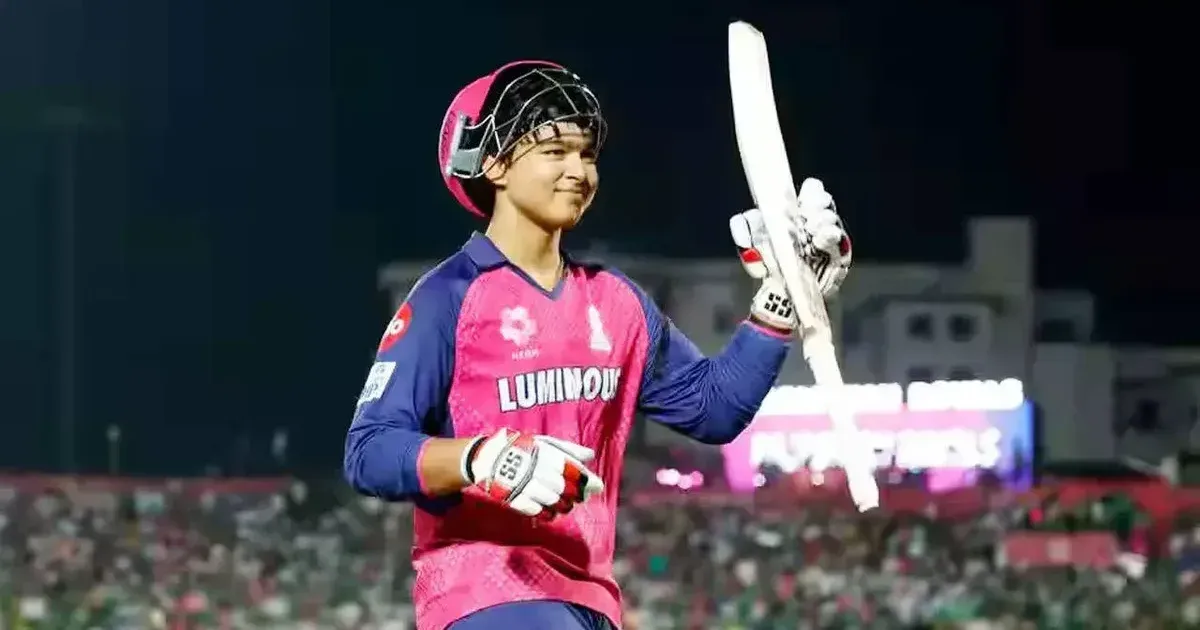
Vaibhav Sooryavanshi rewrote the record books in Guwahati during a match between Rajasthan Royals and Royal Challengers Bengaluru. High-octane aggression defined the evening as the 15-year-old cricketer bludgeoned a half-century in just 15 deliveries, matching a personal record he established earlier in the IPL 2026 season. Spectators at the Barsapara Cricket Stadium witnessed a clinical display of power hitting that dismantled the bowling attack of the Royal Challengers Bengaluru. Technical proficiency merged with raw youthful energy to produce one of the most efficient scoring bursts in the history of the league. Vaibhav Sooryavanshi accelerated the chase in Guwahati on April 10, 2026, with his record innings. Rajasthan Royals management watched from the dugout as their scouting investment paid immediate dividends on the field. Records previously held by international icons crumbled under the weight of this rapid scoring rate. By reaching fifty in fifteen balls, Sooryavanshi eclipsed the benchmarks set by established stars like Ben Stokes and Yashasvi Jaiswal. His ability to find gaps in the field during the powerplay overs suggests a maturity far beyond his biological age. Momentum shifted toward the Royals from the first over, leaving the Bengaluru side struggling to find a viable defensive strategy.
Sooryavanshi Smashes Record Books in Guwahati
Guwahati has become a fertile ground for high-scoring encounters, yet the pace of this specific innings startled even veteran commentators. Every boundary seemed calculated, with the young batter exploiting the short square boundaries to his advantage. Speed and precision characterized his footwork, allowing him to neutralize both pace and spin with equal ease. While some critics initially questioned the decision to field such a young player in high-pressure scenarios, those doubts vanished as the strike rate climbed toward 333.33. Local fans in Assam provided a thunderous backdrop to every ball that cleared the ropes.
Comparisons to previous IPL legends are now unavoidable. Yashasvi Jaiswal previously held the standard for explosive starts, but the current velocity displayed by the Royals opener sets a new trajectory for T20 batting. Ben Stokes once provided the gold standard for high-pressure hitting; however, the sheer economy of movement in the Sooryavanshi technique provides a different template for success. Efficiency of effort appears to be the hallmark of his game, focusing on timing rather than brute force. Scouts from other franchises are already analyzing the biomechanics that allow a teenager to generate such high bat speed. Success in the IPL often leads to immediate national scrutiny and immense commercial pressure. Young athletes frequently struggle with the transition from domestic circuits to the glitz of a global stage. Vaibhav Sooryavanshi seems insulated from these distractions by a rigorous training regimen and a grounded support structure within the Rajasthan camp. Team dynamics matter in encouraging this kind of talent, providing a platform where failure is viewed as a learning curve and success is managed with professional restraint. The franchise has built a reputation for developing domestic talent into international assets.
Statistical Analysis of the 15 Ball Half Century
Data from the innings reveals a fascinating distribution of scoring zones. Nearly sixty percent of his runs came through the leg side, where he frequently cleared the mid-wicket boundary with ease. Bowlers attempted to cramp him for room by targeting the body, yet he countered with quick wristwork and back-foot punches. Such versatility makes him a difficult target for opposition captains who rely on traditional field settings. Bengaluru captaincy shuffled through three different bowling changes within the first four overs to stem the flow of runs. None of these adjustments successfully slowed the scoring rate. Consistency across multiple matches is what separates a flash-in-the-pan performance from a genuine breakthrough season. Matching his own record of a 15-ball fifty proves that the earlier feat was not a statistical anomaly. Instead, it confirms a repeatable method of aggression that targets the first six overs of the innings. Domestic cricket observers note that his progression through the age-group levels was marked by similar bursts of dominance. His current form suggests that the professional level of the IPL has not yet found a consistent way to exploit any technical weaknesses. Most bowlers find themselves reacting to his movements instead of dictating the terms of the engagement.
Rivalries in the IPL often boil down to specific individual match-ups that capture the public imagination. The battle between the youthful exuberance of the Royals and the experienced core of the Bengaluru side provided a perfect case study in modern T20 trends. Experience is frequently cited as the primary asset in high-stakes matches, yet the fearlessness of youth can override tactical planning. Youngsters like Sooryavanshi do not carry the psychological baggage of past failures, allowing them to play with a freedom that veterans sometimes lose. This psychological edge is becoming a major factor in team selection processes.
Rising Market Value for Rajasthan Royals Talent
Financial analysts monitoring the sports sector point toward a significant spike in the valuation of the Rajasthan Royals brand. Identifying and securing the services of a 15-year-old who can outperform world-class internationals is a masterstroke in roster management. Salary caps and auction dynamics mean that domestic prodigies provide the highest return on investment for any franchise. Every run scored at a strike rate above 200 adds millions to the potential sponsorship deals for both the player and the team. Global brands are already circling the young batter for endorsement opportunities across various sectors.
International interest in the IPL remains high, particularly in markets like the United Kingdom and Australia. Seeing a player beat a record held by Ben Stokes generates headlines in London as much as it does in Jaipur. The global nature of the cricket economy ensures that such performances are analyzed by coaches around the world. Talent pipelines are now being restructured to find more athletes like Sooryavanshi at earlier ages. Traditional paths through university or long-term domestic grinds are being bypassed for explosive specialists who can impact a game in under twenty minutes. This shift is fundamentally changing how cricket is coached at the grassroots level. Pressure from the media can often derail a young career before it truly begins. Indian cricket history is littered with names who were hailed as the next big thing only to fade into obscurity after a few seasons. Maintaining focus requires a level of mental fortitude that is difficult to sustain under the bright lights of a televised league. Coaches at the Royals emphasize the importance of the process over the results, helping to keep expectations realistic. Despite the viral nature of his current success, the internal narrative remains one of incremental improvement and technical refinement. Hard work behind the scenes is the foundation of these public spectacles.
Psychological Edge in the Jitesh Sharma Exchange
Interactions between players often reveal more about their mental state than the statistics themselves. Ahead of the crucial match in Guwahati, Sooryavanshi shared a light-hearted exchange with Jitesh Sharma, the wicket-keeper for Bengaluru. Playful teasing from the senior player was met with a witty and confident reply from the teenager. Social media platforms erupted with praise for the young man's composure during this encounter. Professional sports require a balance of competitive fire and mutual respect, which was on full display during this pre-match moment. His ability to handle banter with an established star like Sharma indicates a high level of social and emotional intelligence.
"It was a light-hearted moment that highlighted the mutual respect between players from both sides," noted a report from NDTV regarding the pre-match interaction.
Respect is earned on the field, but it is often maintained through these small human connections. Jitesh Sharma, a seasoned campaigner himself, appeared to recognize the special talent present in the Royals' lineup. Such moments humanize the players for the fans, moving beyond the cold numbers of a scoreboard. It also serves to diffuse some of the tension that naturally builds before a high-profile IPL clash. Confidence radiates from the 15-year-old, not just in how he swings the bat, but in how he carries himself among his peers. He belongs on this stage, and his senior colleagues clearly agree. Match results often hinge on these psychological factors as much as they do on technical skill. A relaxed player is a dangerous player, capable of making split-second decisions without the paralysis of over-analysis. Sooryavanshi's reply to Sharma's teasing became a viral sensation precisely because it showed he was not intimidated by the occasion. While the Bengaluru side focused on tactical plans to stop his scoring, the young man was simply enjoying the environment. This sense of play is a powerful weapon in a professional setting where stress levels are habitually high. The result was a record-breaking performance that silenced his detractors.
Youth Development Collides With IPL Commercial Pressure
Professional sports leagues increasingly function as high-stakes laboratories for biological limits. The emergence of a fifteen-year-old capable of dismantling professional bowling units is more than a sports story; it is a disruption of the traditional developmental hierarchy. The evidence points to the death of the apprenticeship model in cricket. The idea that a player must spend years in the domestic wilderness to earn their stripes is a relic of the twentieth century. Data-driven scouting now identifies power-hitting potential before the athlete is old enough to hold a driver's license.
Is this progress or exploitation? The IPL machine requires constant fuel in the form of new, marketable faces to maintain its multi-billion dollar valuation. By elevating children to the status of national icons, the league creates an unstable environment where the cost of failure is absolute. One must ask if the human psyche is built to handle the transition from high school classrooms to global television audiences overnight. The Royals have found a goldmine, but the ecological impact on the player's long-term career remains to be seen. Modern cricket no longer rewards experience; it rewards the lack of fear that only comes with youth. Skepticism should be our default position when a teen phenom arrives. For every prodigy that succeeds, a dozen others are discarded by a system that has no use for those who lose their edge. The commercialization of youth in the IPL is a high-reward, high-risk move. If Sooryavanshi continues this trajectory, the sport changes forever. If he plateaus, he becomes another data point in the league's ruthless search for the next viral moment. The spectacle is undeniable. The sustainability is questionable.