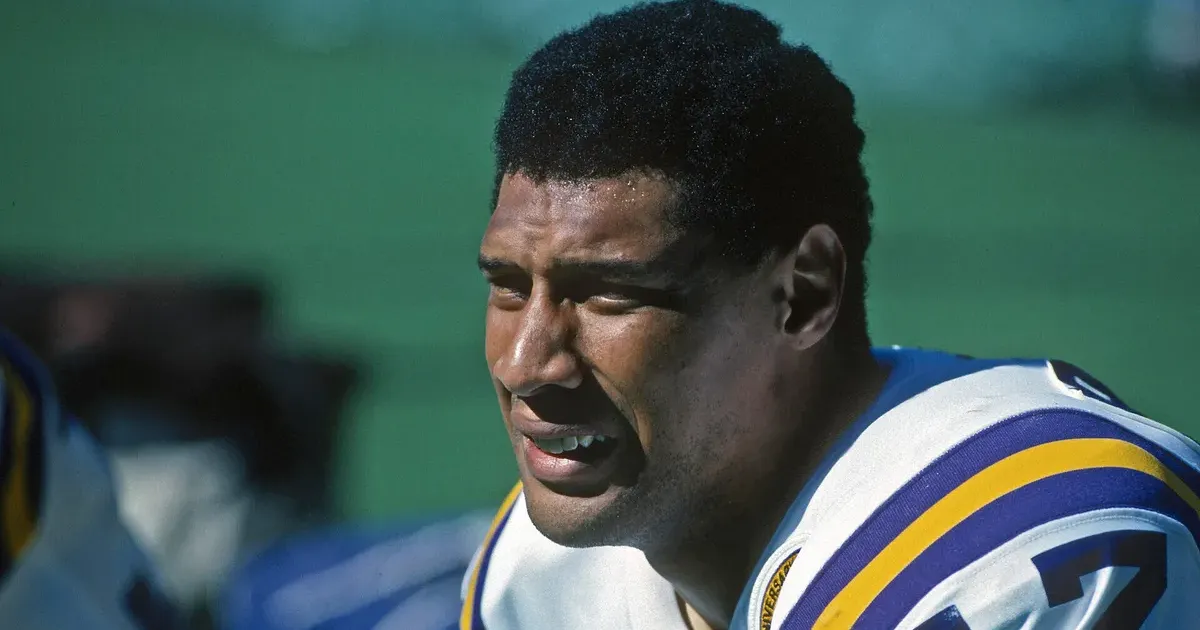
Joey Browner's death at 65 closed a life that meant far more to the Minnesota Vikings than one era of physical play. The franchise announced that the Ring of Honor safety had died Saturday, bringing fresh attention to a career that still sits awkwardly outside the Pro Football Hall of Fame.
Browner was a first-round pick out of USC in 1983 and became one of the defining defensive players of the Vikings' 1980s teams. He made six Pro Bowls, earned first-team All-Pro recognition across the heart of his prime and was selected to the NFL's 1980s All-Decade Team. Those are not local-legend credentials. They are era-level credentials.
Minnesota Built Part Of Its Identity Around Him
Browner played nine seasons for the Vikings before finishing his NFL career with Tampa Bay. In Minnesota, he became part of the franchise's defensive memory: the Metrodome years, the NFC Central grind and a style of safety play built on force, range and intimidation.
The statistics still explain why his name carries weight. Browner had 37 interceptions with the Vikings, recovered fumbles, added sacks and covered enough of the field to affect both the passing game and the run game. He was not only an enforcer waiting for a receiver over the middle. He changed angles, closed space and made quarterbacks account for him before the ball left their hand.
The Safety Role Was Different Then
Modern viewers have to be careful when judging safeties from Browner's prime. The rules, route concepts and defensive responsibilities were different. Safeties were asked to patrol the middle, punish crossing routes and bring a physical cost to throws that are protected differently now.
That can make old highlights look more punishing through a modern lens, but it should not flatten Browner into only a hitter. His case for Canton rests on versatility. He could play near the line, cover enough ground deep and finish plays with the ball. The hybrid safety label came later; Browner was already living in that space.
The Hall Case Is Not Sentimental
The Hall of Fame discussion will follow his death because it followed his retirement. An All-Decade selection with six Pro Bowls and a long run of All-Pro-level recognition has a serious Canton argument. Minnesota put him in its Ring of Honor in 2013, but the national honor has never arrived.
There are familiar reasons for that kind of omission. The Vikings did not win a Super Bowl during Browner's prime. Safeties can be crowded out by quarterbacks, pass rushers and championship-team narratives. Older defensive backs also suffer when voters lack comparable modern metrics for coverage value, spacing and intimidation.
None of those explanations fully settles the issue. If a player was recognized as one of the leading safeties of his decade while he was playing, the burden should not fall entirely on memory to prove it again decades later.
The Legacy Is Bigger Than The Vote
Browner's death also landed during a painful stretch for Vikings fans, who had recently mourned other franchise figures. That context makes the grief more acute, but it should not blur the evaluation. Browner was not simply beloved because he played in purple. He was beloved because he gave the franchise a defensive edge that fans could identify immediately.
Football memory often rewards rings and market visibility more reliably than positional influence. Browner's career exposes that weakness. He was one of the leading safeties of the 1980s, and his absence from Canton remains part of how his story is told. The Hall of Fame vote may never catch up. Minnesota's memory already has.