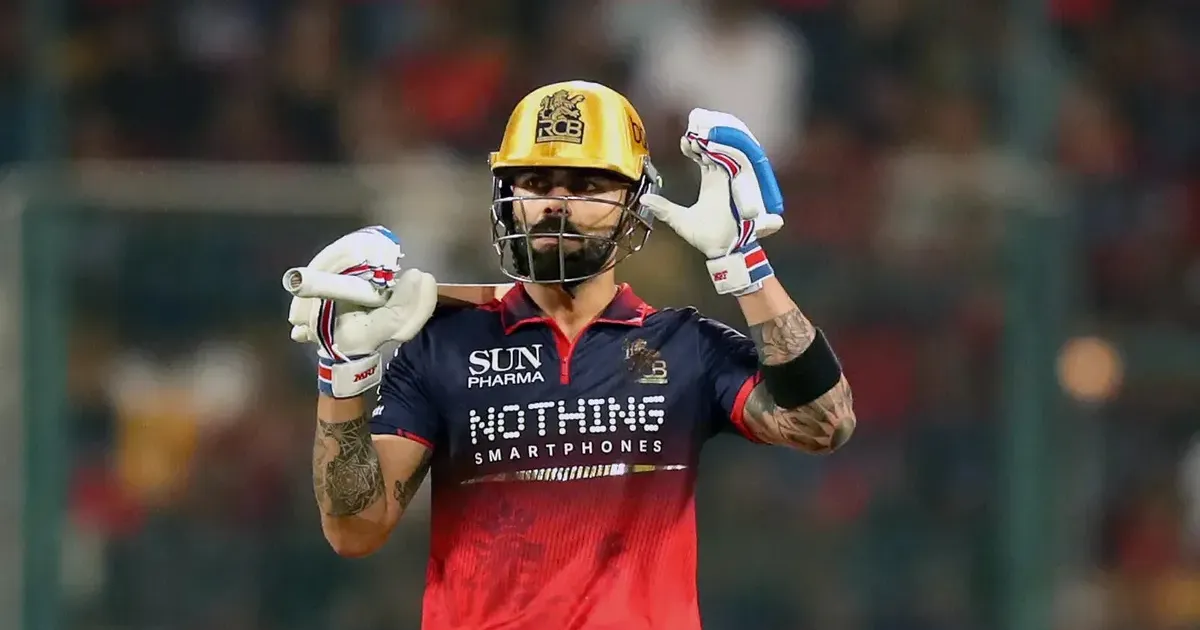
Virat Kohli's record night for Royal Challengers Bengaluru landed inside a chase that was quicker, more forceful and messier than a simple milestone piece would suggest.
The IPL 2026 opener was played on March 28 at M. Chinnaswamy Stadium, where RCB chased 202 against Sunrisers Hyderabad in 15.4 overs and won by six wickets. Kohli finished unbeaten on 69 from 38 balls. Devdutt Padikkal, used as the Impact Player, hit 61 from 26. Rajat Patidar added 31 from 12. The defending champions reached 203/4 with 26 balls unused.
The records gave the night its headline. Kohli passed Shoaib Malik on the all-time T20 run list and became the first batter to cross 4,000 IPL runs in chases. The context made those records more significant: he reached them while helping RCB complete the fastest successful chase of a 200-plus target in IPL history.
The Record Was About Chase Control
Kohli's 69 not out did not look like a batter protecting a personal landmark. It looked like a chase manager refusing to let the target become emotional. He rotated early, punished width, kept the field moving and let Padikkal's burst change the required-rate math.
It is the familiar Kohli structure updated for a faster IPL. He did not need to dominate every over. He needed to stay present through the chase, make sure wickets did not turn acceleration into panic and finish the job after the innings had been broken open.
The distinction undercuts late-career debates that reduce Kohli to nostalgia, brand pull or anchor risk. Against SRH, he was neither a passenger nor a brake. He scored quickly enough for the modern tempo while still giving RCB a fixed point.
Padikkal Made the Chase Explode
Padikkal's 61 from 26 balls was the innings that made the record chase feel inevitable before it was actually safe. A 202 target can still become awkward if the first half of the innings is merely tidy. Padikkal accelerated it.
His hitting reduced the chase to manageable phases. Once he had attacked the bowlers and forced SRH to defend wider fields, Kohli could keep the innings from drifting. Patidar's 31 from 12 then added the middle burst that stopped Hyderabad from dragging the game back through one tight spell.
The chase should therefore not be framed as a Kohli-only story. The record belongs to Kohli, but the speed of the chase belonged to the collective tempo. RCB's top order did more than win. It compressed the match.
SRH's 201 Was a Recovery, Not Control
Sunrisers Hyderabad reached 201/9 through Ishan Kishan's 80 from 38 balls and Aniket Verma's 43 from 18. Those innings were powerful enough to give SRH a defendable total on most nights. They also covered for early damage.
Hyderabad lost Abhishek Sharma, Travis Head and Nitish Reddy in the powerplay. That should have kept the innings under tighter control. Kishan and Verma rescued the total, but a rescue score can look big only until the other side starts batting at Chinnaswamy pace.
Jacob Duffy's 3 for 22 was the quieter reason RCB could attack 202 rather than chase something closer to 225. Romario Shepherd also took three wickets, though at greater cost. The bowling was imperfect, but it kept creating interruptions in an innings that could otherwise have run away.
The Milestone Was Utility, Not Sentiment
Kohli's late-career value is no longer only about memory. He remains a chase batter who can combine tempo with order. Such a combination is dangerous in a lineup with power around him.
Against SRH, he crossed two records, stayed unbeaten and let others supply the biggest bursts without surrendering control of the innings. This was not a sentimental cameo. It was utility at elite speed.
RCB's six-wicket win will sit in the record books because of the fastest 200-plus chase. Kohli's night will sit inside it because the milestones came while the match was still being decided, not after the result had become decorative.