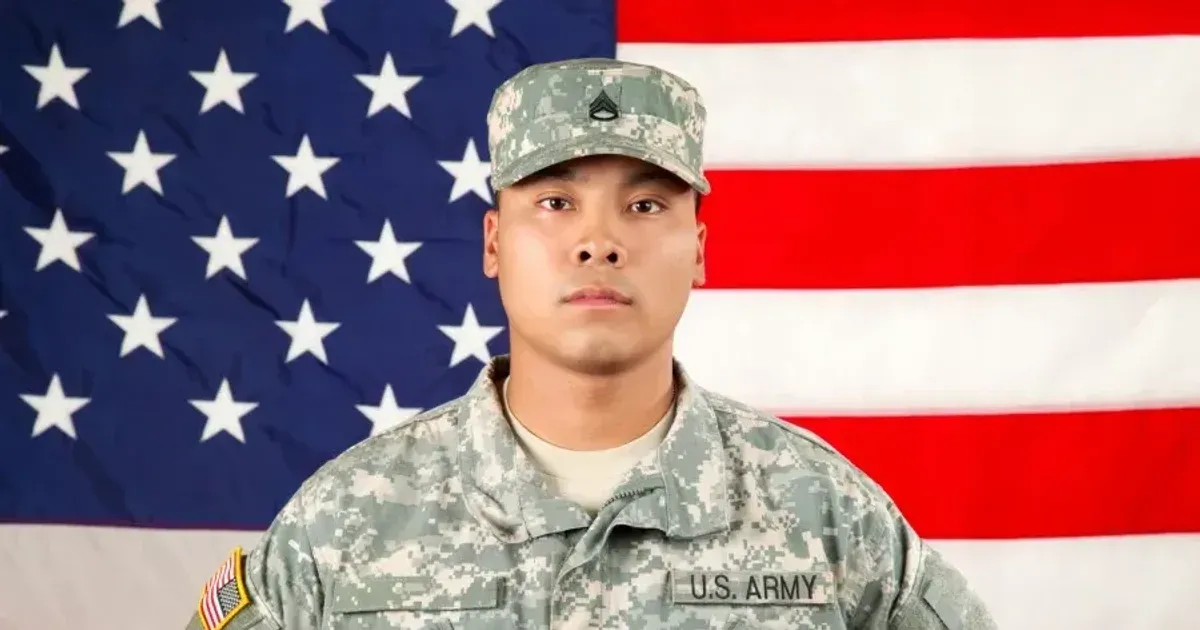
The administration’s deportation push is now colliding with military readiness. The readiness argument gives the immigration debate a defense-policy dimension. Donald Trump issued directives on April 16, 2026, that intensified enforcement by Immigration and Customs Enforcement, forcing the Department of Defense to recalibrate its long-term manpower projections. Recruitment data suggests a growing rift between federal immigration priorities and the personnel requirements of the Army, Navy, and Air Force. Military planners now face a shrinking pool of eligible candidates as deportation threats alienate non-citizen residents and their families. These developments coincide with escalating tensions across the Middle East that require a strong and sustainable force structure.
Immigrants and their children constitute an essential demographic for the United States military, often enlisting at higher rates than native-born citizens. Recruitment centers in urban hubs report that the aggressive posture of Immigration and Customs Enforcement (ICE) created a climate of fear that discourages green card holders from pursuing service careers. Prospective soldiers frequently worry that enlisting will not protect their undocumented family members from removal proceedings. Military enlistment contracts for non-citizens have plummeted 22% compared to the same period in the previous fiscal year.
Immigration Policies Disrupt Military Recruitment Pipelines
Recruitment shortfalls became a primary concern for the Pentagon following the suspension of programs that streamlined the naturalization process for service members. Military Accessions Vital to the National Interest, a program once used to recruit individuals with critical language and medical skills, remains largely dormant. Donald Trump and his administration have instead prioritized a rigorous vetting process that adds years to the enlistment timeline for foreign-born applicants. This delay often leads high-quality candidates to seek employment in the private sector where legal status is less scrutinized.
Army leadership recently indicated that meeting the 2026 end-strength goals is increasingly unlikely without the participation of immigrant communities. Defense officials note that foreign-born recruits often possess the cultural competencies and linguistic fluencies necessary for overseas operations. Alienating this demographic reduces the tactical effectiveness of units deployed in complex geopolitical environments. The Department of Defense reported a shortage of 12,000 soldiers in specialized roles formerly filled by first-generation Americans.
Congressional Republicans and several governors have championed these restrictive policies as essential for national sovereignty. Governors in states like Texas and Florida signed legislation that mirrors federal efforts, further complicating the lives of mixed-status families. These state-level actions create a patchwork of enforcement that makes military families vulnerable to detention during routine travel between bases. Legal experts point to a rise in deportation cases involving the parents of active-duty service members.
A memorandum from the Department of Defense stated that the stability of the all-volunteer force relies heavily on the continued willingness of diverse populations to see military service as a pathway to integration and security.
Pentagon officials privately expressed concern that the current political climate undermines decades of outreach to minority communities. Trust between local recruiters and immigrant neighborhoods has eroded sharply over the last 18 months. Community leaders in Los Angeles and Chicago report that young men and women who previously viewed the military as a vehicle for social mobility now see it as an extension of an unfriendly federal government. The number of high school seniors from immigrant households expressing interest in the ROTC program has reached a decade low.
Historical Precedents of Immigrant Service
Immigrants have served in every major American conflict since the Revolutionary War, often earning citizenship through their bravery on the battlefield. Historical records show that 60,000 non-citizens served during the Vietnam War, many of whom were recruited specifically for their unique skill sets. The current policy shift departs from this enduring tradition of using the immigrant population to strengthen national defense. Previous administrations viewed military service as the ultimate evidence of loyalty to the United States. Aggressive operations by Immigration and Customs Enforcement have recently prompted legislative threats of prosecution against federal officials.
Legislators in Washington continue to debate the merits of providing legal protections for soldiers who are not yet citizens. While some argue that service should guarantee a permanent right to remain, others believe that immigration status must be resolved independently of military status. This lack of legal clarity leaves thousands of service members in a state of perpetual uncertainty regarding their future. The Department of Veterans Affairs has documented cases of honorably discharged veterans being deported to countries they have not visited since childhood.
Modern warfare demands technical expertise and diverse perspectives that are currently being drained from the ranks. Cybersecurity units and intelligence divisions rely on the unique background of first-generation Americans to counter foreign threats. Removing these individuals from the recruitment pipeline creates a vacuum that native-born citizens cannot always fill. Military analysts suggest that the loss of these specialists directly impacts the nation’s ability to conduct unconventional warfare.
State-Level Legislation Targets Military Families
Republican governors have introduced measures that make it harder for non-citizens to access the basic services required for military life. In some jurisdictions, obtaining a driver’s license or housing assistance now requires proof of citizenship that many legal residents struggle to provide. These obstacles disproportionately affect the families of those serving in the National Guard and Reserve components. Soldiers returning from deployment often find their spouses facing new legal hurdles that were not present when they departed.
Florida has been at the front of this movement, implementing strict verification requirements for all state-funded programs. Critics of the policy argue that it ignores the contributions of those who wear the uniform. Proponents of the legislation maintain that exceptions for military families would create loopholes in the broader enforcement strategy. The tension between state law and federal military necessity is currently being litigated in several circuit courts.
Retention rates among Hispanic and Asian-American service members are showing signs of decline for the first time in five years. Surveys conducted by the Pentagon indicate that family stability is the primary factor in a soldier’s decision to reenlist. When ICE raids occur in military-heavy communities, the resulting instability prompts many to leave the service to focus on protecting their households. Total personnel losses due to these domestic stressors are estimated at 4,000 units annually.
Readiness Risks in Global Conflict Zones
Strategic planners warn that a hollowed-out force cannot adequately respond to simultaneous crises in Eastern Europe and the South China Sea. Maintaining a global presence requires a constant stream of new enlistees to replace those who retire or separate from service. If the immigrant recruitment pipeline is permanently severed, the military may be forced to lower entrance standards or increase enlistment bonuses to unsustainable levels. Current projections show a 15% gap in readiness by the end of the decade.
Defense spending remains focused on hardware and technology, yet the human element is what determines the outcome of most engagements. The White House has not yet addressed the specific concerns raised by the Joint Chiefs of Staff regarding these personnel shortages. Pressure is mounting on the administration to provide a waiver system for military families, but political considerations have so far outweighed tactical concerns. Donald Trump has reiterated his commitment to a zero-tolerance immigration policy despite the protests from the Pentagon.
National security depends on the cohesion of the armed forces and the belief that the government supports those who defend it. When that trust is broken, the entire structure of the all-volunteer force is placed in jeopardy. Foreign adversaries observe these internal divisions as a sign of weakening American resolve and capacity. The Department of Defense continues to monitor the impacts of ICE activities on unit morale and operational tempo.
Defense Readiness Meets Deportation Policy
The administration’s immigration policy creates a readiness tradeoff when legal residents and mixed-status families no longer see military service as a source of stability. Recruitment losses are especially important in language, medical, intelligence and cybersecurity roles that are difficult to replace quickly.
The size of the effect will depend on enlistment and retention trends, as well as whether the White House creates protections for service members and their immediate families. Without those safeguards, the Pentagon may have to rely on larger bonuses, lower entry barriers or a smaller force.
Immigration enforcement and military eligibility can be administered separately, but family uncertainty connects them in practice. Defense planners therefore need a predictable policy that preserves vetting requirements while making clear what service does and does not mean for a recruit’s legal status and household.